Hair Care & Aftercare Products: A Clinic Buyer’s Guide
What clinics hand patients after a transplant — serums, shampoos, vitamins and kits — and how to buy or brand them without overclaiming.
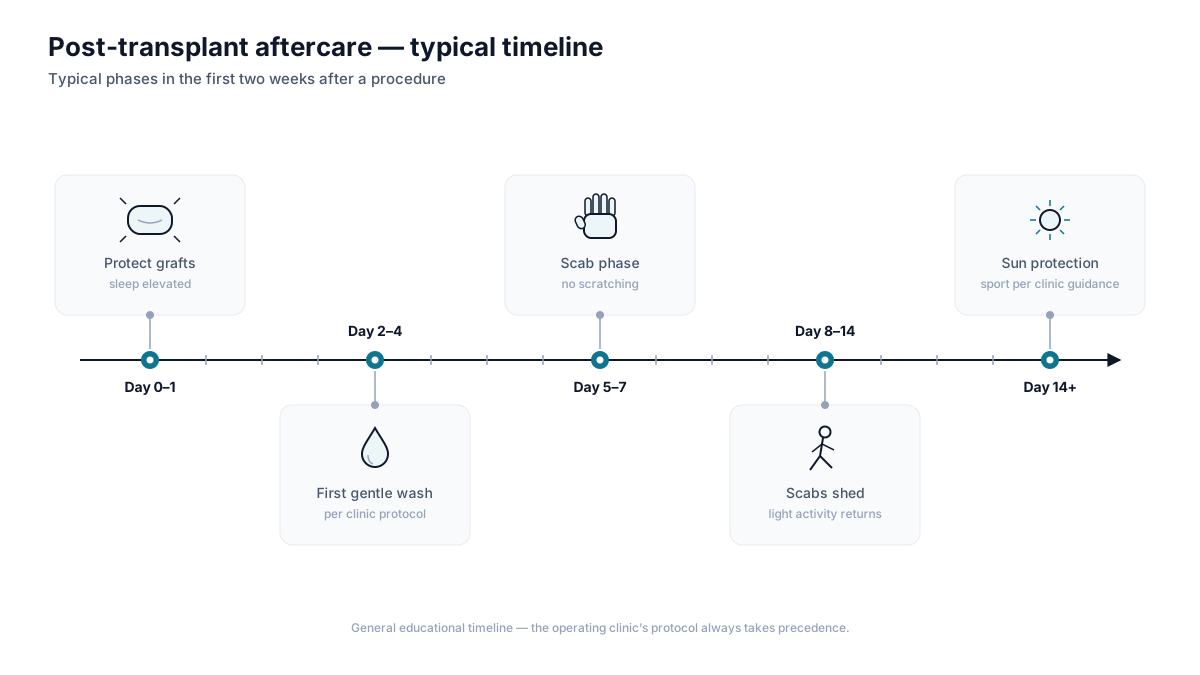
The aftercare timeline clinics hand to patients — key phases at a glance
Every hair transplant ends the same way: the patient goes home with instructions and, in most good clinics, a bag of products. What is in that bag is a clinical decision, a patient-experience decision and — increasingly — a brand decision, because the aftercare category is where clinics most often put their own name on a product. This hub covers the category from the buyer's side: what the products are for, how to judge them, and when private labeling makes sense.
The functional lineup is short. Post-operative sprays and serums keep the recipient area moist in the first days, when grafts are vulnerable and patients are anxious; the purchasing criteria are gentle formulation, a spray mechanism that does not demand touching the scalp, and packaging a nervous patient can use correctly at home. Gentle shampoos carry the patient through the staged return to normal washing — typically formulated without aggressive sulfates and fragrance-heavy bases, because the job in week one is to clean without irritating, not to impress in the shower. Longer-term supportive products — caffeine, peptide or botanical serums and hair-support vitamin formulations built around biotin, zinc and similar micronutrients — occupy the months after healing, where patient motivation is high and evidence per ingredient varies widely. Aftercare kits package the sequence into one box with instructions, which is as much a communication tool as a product: a patient with a clearly staged kit calls the clinic less and complies more.
On ingredients, this platform holds the same line here as everywhere: cosmetic and supplement ingredients differ enormously in how well their claims are supported, and much of the marketing in this category outruns its evidence. Some actives have reasonable published support at specific concentrations; many trade on association and packaging. A clinic buying these products should ask suppliers which claims the formulation can honestly carry in its market — and should prefer suppliers who answer that question with restraint. Overclaiming is not just an ethics problem; it becomes the clinic's liability the moment the product carries the clinic's name.
Which brings us to the private-label question, because aftercare is its natural home. The arithmetic favors clinic branding here for structural reasons: patients receive the products at a moment of maximum trust, reorder cycles are monthly rather than yearly, margins on branded cosmetics comfortably exceed margins on resold third-party brands, and a branded kit keeps the clinic's name in the patient's bathroom for months after surgery. The realistic entry path is standard formulations under your label with professionally designed packaging — custom formulation development comes later, if the volumes justify it. Minimum quantities, packaging options and the process from brief to delivered product are covered on the OEM and private label page; clinics that prefer stocking established products at trade terms start at the wholesale page.
The guides in this hub go deeper on each product type, on reading ingredient lists past the marketing, and on structuring an aftercare kit that patients actually follow. For the in-clinic side of the same patient journey, the PRP systems hub covers the treatment-room consumables.
Frequently asked questions
What belongs in a post-transplant aftercare kit?
Typically a moistening spray or serum for the first days, a gentle shampoo for the staged return to washing, written day-by-day instructions, and often a longer-term supportive serum or vitamin product. The kit’s real job is compliance — a clearly staged box reduces patient calls and mistakes.
Do hair growth serums and vitamins actually work?
It varies by ingredient and concentration, and the honest answer is more modest than the marketing. Some actives have reasonable published support; many rely on association. Clinics should ask suppliers which claims a formulation can defensibly carry and keep their own patient-facing language conservative.
Why do so many clinics private-label aftercare products?
Because the structure favors it: products are handed over at a moment of high trust, reorder cycles are short, cosmetic margins are healthy, and a branded kit keeps the clinic present in the patient’s routine for months. Standard formulations under the clinic’s label make the entry step low-risk.
What should a buyer check before stocking an aftercare product line?
Formulation rationale and ingredient list, claim language against what your market allows, packaging quality and usability for a post-operative patient, unit economics at realistic monthly volumes, and the supplier’s reliability on repeat production. Samples and a small first order answer most of this.
Private label or resell established brands — which is better for a clinic?
Reselling established brands is simpler and borrows their credibility; private labeling earns better margins and builds the clinic’s own brand equity. Many clinics run both: an established name for reassurance, their own label for the kit. Volume and appetite for brand-building decide the mix.
How to put your brand on a hair-support supplement: choosing between tablets, capsules and gummies, reading active-ingredient lists with appropriate scepticism, and what drives minimums and lead times.
A practical buyer's guide to putting your brand on a shampoo: choosing a surfactant base, getting fragrance and pH right for post-transplant users, picking bottles and caps, and understanding filling minimums.
A buyer's guide to launching a hair serum under your own brand: choosing a base formulation, picking packaging, handling claims responsibly, and what actually drives minimum order quantities.
A buyer’s tour of the cosmetic hair serum: what caffeine, panthenol, peptides and botanical extracts actually claim to do, honest evidence-posture language for each class, how to read an INCI list past the marketing, and the claim discipline a clinic-branded product must keep.
An instrument-level comparison for clinic buyers weighing rollers against motorized microneedling pens: how each configures its needles, what you can and cannot control, where the consumable money goes, and why the hygiene models differ more than the marketing suggests.
Why aftercare retail works at the clinic, and how to run it without becoming a pushy shop: assortment design in three tiers, pricing psychology that survives a patient’s later price check, inventory discipline, and staff scripting built on recommendation rather than pressure.
A clinic buyer's guide to putting the practice's name on the post-transplant bag: kit composition, branding depth, what a kit really costs per patient, and whether to buy pre-packed or assemble in-house.
A buyer’s framework for the most scrutinised bottle in the aftercare bag: what mildness actually means at the surfactant level, why fragrance-free is the defensible default, which pH range to ask for, and how packaging decides whether patients follow the protocol.
A component-by-component look at the post-transplant aftercare kit: what each recovery phase demands, how clinics size and portion the products, why the instruction card outranks everything else in the bag, and where branded kits differ from generic ones.
The commercial mechanics of importing hair restoration instruments — customs, MOQs, samples, payment terms and how to evaluate a supplier before committing.