
Private Label Hair Vitamins: Formats, Actives and MOQs
How to put your brand on a hair-support supplement: choosing between tablets, capsules and gummies, reading active-ingredient lists with appropriate scepticism, and what drives minimums and lead times.
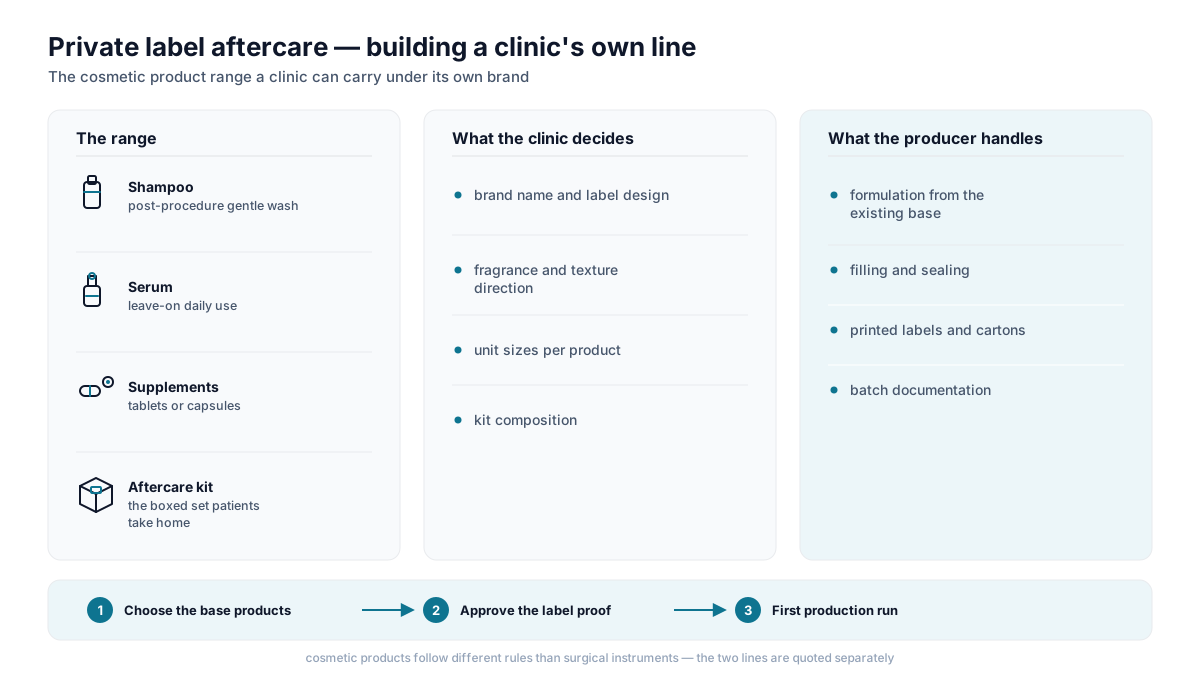
Private-label hair vitamins are food supplements produced from a manufacturer's proven formulation — typically built around biotin, zinc and a supporting micronutrient blend — and packaged under your brand in the dose format you choose: tablet, capsule, softgel or gummy. The format decision drives cost, minimum order quantity and shelf appeal more than the active list does; the active list drives what your label can honestly say, which in this category is where discipline earns its keep. This guide covers the format trade-offs, the honest way to talk about common actives, and the ordering mechanics that differ from cosmetic private label.
Key takeaways
- Format is the big decision: tablets and capsules are the economical workhorses, softgels suit oil-based blends, and gummies maximise appeal but carry the highest minimums and sugar-content trade-offs.
- Common actives — biotin, zinc, selenium — have their clearest role in correcting deficiency; marketing that promises hair growth in well-nourished customers outruns the evidence, and your label should not.
- Hair vitamins are food supplements, not medicines, and the boundary is defined by claims: supplement labels support normal function, they do not treat conditions.
- MOQs are set by pressing, encapsulation or gummy-cooking batch sizes plus packaging runs; count size and bottle versus blister choices move the number materially.
- Supplements reward subscription-style demand: shelf life is long, repeat purchase is monthly, and forecastable reorders earn better pricing than any one-off negotiation.
Where a vitamin product fits in a branded range
For clinics and hair-focused brands, a supplement plays a role the topical products cannot: it lives in the customer's kitchen rather than their bathroom, it is consumed on a strict monthly cadence, and it extends the brand relationship through the long months in which topical routines get abandoned. That cadence is the commercial logic of the category — a 60-count bottle at two capsules a day is a 30-day product, which makes it the natural subscription and reorder anchor of a range that otherwise sells episodically. It also pairs naturally with the moment of maximum motivation: many clinics place a vitamin product in the branded aftercare kit and let the reorders run from there.
The same cadence sets the quality bar. A customer swallows this product daily, so palatability, capsule size, smell on opening the bottle and digestive comfort decide repurchase as much as any perceived result. Buyers who evaluate samples only by reading the label miss the factors that actually churn customers. It is also a category where trust is asymmetric: a topical product that disappoints is abandoned, but an ingested product that disappoints — an odd smell, a stomach complaint, a label that promised too much — damages the customer's trust in everything else that carries the same brand. The upside of the daily cadence comes with that responsibility attached.
Choosing a format: the real trade-offs
Supplement manufacturers quote by format because each format runs on different equipment with different batch economics. The differences that matter to a buyer fit in one table.
| Format | Character in use | Cost and MOQ logic | Watch-outs |
|---|---|---|---|
| Tablet | Compact, high dose capacity per unit, familiar | Most economical at volume; pressing runs are efficient; lowest per-dose cost | Swallowability of large tablets; coating choices affect look and ease; least premium perception |
| Capsule (hard shell) | Easy to swallow, clean label story, vegetarian shells available | Encapsulation minimums moderate; slightly higher cost than tablets | Dose capacity per capsule is limited — multi-capsule daily doses raise per-day cost |
| Softgel | Suits oil-based ingredients and combined oil blends | Specialised equipment; minimums and unit costs above hard capsules | Fewer stock formulations; gelatin origin matters for vegetarian positioning |
| Gummy | Highest consumer appeal and compliance; candy-like experience | Cooking and depositing batches are large — the highest MOQs in the category | Sugar or sweetener content; active stability and dose limits; heat sensitivity in shipping |
| Effervescent / powder | Drink format, flexible dosing, differentiated shelf presence | Tube or sachet filling has its own runs; niche but reachable minimums | Taste masking is hard; daily-ritual friction is higher than swallowing a capsule |
Two selection heuristics serve most buyers. If your customer is a clinic patient following instructions, capsules or tablets deliver the dose economically and nobody churns over format. If your customer is a retail consumer choosing between brands on appeal, gummies convert and retain better — which is why they dominate consumer hair-vitamin marketing — but you pay for that appeal in minimums, sugar-content compromises and per-dose economics. Choosing a gummy as a first product without proven demand is the classic over-commitment in this category.
The actives, honestly
Stock hair-supplement formulations draw from a familiar shelf of ingredients: biotin, zinc, selenium, copper, B-complex vitamins, vitamin D, vitamin C, iron in some formulations, plus botanical additions such as millet, saw palmetto or amino acids like L-cysteine. What can honestly be said about them is more modest than the category's marketing, and a buyer should know the shape of the honest version before writing label copy.
The clearest ground is deficiency: several of these micronutrients have recognised roles in normal hair growth, and correcting a genuine deficiency addresses hair effects that the deficiency caused. The weaker ground is supplementation on top of an adequate diet, where evidence for added hair benefit is limited and varies by ingredient. Biotin illustrates the gap well — it is ubiquitous in hair marketing, while documented deficiency in the general population is uncommon. None of this makes a well-formulated supplement pointless; it makes the honest claim space narrower than the category behaves. In most jurisdictions the practical consequence is that supplement labels work with approved nutrient-function language — the familiar "contributes to the maintenance of normal hair" register — rather than promises of growth or regrowth, and a supplier who drafts your label inside that register is doing you a favour. Ask each candidate supplier to walk you through which claims their formulation supports in your market, and prefer the one whose answer is boring.
One structural note belongs here rather than in a marketing meeting: hair vitamins are food supplements, not medicines. They are regulated as foods in most markets, which means notification-style procedures rather than medical approvals, permitted-ingredient and maximum-level rules that differ by country, and a firm boundary on claims — a supplement supports normal function, it does not treat hair loss or any condition. The detail is national and belongs with your own regulatory advisor for the markets you sell into; for a buyer's purposes the point is simply that the category's obligations are real but manageable, and that they attach to the brand owner as much as the manufacturer.
Counts, bottles and blisters
Packaging decisions in supplements are about count and format before graphics.
| Decision | Common options | What it changes |
|---|---|---|
| Count per pack | 30, 60, 90, 120 units | Days of supply per purchase, price point, reorder cadence |
| Daily dose | 1 or 2 units per day | Per-day cost, capsule size, how long a bottle lasts |
| Primary pack | HDPE or PET bottle, blister cards, sachets, pouches | Bottles are cheapest and standard; blisters read pharmaceutical and suit kits; pouches suit e-commerce shipping |
| Closure and safety | Induction seal, desiccant, child-resistant caps | Shelf-life protection and market expectations |
The default that serves most first projects is a 60-count bottle at a one- or two-a-day dose with induction seal and desiccant — economical, familiar and subscription-friendly. Blister packs earn their extra cost when the product ships inside a clinic kit or when a pharmaceutical look supports the brand.
MOQs and lead times: what is different about supplements
The minimums logic will feel familiar from cosmetic private label — batch runs plus packaging runs — with three supplement-specific twists. First, the dose-form batch is the anchor: a pressing, encapsulation or gummy-cooking run has a minimum size, and gummy runs are the largest by a wide margin. Second, ingredient purchasing has its own minimums: stock formulations use premixes and materials the manufacturer buys routinely, which is why staying inside the stock formula keeps both minimum and lead time down, while a custom blend adds sourcing time for every ingredient that is not already in the warehouse. Third, shelf life is long — typically two years or more — which makes over-ordering less dangerous than in cosmetics but tempts buyers into runs their sales cannot rotate; stock that expires on your shelf was not cheap, whatever the unit price said.
Qualitatively, first orders on stock formulations in bottles commonly start in the low-to-mid four-figure unit range, gummies materially higher; lead times run from several weeks for a bottled stock formula to a few months where custom blends, blisters or printed cartons enter the project. The commercial mechanics — proposal, samples, deposit-and-balance payment, phased delivery options — mirror the wider OEM and private-label process.
The subscription arithmetic buyers should run first
Before requesting quotes, it is worth running the simple arithmetic that decides whether a vitamin product earns its place in your range. Start from the reorder cycle: a 60-count bottle at two units a day is bought twelve times a year by a retained customer, so the lifetime value of the product is dominated by retention, not by the first sale's margin. That reframes several decisions. A slightly more expensive capsule that swallows easily and smells neutral beats a cheaper tablet that customers quietly stop taking. A 90-count pack that lowers the per-day price can improve retention even though it lengthens the reorder cycle. And a clinic that hands the first bottle to every patient inside the aftercare bag is effectively paying a known, modest acquisition cost for a subscription-shaped revenue line — which is why supplements convert so well from clinic channels compared with cold retail.
The same arithmetic disciplines the first order. Estimate realistic monthly unit sales, multiply by the months you can forecast with a straight face, and compare that with the quoted minimum. If the minimum is several multiples of your honest forecast, negotiate structure — phased delivery, a shared-formulation batch, a smaller count size — rather than talking yourself into the bigger number. Two years of shelf life feels like a safety net until a label change or a market pivot strands the stock.
Sample evaluation completes the picture, and it is more physical than buyers expect: swallow the actual capsule or tablet for a week, note the smell when the bottle is first opened and after a fortnight, check gummies for texture after a warm afternoon in a parcel box, and have someone outside the project read the label cold and say what they think the product promises. That last test catches overclaiming while it is still cheap to fix.
Choosing the supplier
Beyond price and minimums, three questions separate supplement suppliers usefully. Ask how they document identity and quantity of actives per batch — a serious answer describes incoming-material controls and batch records, not adjectives. Ask what their stock formulation's label looks like in your target market, which reveals whether they actually know that market's claim conventions. And ask what happens if you scale: whether the same formulation can move to larger counts, new formats or additional markets without starting over. Suppliers who answer all three concretely tend to be the ones still supplying you in year three — the same pattern that holds across private-label serums and the wider aftercare category.
Request a supplement proposal
Share your market, preferred format and a realistic annual quantity, and the reply can be specific: a recommended stock formulation, count and packaging options, the honest claim space for your market, and a first-order structure that does not overcommit you.
Frequently asked questions
What is a typical MOQ for private-label hair vitamins?
For a stock formulation in bottles, first orders commonly start in the low-to-mid four-figure unit range, set by the pressing or encapsulation batch plus packaging runs. Gummies run materially higher because cooking and depositing batches are large. Custom blends raise minimums further through ingredient sourcing. Exact numbers are quoted per project.
Tablets, capsules or gummies — which format should a first product use?
Capsules or tablets for clinic-dispensed and instruction-led use: economical, dose-flexible and unglamorous in a good way. Gummies win on consumer appeal and compliance but carry the highest minimums and sugar trade-offs, so they suit brands with proven retail demand rather than first launches.
Can my hair vitamin label claim it regrows hair?
No. Supplements are foods, and their labels work with nutrient-function language — supporting the maintenance of normal hair — not treatment or regrowth claims, which belong to medicines. The exact permitted wording varies by market, so have label text checked for each country you sell into before printing.
Do hair vitamins actually work?
The honest answer is narrower than the marketing: micronutrients like biotin, zinc and selenium have recognised roles in normal hair growth, and correcting a real deficiency helps hair affected by that deficiency. Evidence for added benefit in well-nourished people is limited and ingredient-dependent. Build your label and expectations on the defensible part.
How long do private-label supplements take to produce?
A bottled stock formulation typically runs several weeks from confirmed order to goods, with sampling and label review in front of that. Custom blends, blister packing or printed cartons extend the calendar toward a few months. Ingredient sourcing for non-stock actives is the most common source of delay.
Bottle or blister packaging?
Bottles are the economical default — a 60-count bottle with induction seal and desiccant serves most launches. Blisters cost more and hold fewer units per pack, but they read pharmaceutical, protect each dose individually and sit well inside clinic aftercare kits. Many ranges use bottles for retail and blisters for the kit version.
Related articles
Hair Care & Aftercare Products: A Clinic Buyer’s Guide
What clinics hand patients after a transplant — serums, shampoos, vitamins and kits — and how to buy or brand them without overclaiming.
Clinic-Branded Aftercare Kits: Contents, Branding and Economics
A clinic buyer's guide to putting the practice's name on the post-transplant bag: kit composition, branding depth, what a kit really costs per patient, and whether to buy pre-packed or assemble in-house.
Private Label Hair Serum: From Base Formulation to Your Brand
A buyer's guide to launching a hair serum under your own brand: choosing a base formulation, picking packaging, handling claims responsibly, and what actually drives minimum order quantities.
OEM vs Private Label vs White Label for Hair Products
The three routes to selling hair care under your own brand — OEM, private label and white label — compared on control, speed, minimums, cost and IP ownership.