
Choosing the Shampoo Your Clinic Hands Out After a Transplant
A buyer’s framework for the most scrutinised bottle in the aftercare bag: what mildness actually means at the surfactant level, why fragrance-free is the defensible default, which pH range to ask for, and how packaging decides whether patients follow the protocol.
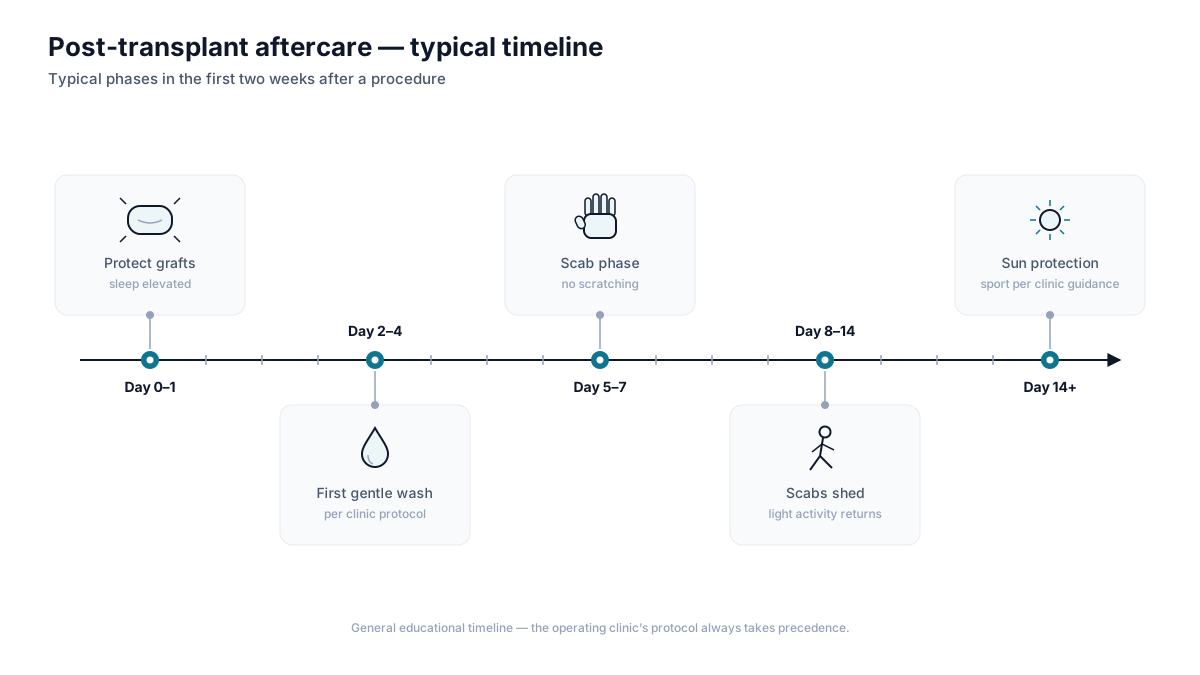
The shampoo a clinic hands out post-op should be selected on five criteria, in this order: a mild surfactant system built on gentle cleansers rather than aggressive sulfates, a fragrance-free formulation that minimises avoidable irritants on healing skin, a pH in the skin-friendly slightly acidic range, a bottle a bandaged and nervous patient can actually use, and a size that lasts the washing phase and no longer. Everything else on the label — botanical garnishes, marketing actives, texture claims — is secondary, because this product's job is narrow: clean a healing scalp without irritating it, day after day, in the hands of someone terrified of touching their own head.
Key takeaways
- Judge the surfactant system, not the front label: mild non-sulfate and amphoteric cleansing systems are the substance behind every credible ‘gentle’ claim.
- Fragrance-free is the defensible default for healing skin — fragrance is a common avoidable irritant and adds nothing to the product’s clinical job.
- Ask for the measured pH and expect a slightly acidic, skin-range value; ‘pH balanced’ without a number is marketing, not a specification.
- The bottle is a compliance device: one-hand opening, controlled dispensing and clear labelling decide whether the protocol survives contact with the shower.
- Patients notice mildness less than they notice foam and scent — manage expectations on the instruction card instead of hardening the formula.
Why this bottle gets more scrutiny than any other
Of everything in the aftercare bag, the shampoo is the product patients use most actively on the most anxious days. The spray mists from a distance; the serum comes later, on healed skin. The shampoo asks the patient to put their fingertips near fresh grafts in week one, repeatedly, following instructions from memory in a wet shower. It is also the product most likely to be compared against the patient's normal cosmetics shelf — everyone has opinions about shampoo — and the one where a bad experience, stinging or perceived harshness, most directly erodes trust in the clinic's whole protocol.
One product also serves two different scalps at once. The recipient area needs the gentlest possible cleansing around grafts that must not be disturbed; the donor area — extraction wounds, sometimes dressing residue — tolerates slightly firmer washing and benefits from it. A single well-chosen mild formulation covers both, but the instructions must distinguish them, which is another reason the shampoo and the instruction card have to be designed as a pair rather than bought separately.
That context defines the selection problem. The clinic is not choosing a great shampoo in the consumer sense; it is choosing a mild cleanser with excellent instructions, packaged for clumsy, careful hands. Buyers who keep that framing resist most of the label theatre the category produces. Where the shampoo sits among the other components — and how its size interacts with the washing phase — is covered in the aftercare kit contents guide.
The selection criteria, and why each one matters
| Criterion | What to look for | Why it matters post-op |
|---|---|---|
| Surfactant system | Mild non-sulfate primary cleansers with amphoteric co-surfactants; no aggressive sulfate-led systems | Cleansing strength drives irritation potential on compromised skin; the surfactant list is where mildness is real or absent |
| Fragrance | Fragrance-free — not ‘lightly fragranced’ or masked with essential oils | Fragrance components are among the most common avoidable cosmetic irritants and allergens; healing skin is the wrong place for them |
| pH | A stated, measured value in the slightly acidic skin range | Skin surface chemistry is mildly acidic; strongly alkaline cleansers stress it — and a supplier who cannot state a pH is guessing |
| Formula restraint | Short ingredient list; soothing agents like panthenol or aloe acceptable; no exfoliants, menthol or strong actives | Every additional ingredient is additional exposure on broken skin for no cleansing benefit |
| Bottle and dispensing | One-hand flip-cap or pump, controlled flow, legible durable label | Post-op patients wash awkwardly and cautiously; packaging that fights them defeats the protocol |
| Size | Matched to the washing phase — commonly 100–250 ml | The bottle should run out roughly when the protocol moves the patient back toward normal hair care |
Mildness at the surfactant level
“Gentle”, “mild” and “dermatologically tested” appear on nearly every candidate bottle, which makes them useless as differentiators. The substance sits in the ingredient list. Traditional strong anionic sulfates clean powerfully and cheaply, which is exactly the property a healing scalp does not want; milder non-sulfate cleansers and blends softened with amphoteric co-surfactants clean adequately with measurably less aggression toward skin. A buyer does not need a chemistry degree to apply this: ask the supplier to describe the surfactant system and its rationale, and expect an answer in terms of specific cleanser classes rather than adjectives. Suppliers formulating deliberately for post-procedure use answer this question fluently; suppliers relabelling a generic base hesitate.
Two related expectations need managing rather than engineering away. Mild systems foam less, and patients read foam as cleaning power; mild systems also rinse differently from consumer shampoos. Both are instruction-card problems — a sentence explaining that low foam is intentional prevents the patient from compensating with quantity or vigour, which is the actual risk.
The fragrance-free rationale
Fragrance is the easiest specification decision in the category and worth holding firm on. Fragrance compounds — including natural essential-oil blends, which are chemically just as much fragrance as synthetics — are among the most common avoidable irritants and contact allergens in cosmetics. On intact skin most people tolerate them without incident. On a scalp with hundreds of fresh micro-wounds, they are exposure without function: the product cleans no better for smelling pleasant.
The counterargument is commercial — scented products feel nicer and review better — and it has a clean resolution: the handed-out first-phase shampoo is fragrance-free because its user has healing skin, while the continuation products a patient buys later, for use on healed skin, can carry a pleasant, well-chosen scent. Splitting the range this way keeps the clinical phase defensible without making the retail phase austere — the handed-out bottle answers to the protocol, the repurchased one may also answer to preference.
pH, stated rather than implied
Skin surface chemistry sits in a mildly acidic range, and cleansers formulated near that range are less disruptive to it than alkaline ones — a rare point in this category with a reasonable evidence footing, even if the practical differences between two well-formulated modern shampoos are modest. The buying value of pH is partly the number and partly the test it applies to the supplier: “pH balanced” printed on a label is a slogan, while a supplier who states a target value with a tolerance, and can show it per batch, is running real quality control. Ask for the number. The answer costs the supplier nothing if they have it and reveals a great deal if they do not.
The bottle is a compliance device
Packaging decisions read as aesthetics and function as protocol. The post-op patient washes with one careful hand, often at arm's length, sometimes over a basin rather than in a shower, following remembered instructions. A heavy glass bottle with a stiff screw cap fails that user; a light bottle with a one-hand flip-cap or a pump that dispenses a controlled amount succeeds. Dispensing control matters twice: it stops the patient using too much product — which then demands more rinsing and more contact — and it makes the bottle last the phase it was sized for.
Labelling belongs to the same analysis. The label will be read wet, without glasses, by someone matching “the shampoo” to a step on an instruction card; a clear product name, a step number or colour code matching the card, and durable print that survives a bathroom all earn their cost. Size closes the loop: a 100–250 ml bottle covers a typical washing phase of daily use and runs out approximately when the protocol wants the patient transitioning back to normal hair care, making the empty bottle itself a protocol signal.
Texture, preservation and the criteria nobody prints
Two quieter formulation properties deserve a place on the checklist. The first is texture and rinse behaviour. A very thick shampoo demands working and massaging to distribute — precisely the mechanical action week-one washing tries to minimise — while a very thin one runs off the fingertips before it arrives. The workable middle is a formulation the patient can dilute in cupped hands or lather off the scalp and apply as foam, which several protocols specify explicitly. If the clinic's washing instructions involve diluting the product or pre-lathering, test that the candidate formula actually behaves under those instructions; not every base does.
The second is preservation. Fragrance-free, mild formulations still need robust preservative systems, because the bottle will live in a warm, wet bathroom for weeks and be handled daily. This is a place where ingredient-list minimalism can be taken too far: a buyer should prefer a conventionally, competently preserved product over one marketed as preservative-free, and should ask the supplier how the formula's preservation was challenged and verified. As with pH, the value of the question is partly diagnostic — it distinguishes suppliers who formulate from suppliers who relabel.
Running the evaluation before the first patient bag
Shampoo candidates are cheap to evaluate properly, which removes any excuse for choosing from a datasheet. The sequence that works is short and worth running in full for the two or three finalists that survive the criteria table.
The last step is the one most often skipped and most consequential. The shampoo and the washing instructions are a single system: a change of product that alters foam, thickness or rinse behaviour silently invalidates card wording written for its predecessor. Approving product and wording together — and re-approving both whenever either changes — keeps the system coherent through supplier switches and formula updates alike.
Evidence posture: what this product can honestly promise
The honest claim set for a post-op shampoo is short: it cleans, it is formulated to minimise irritation, and its characteristics — surfactant classes, fragrance-free status, pH — are stated and verifiable. Claims beyond that deserve suspicion in proportion to their ambition. A shampoo is a rinse-off product with seconds of contact time; ingredient stories about stimulating growth or nourishing follicles from a rinse-off base carry, at best, limited and indirect support, and a clinic repeating them to patients spends its own credibility. Growth-adjacent actives belong, if anywhere, in leave-on products — and even there they deserve the same evidence-cautious reading, ingredient class by ingredient class. The strongest position for the clinic is understatement: recommend the shampoo as the mild cleanser the protocol requires, and let the outcome speak.
Sourcing: stocked brand or the clinic's own label
Both routes can satisfy every criterion above. Stocking an established gentle shampoo is fast and borrows the brand's familiarity; its costs are retail-style margins, no control over formulation changes, and someone else's name in the patient's shower for months. A clinic-labelled shampoo — a standard mild formulation from a private-label manufacturer, specified fragrance-free and pH-stated, under the clinic's brand — costs more setup effort and carries minimums, but locks the specification, improves unit economics at volume and extends the clinic's presence through the recovery months. The decision mechanics, minimums and timelines are covered in the private-label hair shampoo guide; the category context sits in the hair care and aftercare hub. Either way, the evaluation discipline is identical: sample the actual product, wash with it, check the ingredient list against the criteria table above, and have the surgical team approve it against the protocol before the first patient bag is packed.
Frequently asked questions
What makes a shampoo suitable for post-transplant use?
A mild surfactant system without aggressive sulfates, a fragrance-free formulation, a stated slightly acidic pH, a restrained ingredient list, and packaging a post-operative patient can use one-handed with controlled dispensing. The product’s job is to clean healing skin without irritating it — nothing on the label matters more than that.
Does the post-op shampoo need to be sulfate-free?
The defensible default is a mild, non-sulfate-led cleansing system, because strong sulfates are efficient cleansers at the cost of higher irritation potential — the wrong trade for compromised skin. What matters is the overall surfactant system’s mildness; ask suppliers to explain it in terms of specific cleanser classes rather than front-label adjectives.
Why fragrance-free rather than lightly scented?
Fragrance components — including natural essential oils — are among the most common avoidable cosmetic irritants and allergens, and they add no cleansing function. On a scalp with fresh micro-wounds that is exposure without benefit. Scent belongs in the continuation products patients use later on healed skin, not in the first-phase bottle.
How long should patients use the special shampoo?
That is the clinic’s protocol decision, not the bottle’s — most protocols run the dedicated mild shampoo through the initial washing phase and then transition back toward normal gentle hair care. Sizing the bottle to the phase, commonly 100–250 ml, means it runs out roughly on schedule and prompts the transition.
Can a post-op shampoo help hair growth?
Treat such claims with caution. A shampoo is a rinse-off product with seconds of contact time, so growth-adjacent ingredient claims carry limited and indirect support at best. Choose the shampoo for mildness and cleansing, and leave active-ingredient stories to leave-on products — where the evidence still deserves a cautious reading.
Should a clinic private-label its post-op shampoo?
It is often the second product clinics brand, after the serum: the formulation requirements are simple and stable, usage is universal across patients, and the bottle sits in the patient’s shower for weeks. Start by specifying a standard mild, fragrance-free base under your label, and apply the same sampling discipline you would to any stocked brand.
Related articles
What Clinics Actually Put in Post-Transplant Aftercare Kits
A component-by-component look at the post-transplant aftercare kit: what each recovery phase demands, how clinics size and portion the products, why the instruction card outranks everything else in the bag, and where branded kits differ from generic ones.
Private Label Hair Shampoo: Bases, Bottles and Filling MOQs
A practical buyer's guide to putting your brand on a shampoo: choosing a surfactant base, getting fragrance and pH right for post-transplant users, picking bottles and caps, and understanding filling minimums.
Hair Care & Aftercare Products: A Clinic Buyer’s Guide
What clinics hand patients after a transplant — serums, shampoos, vitamins and kits — and how to buy or brand them without overclaiming.
Selling Aftercare Products at the Clinic: The Honest Retail Model
Why aftercare retail works at the clinic, and how to run it without becoming a pushy shop: assortment design in three tiers, pricing psychology that survives a patient’s later price check, inventory discipline, and staff scripting built on recommendation rather than pressure.