
Private Label Hair Serum: From Base Formulation to Your Brand
A buyer's guide to launching a hair serum under your own brand: choosing a base formulation, picking packaging, handling claims responsibly, and what actually drives minimum order quantities.
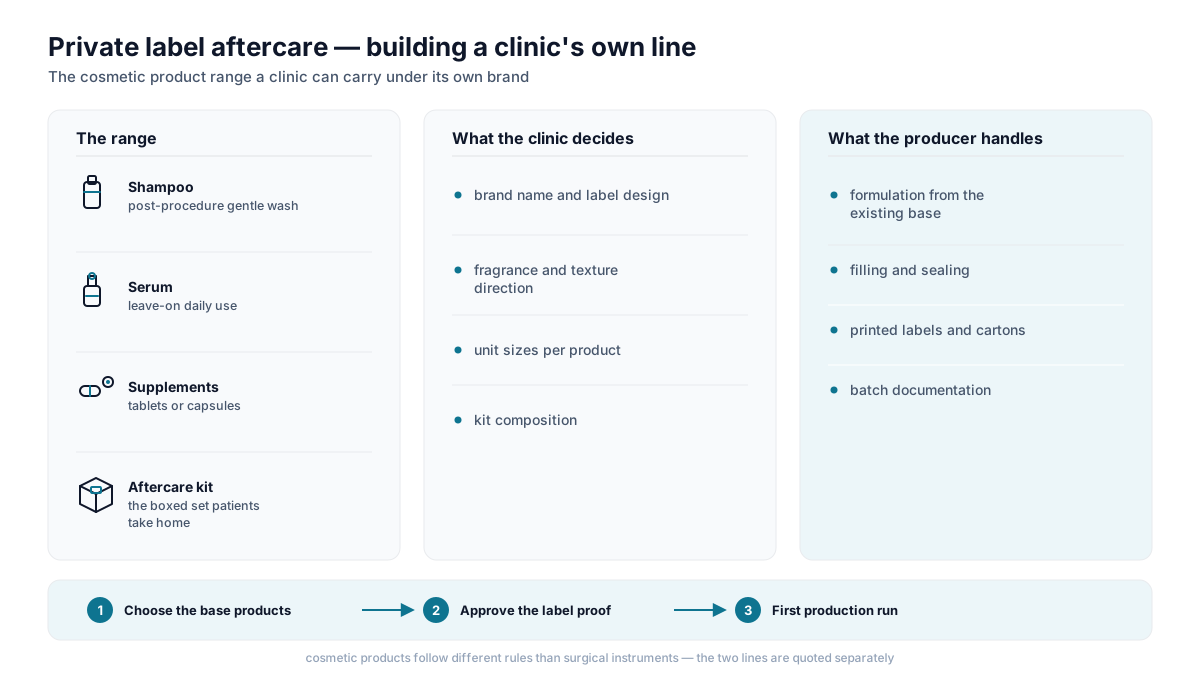
Launching a private-label hair serum means selecting one of a manufacturer's proven base formulations — typically built around caffeine, peptide or botanical ingredient stories — choosing a packaging format, and putting your artwork on a product that already exists in stable, fillable form. Because the formulation work is already done, the decisions that actually shape your project are packaging format, label claims, and order quantity, and the realistic path from first brief to sellable stock is measured in a few months rather than the year a ground-up formulation development takes. This guide walks through each decision in the order a manufacturer will ask you to make it.
Key takeaways
- Private-label serums start from a manufacturer's existing base formulation — caffeine, peptide or botanical — so your project is mostly packaging, claims and quantity decisions, not chemistry.
- Packaging format (dropper, pump, ampoule, spray) drives perceived positioning, per-unit cost and MOQ more than the formulation itself does.
- Claims are the buyer's legal responsibility in most markets: choose a supplier who tells you what a formulation can honestly say, not one who promises everything.
- MOQ is driven by filling-batch size and printed-component runs, not manufacturer stubbornness — stock bottles with printed labels lower the entry threshold substantially.
- Sample first, always: evaluate texture, scent, absorption and packaging function on filled physical samples before committing to a production run.
Who private-label serums are for
Three buyer profiles account for most serum projects. Hair transplant clinics want a branded product for the months after surgery, when patients are motivated and the clinic's name on the bottle keeps the relationship alive — the surrounding product category is covered in the hair care and aftercare hub. E-commerce and social-first brands want a serum as a hero product with an ingredient story they can market. Pharmacies and salon chains want a house-brand alternative to the international names on their shelves, at a margin those names never allow.
All three are buying the same underlying service, but they weight the decisions differently: clinics care most about post-procedure gentleness and packaging a patient can use correctly, brands care most about ingredient story and shelf presence, and chains care most about unit economics at volume. Saying which profile you are in the first email will get you a usefully targeted proposal instead of a generic one.
Choosing a base formulation
A serious private-label manufacturer maintains a small portfolio of serum bases that have already been through stability and compatibility testing. Your first real decision is which base carries your brand. The honest framing matters here: cosmetic serum ingredients differ widely in how well their marketing is supported by published evidence, and a responsible supplier will say so. What follows describes market positioning, not proven biological performance.
| Base family | Typical ingredient story | Texture and format fit | Claim posture |
|---|---|---|---|
| Caffeine-based | Caffeine, often with panthenol or niacinamide | Light aqueous fluid; suits dropper or spray; daily leave-in use | Familiar, widely recognised story; keep claims to cosmetic scalp-care language |
| Peptide-based | Peptide complexes, often combined with plant extracts | Slightly richer fluid or light gel; suits dropper or airless pump | Premium positioning; evidence varies by peptide and concentration — claims need particular restraint |
| Botanical / herbal | Plant extracts such as rosemary or ginseng, plus oils | From watery tonics to oil-serum hybrids; broad format range | Natural-positioning story; strongest fit for markets that favour plant-led branding |
| Multi-active blends | A combination of the above families in one formulation | Medium-weight serum; usually pump or dropper | Lets the label tell a layered story, but every listed active must still be honestly dosed |
Two practical points on choosing. First, pick the base whose texture and scent your customers will actually tolerate daily — a serum that feels greasy or smells medicinal gets abandoned in week two regardless of its ingredient list. Second, resist the urge to request additions to a stock base at the first order. Every meaningful formulation change reopens stability questions, adds development time, and pushes you toward OEM territory — a different model with different minimums, compared in detail in the OEM versus private label guide.
Packaging formats: the decision that shapes the product
Buyers routinely underweight packaging, yet it determines shelf presence, per-unit cost, usability and even which sales channels are realistic. The main formats each solve a different problem.
| Format | Typical fill volume | Strengths | Watch-outs |
|---|---|---|---|
| Dropper bottle | 30–100 ml | Classic serum look; precise scalp application; strong pharmacy shelf presence | Glass adds freight weight and breakage risk; droppers frustrate some older users |
| Treatment pump | 50–100 ml | Controlled dosing; good for daily-routine positioning; plastic options ship well | Less premium perception than glass unless the component quality is high |
| Airless pump | 30–50 ml | Protects oxidation-sensitive formulations; premium feel; near-complete evacuation | Highest component cost; fewer stock component options at low volume |
| Ampoules | 5–10 ml single-dose | Strong intensive-treatment story; suits course-of-use selling | Filling is slower and MOQ logic differs; per-millilitre price is high |
| Spray bottle | 50–150 ml | No-touch application — valued after procedures; fast to use on the scalp | Reads as tonic rather than serum; fine mist heads vary widely in quality |
Component sourcing is part of the manufacturer's job, but the choice between stock components with your printed label and fully custom packaging is yours — and it is the single biggest lever on both cost and minimum quantity, discussed below. For clinic buyers building a full patient bag rather than a standalone product, the packaging decision interacts with kit design, covered in the clinic-branded aftercare kits guide.
Labels and claims: what is the manufacturer's job and what is yours
The division of responsibility surprises first-time buyers. The manufacturer is responsible for producing the formulation it agreed to produce, with proper ingredient documentation and consistent quality. The brand owner — you — is generally responsible for what the label and marketing claim the product does in the market where it is sold. Cosmetic products in most jurisdictions may carry appearance- and care-related claims but not medical ones: language that promises to treat hair loss or regrow hair moves a serum out of the cosmetic category, and that boundary is defined by national rules that vary by market. It is worth one conversation with your own regulatory or legal advisor before artwork is finalised; a good manufacturer will prepare the ingredient declaration and flag claim language that looks risky, but they cannot carry your market obligations for you.
The practical test of a supplier is how they answer the question "what can this serum honestly claim?" A supplier who answers with restraint — distinguishing what the formulation supports from what the market's louder brands merely say — is protecting your downside. A supplier who promises that a stock caffeine serum can carry regrowth claims is creating a problem you will own.
What actually drives serum MOQs
Minimum order quantities in serum projects are arithmetic, not attitude. Three batch sizes have to line up.
The filling batch. Mixing and filling a water-based serum has setup and cleaning costs that are nearly fixed per run, so manufacturers set a minimum liquid batch that makes the run economic. For stock bases this is the smallest of the three constraints, since one mixing batch can serve several customers' fills in some operations.
Printed components. Label printing at small quantities is cheap and flexible; printed cartons cost more per design; silk-screened or custom-moulded bottles carry the print-run and tooling economics of the packaging industry, with minimums that often exceed the filling minimum several times over. This is why first orders on stock bottles with pressure-sensitive labels can start at modest four-figure unit quantities, while fully custom packaging pushes the same project toward five figures.
Component purchasing. Pumps, droppers and closures are bought from component makers in carton quantities. Stock components the manufacturer already uses add nothing; unusual components add their own minimum.
The consequences are worth internalising: your first-order MOQ is mostly a packaging decision. Launching on stock components with well-designed labels, then graduating to custom packaging once sales data justifies it, is the standard de-risked path — and any manufacturer who volunteers that path rather than quoting the largest possible first order is showing you how they think about long-term customers. Ordering, sampling and payment mechanics follow the same pattern as the broader private-label process described on the OEM and private label page.
Timeline: brief to sellable stock
For a stock base with stock components, the qualitative sequence is consistent across manufacturers even when the calendar varies.
Expect the sample stage to take a small number of weeks, artwork and printed-component procurement a similar period, and the production slot itself to be measured in weeks rather than days once confirmed. A realistic first project on a stock base lands in the low single-digit months from brief to goods; custom formulation work extends that severalfold, which is exactly why it belongs after market validation, not before. The slowest variable in most projects is not the factory — it is buyer-side decisions on artwork and claims. Arriving with a finished logo, a chosen name and a designer lined up shortens the calendar more than any negotiation with the manufacturer can.
Evaluating serum samples like a professional
Treat the sample stage as a structured test, not a formality. Check texture and absorption on real scalps over at least a week of daily use, not a single application on the back of a hand. Judge scent at application and an hour later. Test the packaging as your least dextrous customer would: dropper control, pump priming, spray pattern. Leave one sample in a hot car and one in a bathroom for a fortnight and look for separation or scent drift. And confirm that the sample batch documentation matches what production will use — a golden sample filled from a lab bench tells you little about run three. Suppliers comfortable with this scrutiny are the ones to shortlist.
Shelf life, reorders and not over-ordering
One more piece of arithmetic belongs in the first order decision: shelf life. Cosmetic serums typically carry a total shelf life measured in a couple of years from manufacture, plus a period-after-opening indication on the label, and your first production run starts consuming that clock the day it is filled. A first order sized to two years of optimistic sales projections is really a bet that nothing about the label, the formulation choice or the price point will need changing for two years — a bet first launches usually lose. The disciplined approach is to size run one to a sales period you can forecast honestly, perhaps six to twelve months, accept the slightly worse unit price, and put the learning from real sell-through into run two.
Reorders are also where the economics of private label quietly improve. Artwork exists, components are proven, the base is unchanged, so a reorder is essentially a filling slot plus component call-off — faster than the first run and free of its one-time costs. Clinics in particular should plan the reorder cadence against patient volume: a clinic handing a serum to every transplant patient can predict consumption from its surgical calendar with unusual accuracy, which makes it exactly the kind of forecastable demand manufacturers price favourably.
Start your serum project
If you have a market, a brand name and a rough quantity in mind, that is enough for a first conversation — the base recommendation, packaging options and realistic minimums for your situation come back as a concrete proposal, not a brochure. And if your ambitions run beyond care products, the same manufacturing relationship extends to branded instruments, covered in the OEM surgical instruments guide.
Frequently asked questions
What quantity do I need for a first private-label serum order?
It depends mostly on packaging. On stock bottles with printed labels, first orders commonly start in the modest four-figure unit range; fully custom bottles or cartons push minimums up substantially because print runs and tooling have their own economics. Ask for the stock-component option explicitly if you want the lowest entry threshold.
Can I change the formulation of a private-label serum base?
Within limits. Fragrance level, minor texture adjustments and sometimes active concentration tweaks are often possible. Meaningful changes — new actives, different preservative systems — reopen stability testing and shift the project toward OEM development, with longer timelines and higher minimums. For a first launch, choosing the right stock base beats modifying the wrong one.
Who is legally responsible for what my serum label claims?
In most markets, the brand owner placing the product on the market carries responsibility for claims and labeling compliance, not the contract manufacturer. A good manufacturer prepares ingredient declarations and flags risky claim language, but you should have your own market’s rules checked before printing artwork.
How long does a private-label serum launch take?
On a stock base with stock packaging components, a realistic brief-to-delivery timeline is a few months, with sampling, artwork and component procurement as the main stages. Custom formulation development is a different undertaking measured in additional months to a year. Buyer-side decision speed on artwork and claims is usually the biggest variable.
Dropper, pump, ampoule or spray — which format should I choose?
Match the format to the use case: droppers for classic serum positioning and precise application, pumps for daily-routine dosing, airless pumps for oxidation-sensitive premium products, ampoules for intensive-course positioning, sprays where no-touch application matters — for example in post-procedure use. Format drives cost and MOQ as much as branding, so decide it early.
How do I judge whether a serum manufacturer is any good?
Ask what their bases can honestly claim in your market and listen for restraint. Request filled samples with batch documentation and test them over weeks, not minutes. Check that samples come from production equipment, not only a lab bench. And prefer suppliers who propose a low-risk first order structure themselves — it signals they price relationships, not transactions.
Related articles
Hair Care & Aftercare Products: A Clinic Buyer’s Guide
What clinics hand patients after a transplant — serums, shampoos, vitamins and kits — and how to buy or brand them without overclaiming.
OEM vs Private Label vs White Label for Hair Products
The three routes to selling hair care under your own brand — OEM, private label and white label — compared on control, speed, minimums, cost and IP ownership.
Private Label Hair Shampoo: Bases, Bottles and Filling MOQs
A practical buyer's guide to putting your brand on a shampoo: choosing a surfactant base, getting fragrance and pH right for post-transplant users, picking bottles and caps, and understanding filling minimums.
Clinic-Branded Aftercare Kits: Contents, Branding and Economics
A clinic buyer's guide to putting the practice's name on the post-transplant bag: kit composition, branding depth, what a kit really costs per patient, and whether to buy pre-packed or assemble in-house.