
What’s Inside a PRP Kit?
The anatomy of a PRP kit: anticoagulant-loaded tubes at the core, blood collection hardware, transfer devices for moving plasma sterilely, and sometimes an activator — plus what a complete kit actually saves you.
PRP systems
How hair clinics buy PRP equipment and consumables — tube chemistry, centrifuge matching, kit completeness and an honest view of the evidence.
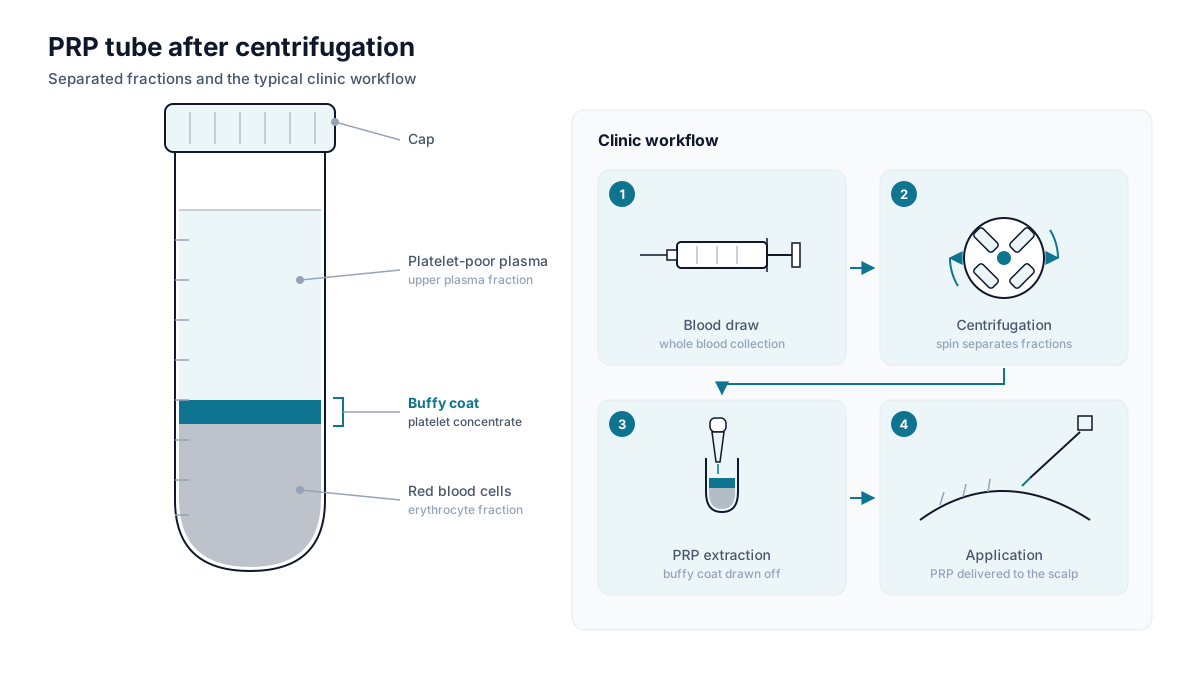
Platelet-rich plasma sits in most hair clinics as a standing service line: offered alongside transplantation, as a standalone treatment for thinning, or as an adjunct around surgery. Whatever the clinical positioning, the purchasing reality is the same — PRP is a system of components that must work together, bought on a recurring basis, where the consumable economics matter more than the one-time equipment cost.
The system has three layers. Tubes are the consumable heart of it: blood is drawn into a tube containing an anticoagulant and, depending on the design, a separator gel that mechanically divides plasma from red cells after centrifugation. The common chemistry choices — sodium citrate, ACD variants, with or without gel — affect handling, plasma character and how cleanly the platelet layer can be recovered, and clinics should know which chemistry they are buying rather than treating tubes as generic glassware. The centrifuge does the separation, and it must match the tubes: correct rotor capacity for the tube size, the speed range the tube protocol specifies, and swing-out versus fixed-angle behavior appropriate to the separation method. Accessories complete the workflow — collection needles or butterfly sets, transfer devices or long needles for drawing off plasma, and the injection supplies for application.
Kits versus components is the first sourcing decision. A complete kit — tubes, collection hardware and transfer supplies in one sterile package — costs more per treatment but standardizes the procedure and simplifies stock control; buying components separately is cheaper and more flexible but makes the clinic responsible for compatibility and for having every item on the shelf. When comparing kits, completeness is the honest metric: a kit that still requires three separately purchased items is a tube set with marketing.
Capacity matching is the mistake that gets made most often. Tube volume, rotor capacity and per-session tube count need to agree with each other and with the clinic's treatment protocol. A clinic running multiple PRP patients in a block needs rotor capacity to process a session's tubes in one or two spins, not five; a mobile practitioner may prioritize a compact centrifuge and accept lower throughput. Working backwards from a realistic weekly treatment count is more useful than comparing spec sheets in the abstract.
A word on claims, because this category is thick with them. The clinical literature on PRP for androgenetic hair loss is genuinely mixed — many studies suggest benefit, protocols vary widely, and standardization is poor. That cuts two ways for a buyer: be skeptical of any system marketed on dramatic outcome claims or on proprietary "activation" language without published support, and be equally careful not to promise patients what the evidence does not underwrite. Buy PRP systems on verifiable properties — tube chemistry, recovery consistency, kit completeness, supply reliability — and let your own clinical results argue for the service line.
The guides in this hub compare tube chemistries, walk through centrifuge selection for hair-clinic workloads, and cover per-treatment cost calculation across kit and component sourcing. For the rest of the treatment-room stack, see the clinic equipment hub; for what patients take home afterwards, the hair care and aftercare hub covers the retail side.
An anticoagulant — commonly sodium citrate or an ACD formulation — and often a separator gel that forms a barrier between plasma and red cells during centrifugation. The specific chemistry affects handling and how cleanly the platelet fraction can be recovered, so it belongs on the comparison sheet, not in the fine print.
No. The centrifuge must fit the tubes physically (rotor capacity and tube size) and match the protocol the tube manufacturer specifies — speed range and, for some methods, swing-out rotor behavior. Buying tubes and centrifuge as an agreed pair avoids the most common compatibility failures.
Often, for clinics that value standardization: one sterile package per treatment simplifies stock, training and audit. High-volume clinics with strong purchasing discipline can save meaningfully buying components — provided someone owns compatibility and stock completeness. Judge kits by whether they are genuinely complete.
Mixed and heterogeneous. A body of studies suggests benefit for androgenetic hair loss, but protocols, systems and outcome measures vary widely and results are not uniform. A prudent clinic buys on verifiable product properties and keeps its patient-facing claims modest.
Cost per treatment at a realistic weekly volume: tubes and consumables per session, kit versus component pricing, centrifuge throughput against session scheduling, and supply reliability. A cheap tube with an unreliable supply line costs more than it saves the first time a treatment day has no stock.
The anatomy of a PRP kit: anticoagulant-loaded tubes at the core, blood collection hardware, transfer devices for moving plasma sterilely, and sometimes an activator — plus what a complete kit actually saves you.
PRP tubes and centrifuges generally fall under medical device rules, with classification differing by market and intended use — and that has practical consequences for what documentation buyers should expect from suppliers.
PRP tubes are the one consumable in this catalogue where the calendar, not the warehouse, limits order size. This guide compares tube types, volumes and additives, clears up the cold-chain myth, and shows how to build expiry-driven order cycles.
A specification-level look at the anticoagulants in PRP collection tubes — ACD-A versus sodium citrate, why EDTA is avoided, and the handling details that separate a clean prep from a poor one.
How to buy PRP tubes, kits and centrifuges for a hair clinic: additives, kit completeness, rpm/rcf matching, cost per treatment, storage and honest claims.
A specification-first guide to selecting a PRP centrifuge — why RCF matters more than RPM, swing-out versus fixed-angle rotors, capacity matching and spin-protocol compatibility with your tubes.
What exosome products claim to be, why the evidence is still early and heterogeneous, the questions to put to any vendor, and the marketing red flags that should make a buyer pause.
The full equipment stack of a hair transplant clinic, from operating table to autoclave — written for founders specifying their first operating room.
What clinics hand patients after a transplant — serums, shampoos, vitamins and kits — and how to buy or brand them without overclaiming.
The commercial mechanics of importing hair restoration instruments — customs, MOQs, samples, payment terms and how to evaluate a supplier before committing.