
OEM Manufacturing & Private Label Hair Care
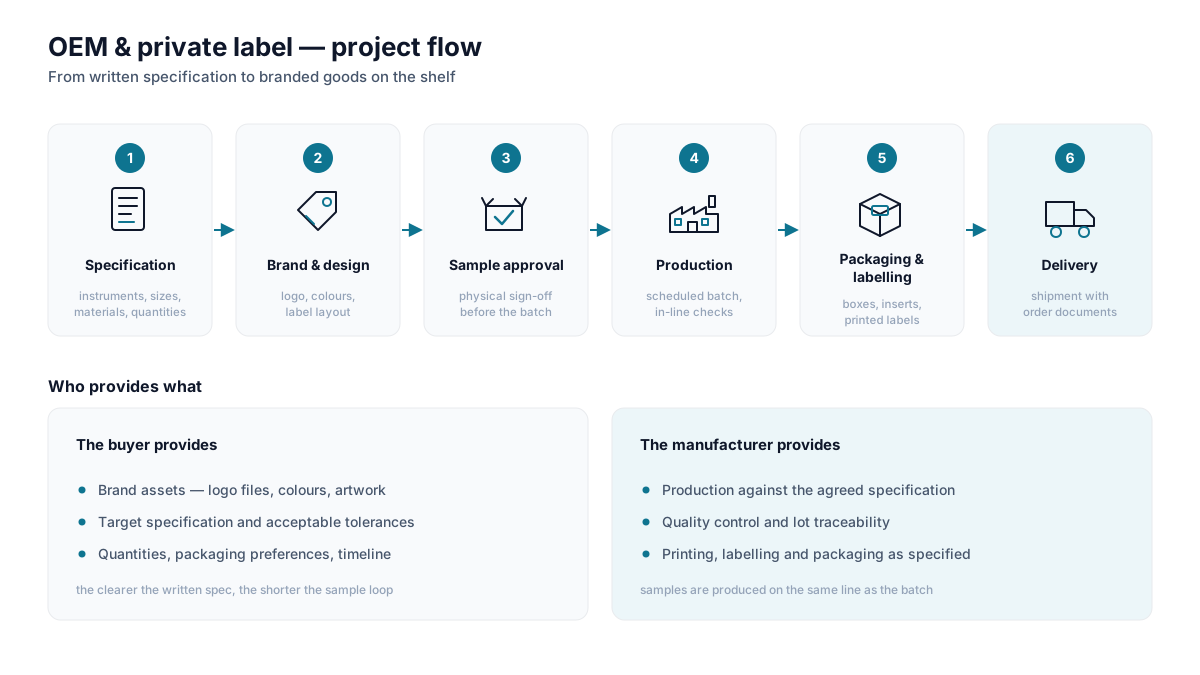
Two kinds of buyers arrive at this page. The first sells instruments — a distributor or brand owner who wants FUE punches, implanters or blade sets manufactured to their specification and packaged under their name. The second sells care — a clinic, pharmacy chain or e-commerce brand that wants its own serum, shampoo or aftercare kit without building a laboratory. Both are served by the manufacturing operation behind this platform, Bind Pharma in Istanbul.
OEM surgical instruments
Instrument OEM starts from a specification, not a catalog. You define the parameters — punch diameters and wall thickness, edge geometry, implanter gauge range, blade dimensions, handle design, materials and surface treatment — and we manufacture to them. Where you have no fixed specification yet, existing production designs can be adapted, which shortens development considerably.
Branding covers the parts buyers actually see: laser marking or printing on the instrument itself where the design allows, unit packaging in your artwork, and box or set configurations matched to how your customers order. Lot labeling follows your market's requirements, agreed during specification.
Private-label hair care
The private-label range covers the products clinics hand to patients and pharmacies sell over the counter: post-transplant serums and foams, gentle shampoos, hair-support vitamin formulations, and complete aftercare kits combining several products in one branded box.
The service is end to end where you want it to be, and modular where you do not:
- Formulation. Choose from established base formulations or develop a variation around the ingredient story your brand needs. We are deliberately careful with claims — we will tell you plainly what a formulation can honestly be said to do in your market, because exaggerated claims become your legal problem, not just ours.
- Packaging design. Bottle, tube and box formats with your artwork; design support is available if you have a logo but no packaging designer.
- Labeling. Ingredient declarations and label text prepared for your target market's conventions, reviewed with you before print.
How a project runs
- Brief. You describe the product, target market, quantities and timeline — a paragraph is enough to start.
- Specification or formulation proposal. We respond with a concrete technical proposal and a realistic cost frame, and flag anything in the brief that will cause trouble later.
- Samples. Physical pre-production samples of the instrument or filled product, with your packaging mock-up where relevant. Nothing goes to production that you have not held.
- Production. Agreed quantities, agreed dates, with lot documentation retained.
- Delivery. Ex-works, or shipped under terms agreed in the quotation — the sourcing and import hub explains the logistics vocabulary if importing is new to you.
On minimum order quantities
MOQs are real but negotiable in structure. They exist because tooling, formulation batches and printed packaging each have fixed setup costs; they differ by product type and packaging complexity, so we quote them per project rather than publishing a misleading single number. First projects can often be structured to lower the entry threshold — shared packaging formats, standard formulations, phased production — and we will say so when that is possible rather than quoting the largest figure first.
If your need is stocking existing products rather than manufacturing your own, the wholesale page is the shorter path. For reselling under our manufacturing partner's brand, see the distributor program.