
Can Clinics Import Instruments Directly from Manufacturers?
Clinics can and routinely do import directly from instrument manufacturers. The trade: lower unit prices and full catalog access in exchange for importer responsibilities, freight and customs work.
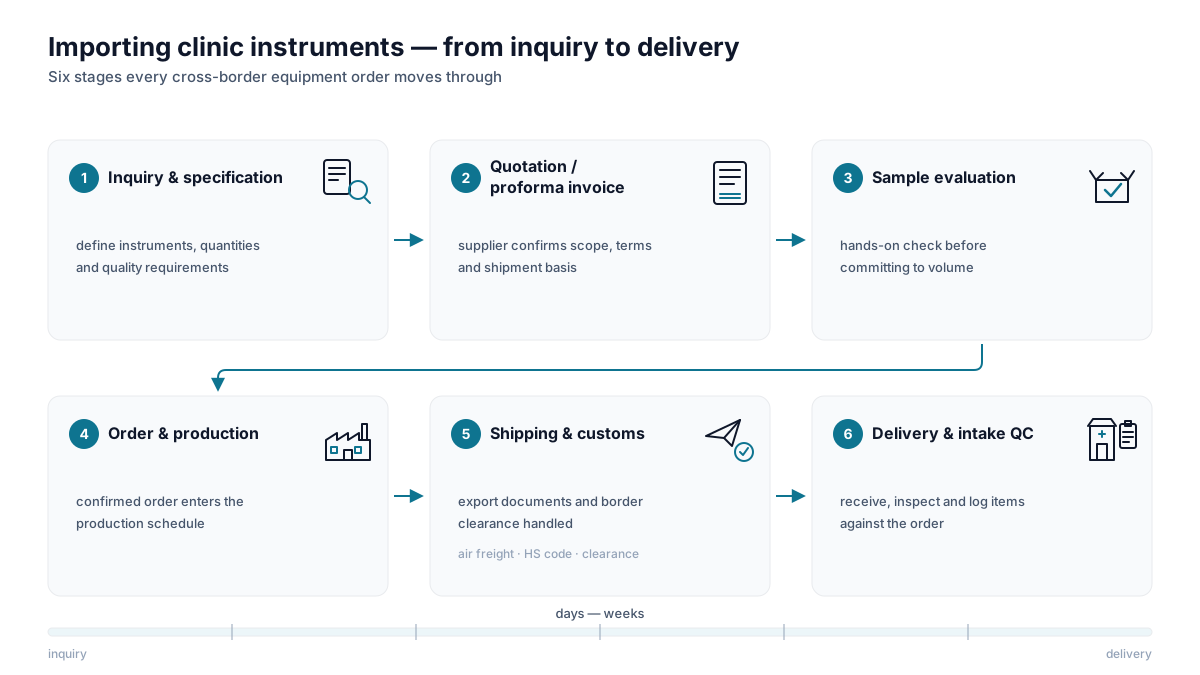
Yes. Clinics can buy directly from instrument manufacturers abroad, and many do — there is no general rule reserving manufacturer relationships for distributors. The trade-off is that the importing clinic takes on the importer’s role, which carries its own responsibilities for documentation, traceability and compliance in its market. In exchange, direct import brings structurally lower unit prices, access to the manufacturer’s full catalog rather than a stocked subset, and specification control that no intermediary can match. Whether that trade is worth making depends mostly on volume and on whether anyone in the clinic can own the process.
What the process actually looks like
Direct importing follows a predictable sequence, and none of its steps require special corporate scale — only attention:
- Samples first. Serious manufacturers expect evaluation orders. Request samples of the exact SKUs you intend to buy, evaluate them in real use, and confirm specifications in writing. The mechanics are covered in the sample orders guide.
- Proforma invoice. Once specifications are agreed, the manufacturer issues a proforma stating items, quantities, unit prices, Incoterms and payment terms. This document is your reference for everything that follows — check it line by line.
- Payment and production. Typical first-order terms involve partial or full advance payment; established relationships graduate to friendlier terms over time.
- Freight. For typical instrument volumes, air freight or courier is the norm — instrument shipments are compact and high-value, so sea freight rarely makes sense below pallet scale.
- Customs clearance. A customs broker files the import declaration, applies the right tariff classification, and handles import VAT and any duties. For a first-time importer, a broker is not an optional luxury; brokerage fees are small against the cost of a shipment stuck in customs.
After the first cycle, reorders compress into a short email exchange plus logistics. The full walkthrough, including landed-cost arithmetic and document checklists, is in the import from Turkey guide — most of which applies to importing from any manufacturing country.
When a distributor is the easier answer
Direct import is a capability, and capabilities have carrying costs. A distributor remains the better route when volumes are small or irregular (the manufacturer’s minimums exceed your real consumption), when you need mixed-brand baskets in single orders, when urgency matters more than unit price, or when nobody in the organisation wants to own customs paperwork and cross-border quality disputes. Many clinics land on a hybrid: direct relationships for the two or three high-volume consumables that dominate spend, a domestic distributor for the long tail and emergency top-ups. The full comparison of the two routes is in the manufacturer vs distributor guide.
The honest bottom line
The question is rarely can a clinic import directly — it can — but should this clinic, at this volume, this year. If your annual usage of core SKUs clears manufacturer minimums comfortably and someone on staff can own the process, direct import typically pays for its learning curve within a few orders. If not, the distributor margin is buying you real work, and paying it is the rational choice until your volumes say otherwise. Either way, start with samples and small orders: the cheapest way to learn a supplier is before the volume commitment, not after.