
Instrument Samples Before a Bulk Order: How Professionals Evaluate
A clinic buyer's guide to sample orders: how to request the exact SKUs you intend to buy, what paid and free samples really signal, a structured evaluation protocol, and how to convert results into a safe first order.
Professional sample evaluation means requesting the exact SKUs you intend to buy — same size, same line, same sterile format — testing them against written criteria, and only then negotiating quantity and price. Free samples are common for low-value consumables and unrealistic for full instrument sets; paying a modest sample fee, often credited against the first order, is normal and tells you nothing negative about the supplier. What matters is not whether the sample is free but whether it is representative — and whether your evaluation is structured enough to catch the difference between a good sample and a good production lot.
Key takeaways
- Sample the exact SKU you will order: same line, size, coating and sterile format. A different variant tests nothing.
- Paid samples are normal and often credited against the first order; insisting on free samples filters for the wrong suppliers.
- Evaluate against a written protocol — criteria, method, pass threshold — not by handing instruments around for opinions.
- The classic failure mode is the golden sample: a hand-picked unit better than production. Your first bulk delivery is the real test.
- Keep records: photograph packaging and lot labels, log results per criterion, and reference the sample lot on your first purchase order.
Why sampling is a process, not a courtesy
A sample order answers three questions a catalog cannot: whether the product performs in your team's hands, whether the supplier's quality claims survive contact with a delivered box, and whether their commercial process — response time, documentation, shipping — works at small scale before you trust it at large scale. Skipping the sample stage to save two or three weeks routinely costs months later, because a bulk order of an unsuitable instrument is not just money lost; it is a stalled clinic schedule while replacements are sourced.
Sampling also disciplines the supplier conversation. A buyer who requests specific SKUs with specifications in hand gets routed to serious sales staff; a buyer who asks vaguely for "some samples of your punches" gets whatever is loose in the sample drawer. The quality of what you receive mirrors the precision of what you request.
Requesting samples the right way
Name exact SKUs. Request the precise catalog reference: line, diameter or gauge, sterile or non-sterile format, packaging unit. If you are comparing two lines from the same factory, say so and request both explicitly. For punches, that means the specific diameters your surgeons work with — the selection logic is covered in how to choose an FUE punch.
Ask for production-lot samples. Request that samples come from a recent production lot with normal packaging and lot labelling, not from a demonstration stock. Phrase it plainly: "Please ship samples from current production, in standard sterile packaging, with lot number and expiry visible." A supplier who hesitates at that sentence has told you something.
Request quantity enough to test properly. One unit is a paperweight. For consumables, ask for enough to run your full protocol with more than one operator — typically a small box rather than a single pouch. For reusable instruments, one or two units is reasonable.
Get the paperwork with the goods. Specification sheet, and where applicable the lot documentation that would accompany a bulk shipment. Evaluating documentation is part of evaluating the supplier — the checklist in how to evaluate an instrument manufacturer pairs naturally with the physical testing below.
What to sample, category by category
The protocol below applies everywhere, but what "representative" means differs by product family, and requesting the right sample set per category saves a second round.
FUE punches. Sample every diameter your surgeons actually use — typically two or three sizes — in the exact sterile format you would order, because edge quality can vary between sizes within the same line. If you are weighing coated against uncoated, sample both from the same line so the comparison isolates the coating rather than the grind underneath.
Sapphire blades. Request the width set that matches your case mix and inspect tips under magnification before any hands-on use: chips and micro-fractures from transit are a real category risk, and finding them at inspection tells you about the supplier's packaging as much as the product. Handle enough units to judge consistency, since blade-to-blade uniformity is where cheap lines fail first.
DHI implanter pens and needles. Sample the pen together with needles across your working gauges — the system is what you are buying, not the components. Cycle the mechanism repeatedly; spring feel that changes over a session's worth of actuations is a defect a five-minute demonstration hides.
PRP tubes. Check draw integrity, additive presentation and label dating on arrival, and run sampled tubes through your own centrifuge at your protocol's settings — tube-and-rotor compatibility is exactly the kind of problem sampling exists to catch. Note the remaining shelf life on the samples: it previews the dating you can expect on a bulk order.
Basket consumables. For drapes, gloves and dressing-type items, sample the packaging unit you would buy, not a loose piece, and evaluate the boring things — seal quality, fold, sizing accuracy — because at bulk quantities the boring things are the product.
Paid versus free samples: the honest picture
Free samples are marketing spend, and suppliers allocate them where the economics work: low-value consumables, active negotiations with credible buyers, and product launches. Full implanter pens, reusable instruments and broad size ranges rarely ship free to unknown contacts, and there is no reason they should.
The professional norms are straightforward. A modest sample fee — often with shipping charged separately — is standard, and many suppliers credit it against the first order, which is a fair test of mutual seriousness. A supplier who charges heavily for samples with no credit and no itemisation may simply be filtering tyre-kickers, but combined with other friction it can signal a reseller sourcing your "samples" on demand. Conversely, a buyer who refuses to pay anything for samples filters out disciplined manufacturers and selects for suppliers desperate enough to say yes to everything — the opposite of what sampling is for. Budget a small, real amount for the sampling phase and treat it as the cheapest quality assurance you will ever buy.
A structured evaluation protocol
Opinions collected in a corridor are not an evaluation. Write the criteria down before the box arrives, define the method and the pass threshold for each, and record results per unit tested. The table below is a workable starting protocol for hair-restoration instruments; adapt the criteria to the category you are testing.
| Criterion | Method | Pass indication |
|---|---|---|
| Packaging integrity and labelling | Inspect every unit on receipt: pouch seals, lot number, expiry, sterility indicator, box condition after transit | No breached seals; lot and expiry printed and consistent across units; labelling matches the paperwork |
| Dimensional consistency | Measure stated critical dimensions across all sampled units (punch diameter, blade width, needle gauge) with calibrated instruments where available | Measurements cluster tightly around the stated specification; no visible outliers between units |
| Edge or tip condition | Examine under magnification before use: burrs, asymmetry, grind marks, coating defects | Uniform, defect-free edges across the sample — not just on the best unit |
| Functional performance | Structured hands-on use by more than one experienced operator, same task, blinded against the incumbent product where practical | Operators independently rate it equal or better than the current standard on the tasks that matter |
| Durability within a session | For consumables: performance at the start versus the end of realistic use; for reusables: condition after cleaning and reprocessing cycles | Performance degrades no faster than the incumbent; reusables show no corrosion or mechanical loosening |
| Consistency across units | Compare results unit-to-unit across every criterion above | Low spread between best and worst unit — spread predicts what a full lot will look like |
Two practical notes. First, blind the comparison where you can: decant identically-sized competitors into neutral holders or have a colleague hand instruments in random order. Brand expectations measurably shape professional judgement, and you are paying for performance, not typography. Second, photograph everything — packaging front and back, lot labels, any defect you find. The photo file becomes your reference when the first bulk delivery arrives, and your evidence if it differs.
From sample to first order
A passed evaluation converts into a first order through three deliberate steps.
Reference the sample in the order. Your purchase order or proforma should name the exact SKU and state that goods must conform to the sampled specification; note the sample lot number in the order correspondence. This closes the most common gap between what was tested and what ships.
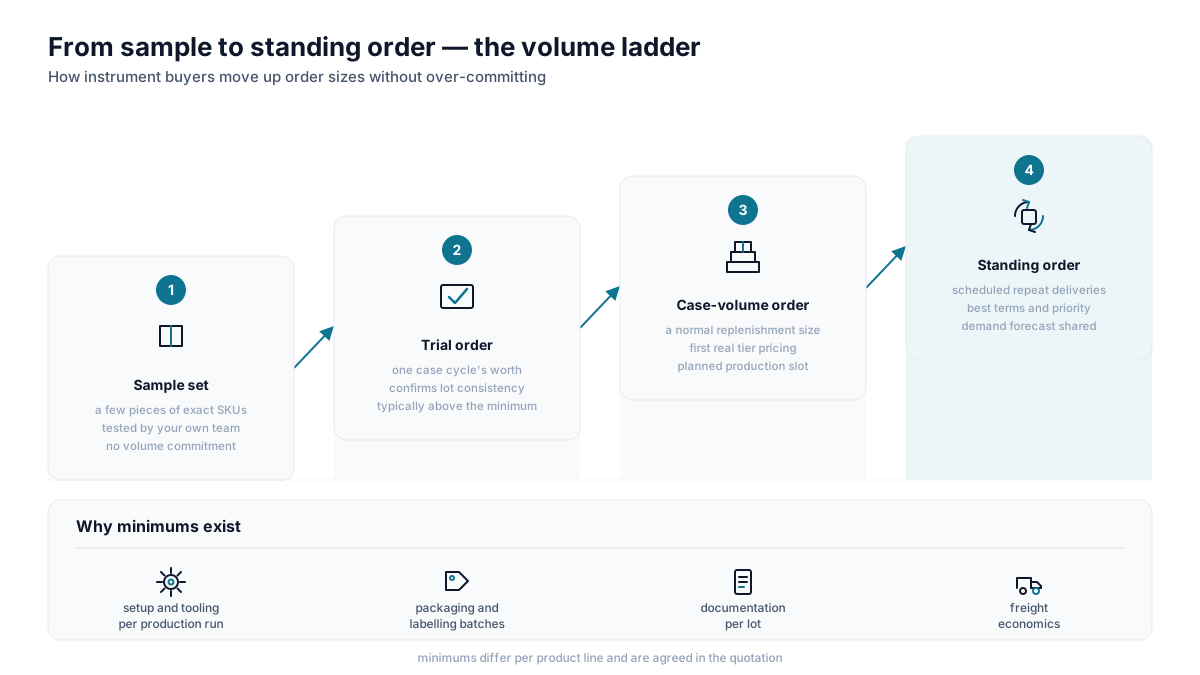
Order small, audit hard. Size the first order at or near the supplier's minimum — how minimums work and flex is covered in the instrument MOQ guide — and treat the delivery itself as the second half of the evaluation. Inspect a meaningful portion of the shipment against your retained samples: packaging, dimensions, edge condition, lot documentation. The golden-sample problem, where hand-picked samples outperform production, is caught here or not at all.
Settle terms in the same conversation. Payment structure, lead time for repeats and what happens if a lot fails incoming inspection all belong in the first-order negotiation, while your alternatives are still warm. Sensible structures for a first transaction with a new supplier — proforma invoice, split payment — are set out in the supplier payment terms guide.
Keep the losing samples and their scores, too. Suppliers improve, lines are reformulated, and a documented evaluation from this year is a two-hour refresh next year instead of a three-week project.
Common sampling mistakes
The failure modes repeat across clinics, and all of them are cheap to avoid. Testing with a single operator produces a preference, not a result — one surgeon's hand feel is real but does not predict the team's. Comparing products across different days and case types quietly biases the score toward whichever product met the easier donor area. Letting a supplier's representative run the trial converts an evaluation into a demonstration; take the training, then test without an audience. Evaluating only the product while ignoring packaging, labelling and documentation misses half of what a bulk relationship depends on. Sampling under time pressure — a launch date, an expiring quote — reliably produces the decision the calendar wanted rather than the one the evidence supports; suppliers know this, which is why artificial urgency around sample-phase pricing is itself a signal worth noting. And discarding samples after the decision throws away your only physical reference for auditing the first delivery. None of these mistakes requires bad judgement, only a missing procedure — which is the argument for writing the protocol down before the first box arrives.
What sampling cannot tell you
Honesty about the limits keeps the process sharp. A sample cannot prove lot-to-lot consistency — only repeat deliveries do that. It cannot verify the supplier's capacity, financial stability or behaviour under a quality dispute. And it cannot substitute for checking that sterile goods arrive with coherent lot documentation, storage guidance and intact packaging as a system — the instrument sterility and packaging guide covers what to check on every delivery, not just the first. Sampling is the sharpest single filter you have; it is not the whole due-diligence stack.
Frequently asked questions
Should instrument samples be free?
Not necessarily, and insisting on free samples works against you. Low-value consumables are often sampled free to credible buyers, but disciplined manufacturers routinely charge a modest fee — frequently credited against the first order — especially for pens, reusable instruments or broad size ranges. Treat a fair sample fee as normal and the credit-against-order structure as a good sign of mutual seriousness.
How many units do I need for a proper evaluation?
Enough to run every criterion in your protocol with more than one operator and still retain reference units — for consumables that usually means a small box per SKU, not a single pouch. Unit-to-unit spread is the most predictive thing you can measure, and you cannot measure spread on one unit. For reusable instruments, one or two units plus reprocessing cycles is reasonable.
How do I avoid being fooled by a golden sample?
Ask for samples from current production in standard packaging with visible lot numbers, photograph and retain them, reference the sampled specification and lot in your purchase order, and audit the first bulk delivery against the retained samples piece by piece. A supplier who knows the first delivery will be checked against the sample has little to gain from sending a hand-picked one.
How long should the sampling phase take?
Typically two to five weeks end to end: a few days to agree SKUs and pay the sample invoice, a week or so in transit, and one to two weeks of structured testing around your clinic schedule. Running two or three suppliers' samples in parallel costs little extra time and gives you real alternatives for the negotiation that follows.
Can I sample from several suppliers at once?
You should. Parallel sampling shortens the calendar, lets you blind-compare products under identical conditions, and leaves you negotiating your first order between two or three lines you would genuinely accept — which is the only negotiating position factories consistently respect. Just keep the protocol and operators identical across suppliers so scores are comparable.
What if the sample performs well but the bulk delivery differs?
That is precisely why the first order should be small and audited. Document the discrepancy with photos against your retained samples and lot records, notify the supplier in writing, and judge them on the response: a serious manufacturer investigates the lot and makes it right. A supplier who argues that minor variation is normal for differences your protocol can detect has failed the real test — walk before the volume grows.
Request a sample package
If you want to run this process on real instruments, tell us which SKUs and sizes you work with and we will put together a sample package from current production — standard packaging, lot-labelled, with specification sheets included.
Related articles
Minimum Order Quantities for Medical Instruments: A Buyer's Guide
Why MOQs exist in instrument manufacturing, what typical minimums look like by product category, which negotiating levers actually move them, and why a supplier with no minimum at all deserves scrutiny.
How to Evaluate an Instrument Manufacturer
A balanced seven-criterion framework distributors and clinics can use to vet instrument manufacturers before committing a territory or a large order.
Instrument Sterility and Packaging: A Buyer's Guide
What clinic buyers need to know about sterile and non-sterile supply formats, sterile barrier packaging, sterilisation methods, receipt inspection, shelf life and storage.
Payment Terms with Medical Instrument Suppliers: Proforma, T/T and LC
How payment actually works when buying instruments internationally: the proforma invoice flow, common T/T split structures, when a letter of credit earns its cost, and the red flags that should stop a transfer.