
Buying & Distributing Hair Transplant Instruments in the UAE
The UAE instrument market runs on agents and relationships: a fast-growing, medical-tourism-driven clinic scene with premium-brand appetite, reached almost always through a local distributor who handles registration, import and service.
In the United Arab Emirates, the question is rarely whether the market wants your instruments — the clinic scene is growing quickly and has a genuine appetite for premium equipment — but who carries them in. Distribution here is built around local agents and distributors: companies that hold the device registrations, act as importer of record, own the clinic relationships, and expect a committed, personal partnership with the manufacturers they represent. Foreign suppliers who try to sell into the UAE at arm's length, catalogue-first, tend to stall; those who invest in the right local partner find one of the most dynamic aesthetic-medicine markets anywhere.
Key takeaways
- The practical route into the UAE is a local agent or distributor who handles device registration, import and clinic relationships — direct-from-abroad selling is the exception.
- MOHAP regulates medical devices federally, and registration requirements apply before instruments are placed on the market.
- The UAE sits in the GCC customs union, and Dubai's ports and airports double as a re-export platform for the wider Gulf region.
- Inbound medical tourism and rapid clinic growth drive demand, with a pronounced preference for recognised premium brands.
- B2B runs in English, the dirham is pegged to the US dollar, and payment customs lean toward prepayment or letters of credit early in a relationship.
Who regulates, in brief
Medical devices in the UAE are regulated federally by MOHAP, the Ministry of Health and Prevention, and device registration requirements apply before instruments are marketed — there is no local conformity mark in the CE sense, and MOHAP's own registration system commonly references recognised international approvals. Alongside the federal layer, Dubai's DHA and the free-zone health authorities operate city- and zone-level licensing for healthcare facilities and professionals. Verify current requirements with MOHAP and your local representative rather than assuming a pathway.
The agent model: how instruments actually reach clinics
The structural fact that shapes everything else is that market access runs through local companies. A UAE distributor typically does four jobs at once: it holds or manages the MOHAP registrations for the lines it carries, imports the goods as consignee of record, sells and delivers to clinics, and provides the in-person service layer — training days, urgent replacements, a familiar face at the clinic's door. Because those functions bundle together, clinics habitually buy from their established distributor even when a direct import might be cheaper on paper; the distributor relationship is the supply chain.
For manufacturers this raises the stakes on partner selection. Agency and distribution relationships in the UAE carry weight — commercial agency arrangements can be sticky, and exclusivity is a standard expectation from serious local partners — so the terms deserve careful drafting before signature rather than repair afterwards. Our guide to distribution agreement terms covers the clauses that matter most, and becoming an instrument distributor describes the role from the local partner's perspective. Choose slowly: switching agents later is harder here than in most European markets.
Customs and the re-export dimension
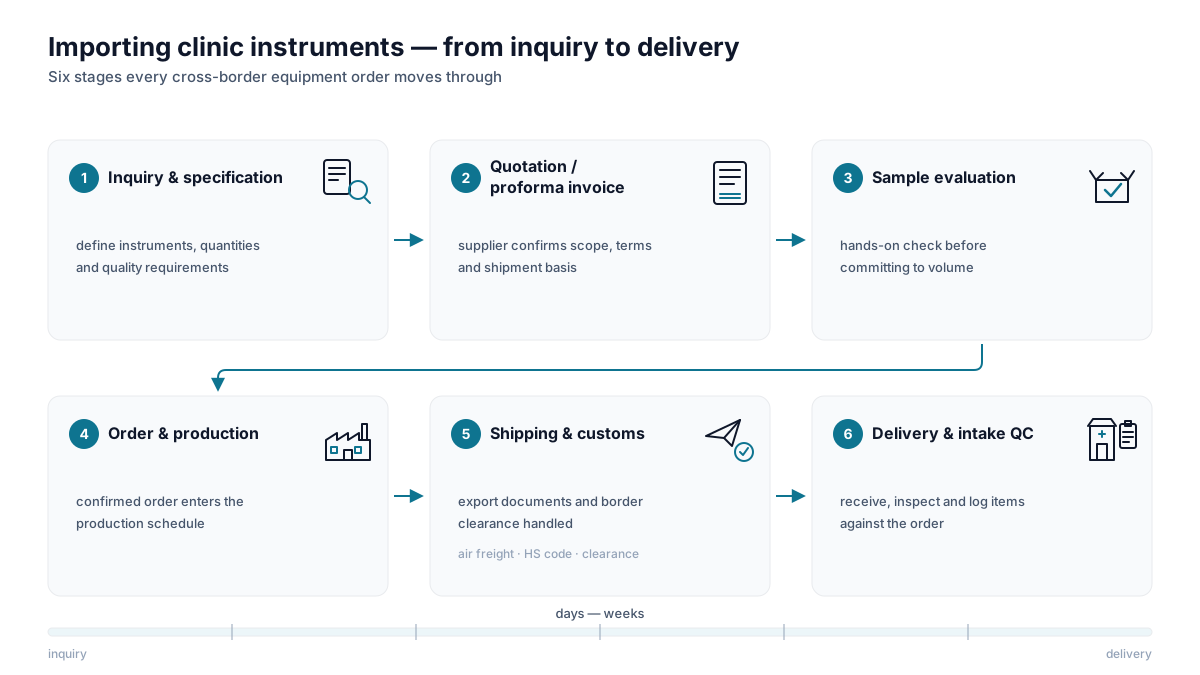
The UAE belongs to the GCC customs union, which applies a common external tariff at the bloc's outer border. Day to day, import mechanics are straightforward by regional standards — clearance through Dubai and Abu Dhabi is fast, brokers are plentiful, and the paperwork burden is manageable for a properly registered consignee. The registration point is the practical constraint: because the importer of record needs the right standing with the authorities, your local partner usually runs the import, and a foreign supplier's role is to ship clean documents against the agreed Incoterm. Classification still matters for costing; the tariff lines in our HS code reference apply to UAE shipments as they do elsewhere.
The second dimension is re-export. Jebel Ali and Dubai's airports make the emirate a distribution platform for the wider Gulf, East Africa and South Asia, and several regional distributors hold stock in the UAE precisely to serve neighbouring markets. If a UAE partner proposes covering more than the Emirates, treat that as a genuine logistical possibility — Dubai warehousing serving multiple GCC countries is an established model — but keep each country's regulatory pathway separate in the agreement, because a UAE registration does not travel with the goods. A useful comparison point for sourcing flows: many instruments sold in the Gulf originate in Turkey, and the export mechanics in our importing from Turkey guide apply equally when the destination is Dubai rather than Rotterdam.
Market character: tourism-driven and brand-conscious
The UAE's procedure market is inseparable from its medical-tourism strategy. Dubai in particular markets itself aggressively as a destination for elective and aesthetic treatment, drawing patients from across the Gulf, Africa, Russia and South Asia, and hair restoration sits comfortably inside that offer. The result is a clinic scene that has grown quickly, skews new and well-capitalised, and competes on visible quality: modern premises, prominent branding, internationally trained surgeons.
The buyer landscape splits into recognisable segments with different purchasing behaviour. Standalone premium clinics — often surgeon-owned, marketing-led and concentrated in Dubai — buy fast, care intensely about brand and appearance, and lean entirely on their distributor for logistics and credit. Hospital aesthetics departments and larger medical groups buy more slowly through procurement functions, want fuller documentation packs, and reward suppliers whose local partner can handle formal vendor onboarding. And a growing tier of medical-tourism-focused chains, some operating multiple sites, buys at volumes closer to European group accounts while still expecting Gulf-style relationship service. A distributor's real value shows in covering all three patterns at once; a manufacturer evaluating partners should ask for reference customers in each segment, not just a headline clinic list.
That competitive logic flows straight into purchasing. UAE clinics are notably brand-conscious buyers — a recognised instrument name is part of the clinic's own marketing story — and the market tolerates premium pricing for products with reputation and polish behind them. At the same time, the buying decision is relationship-mediated: the distributor's recommendation carries real weight, and a warm introduction outperforms any cold campaign. Expect meetings before orders, hospitality as part of doing business, and patience to be read as seriousness. Regional trade exhibitions in Dubai serve as the natural meeting point where manufacturers, distributors and clinic buyers converge.
Timing matters more in the UAE than newcomers expect. The market has a pronounced seasonal rhythm: the cooler months bring the peak of inbound patients, conferences and clinic openings, while the summer heat and the holiday patterns around Ramadan and Eid slow decision-making noticeably. Product launches, training events and partner visits land best in the high season; a proposal sent into the depths of August may simply wait. The working week runs Monday to Friday in the UAE — unlike some of its neighbours — but expect responsiveness to compress around religious holidays, and build shipment schedules with those windows in mind rather than discovering them through a stalled clearance.
Payment customs and currency
The dirham's long-standing peg to the US dollar takes exchange-rate drama out of the relationship: contracts with foreign suppliers are commonly denominated in dollars or euros, and AED-dollar conversion is frictionless. Payment behaviour follows the relationship arc. Early transactions between a foreign manufacturer and a UAE distributor typically run on advance payment or, for larger opening stock orders, letters of credit; established partnerships migrate to open-account terms, though prepayment persists longer here than in northern Europe. In the domestic leg, distributors extend credit to their clinic customers as a service — one more reason the intermediated model dominates. Invoice promptly, document precisely, and expect negotiation on terms to be part of every annual review; commercial negotiation is a respected skill in Gulf business culture, not a sign of trouble.
One local credit practice deserves a note because it surprises European suppliers: post-dated cheques remain a common security instrument in UAE domestic trade, and distributors routinely both give and take them when extending credit to clinic customers. A foreign manufacturer will rarely touch this layer directly, but it explains why your UAE partner watches its own receivables carefully — and why a distributor asking for measured stock growth rather than aggressive opening orders may simply be managing the credit it extends downstream, not signalling weak commitment.
Choosing your entry route
| Option | What it looks like | Where it fits |
|---|---|---|
| Exclusive national distributor | One partner holds registrations, imports and serves all seven emirates | Most manufacturers' default; matches local expectations |
| Regional Gulf partner based in UAE | Dubai-warehoused stock serving several GCC markets under separate registrations | Manufacturers wanting Gulf coverage without country-by-country search |
| Free-zone trading entity of your own | Your own UAE presence handling import and sales | Larger suppliers ready to invest in on-the-ground staff |
Whichever route you choose, the constant is presence. The UAE rewards suppliers who show up — at the distributor's office, at clinic openings, at the Dubai exhibitions — and quietly deprioritises those who manage the market by email. Broader groundwork on evaluating and structuring foreign-market entry sits in our sourcing and import hub.
Frequently asked questions
Can a foreign manufacturer sell directly to UAE clinics without a local partner?
In practice, rarely. Device registration and import mechanics favour a locally established company acting as registration holder and importer of record, and clinics prefer buying from distributors who provide local service and credit. A committed local agent or distributor is the standard route in.
Who regulates medical devices in the UAE?
MOHAP, the federal Ministry of Health and Prevention, regulates medical devices and operates the registration system that applies before instruments are marketed. Dubai's DHA and free-zone health authorities additionally license healthcare facilities and professionals at city and zone level.
Does CE marking mean my instruments are approved in the UAE?
No. The UAE runs its own MOHAP registration system rather than accepting the CE mark as such, though recognised international approvals are commonly referenced in applications. Verify current requirements with MOHAP and your local representative.
How do UAE distributors usually pay foreign suppliers?
Early in a relationship, by advance payment or letter of credit for larger stock orders, typically in US dollars or euros; the dirham's dollar peg makes currency handling simple. Established partnerships move toward open-account terms, though more gradually than in Europe.
Is exclusivity a reasonable request from a UAE agent?
It is the standard expectation from serious local partners, because they invest in registrations, stock and clinic relationships. The sensible response is not to refuse exclusivity outright but to pair it with clear performance obligations, territory definitions and exit terms in the distribution agreement.
Can my UAE partner also cover other Gulf markets?
Logistically yes — Dubai is an established re-export and warehousing hub for the GCC — but regulatory approval is national, so each country needs its own registration pathway. Treat multi-country coverage as separate regulatory projects sharing one warehouse.
Related articles
Sourcing & Import: Buying Medical Instruments Across Borders
The commercial mechanics of importing hair restoration instruments — customs, MOQs, samples, payment terms and how to evaluate a supplier before committing.
Importing Hair Restoration Instruments from Turkey: A Practical Guide
Why Turkey became a manufacturing base for hair-restoration instruments, and the practical import mechanics — Incoterms, customs documents, duty and VAT logic — for buyers in the EU, UK and Gulf.
Distribution Agreement Terms: The Clauses That Decide Whether the Deal Works
A clause-by-clause walk through medical device distribution agreements: territory and exclusivity, minimum commitments, pricing structure, marketing obligations, IP use, termination and the post-term provisions most first-time distributors overlook.
How to Become a Hair Transplant Instrument Distributor
A practical guide to building a distribution business in hair restoration instruments: how the revenue model actually works, how to build a starting portfolio, which manufacturer relationship to choose and how the first customers are won.