
Madrid: Spain's Clinic Cluster and the Latin America Gateway
A city snapshot for B2B buyers and sellers: why hair restoration clinics cluster in Madrid, how the Comunidad de Madrid licenses them, what the congress calendar looks like, and why the city doubles as the commercial doorway to Latin America.
Madrid is where Spain's hair restoration market makes its decisions. The capital concentrates the country's densest run of restoration clinics, the head offices of the private-health groups that own many of them, and the congress venues where the sector meets — and because the city is simultaneously Europe's best-connected door to Latin America, a supplier who establishes a Madrid presence is quietly working two continents at once. Understanding how the city itself functions, rather than treating it as a pin on the Spanish map, is what separates suppliers who grow here from those who merely quote here.
Key takeaways
- Madrid holds Spain's heaviest concentration of hair restoration clinics and, more importantly, the headquarters of the private-health and clinic-chain groups that decide purchasing for sites across the country.
- Clinic authorisation is regional: Madrid facilities are licensed by the Comunidad de Madrid's health department, a layer that sits below the national AEMPS device regime.
- Barajas airport's long-haul network makes Madrid the practical meeting point between European suppliers and Latin American buyers — deals for both regions get done in the same offices.
- IFEMA and the city's hotel-congress circuit host the commercial calendar; treat any specific event dates as something to verify with organisers.
- Supply reaches Madrid clinics mainly through Spanish-speaking specialist distributors headquartered in the city, with chain procurement teams increasingly importing directly.
Why the cluster formed in the capital
Madrid's clinic concentration is not an accident of population alone. Three mechanics stack on top of each other. The first is straightforward demand density: the metropolitan area is Spain's largest pool of private-pay patients, with the disposable income and low cultural friction around cosmetic treatment that keep surgical calendars full year-round.
The second is corporate gravity. Spain's private healthcare sector is unusually group-structured, and the holding companies behind hospital networks, aesthetic chains and insurer-owned clinic estates run their purchasing from Madrid head offices. A restoration chain may operate sites in five cities, but the tender, the framework agreement and the supplier review happen in a Madrid boardroom. For an instrument seller this changes the math of presence: one well-managed relationship in the capital can govern consumable flow into operating rooms hundreds of kilometres away.
The third is professional gravity. The doctors who train Spain's hair surgeons, the opinion leaders who speak at its congresses and the specialist nurses who move between clinics circulate through Madrid more than anywhere else. New techniques, and the instruments attached to them, tend to enter Spain through the capital's teaching environment and radiate outward — which is why product launches and evaluation programmes disproportionately start here.
The Latin America gateway, at street level
Every profile of Spain mentions Latin American ties; what a city snapshot can add is the mechanism, because the mechanism is physically Madrid. Barajas airport operates Europe's deepest schedule of direct long-haul routes into Spanish-speaking America, which makes the city the default stopover where a Colombian clinic group meets its European suppliers, or where a European manufacturer auditions a Mexican distributor without either party crossing the Atlantic twice.
The corporate layer reinforces it. Spanish health groups with LatAm operations administer them from Madrid, and the region's buyers who come to Europe to scout instruments overwhelmingly route their trip through this one city — congress first, supplier meetings after. A supplier exhibiting or hosting meetings in Madrid is therefore addressing two order books: the domestic clinics in the room and the trans-Atlantic relationships that begin there. Territory questions get real very quickly in this environment — a Madrid distributor will often ask for Spanish-speaking markets beyond Spain — so it pays to arrive with a considered position on rights and carve-outs, along the lines set out in distribution agreement terms.
Licensing in the capital
Healthcare authorisation in Spain is devolved, and in the capital region that authority is the Comunidad de Madrid's health department, which licenses and inspects private clinics and surgical facilities operating in the city. The devices used inside those clinics remain governed at national and EU level — AEMPS oversight and CE marking under the EU MDR — so the regional layer concerns the facility rather than the instrument. A supplier needs no Madrid-specific device approval, but should expect professional buyers to hold their own regional paperwork and to expect equivalent orderliness from vendors.
The congress calendar and where it happens
Madrid's commercial calendar runs through two kinds of venue. IFEMA, the city's exhibition complex and one of the largest in Europe, hosts the broad medical, health-sector and beauty-industry fairs where clinic owners and distributors cross paths at scale. Around it, a rotating circuit of aesthetic-medicine, dermatology and trichology congresses fills the city's hotel and conference venues, drawing the surgeon audience that instrument suppliers actually want in front of a demo table. Programmes and locations shift year to year, so verify current editions and dates directly with the organisers; a broader view of which gatherings matter to this industry sits in the industry events calendar.
The commercially useful point is rhythm: Madrid offers several natural occasions per year to meet Spanish and visiting Latin American buyers without cold outreach, and local distributors plan their launch activity around that beat. Suppliers who arrive between events find a second, quieter calendar underneath — the training courses and small workshops that teaching surgeons run through the year, which are often the more productive place to put an instrument into influential hands.
The shape of the city's clinic map
Madrid's restoration clinics arrange themselves along recognizable lines. The premium tier gravitates to the prestige medical addresses of the Salamanca district and the northern business corridor, where an address is part of the clinical brand and patients expect the equipment to match the postcode. High-throughput and chain-operated sites spread wider — near transport nodes and in the larger residential districts — built for volume rather than ceremony, with procurement to match. A third layer is easy to miss: the hospital-adjacent practices around the city's large private hospital campuses, where hair restoration runs alongside broader dermatology and plastic surgery and buying flows through hospital-group supply arrangements rather than the clinic's own hands.
The practical value of the map is targeting. The Salamanca tier buys on refinement and evidence and forgives premium pricing; the volume tier buys on unit economics and delivery reliability and forgives little else; the hospital-adjacent tier is reached through group agreements rather than clinic visits. A supplier who works all three with one undifferentiated pitch will be told, politely, that they do not understand the city.
How supply flows into the city
Instruments reach Madrid operating rooms along three main channels, and most suppliers end up using more than one.
| Buyer type | How they typically buy |
|---|---|
| Independent premium clinics | Through Madrid-based specialist distributors, in Spanish, on relationship and service |
| Chain and group clinics | Head-office procurement; framework pricing, growing direct import when volumes justify it |
| Latin American visitors | Scouting via Madrid congresses and partners, then exporting through Spanish intermediaries |
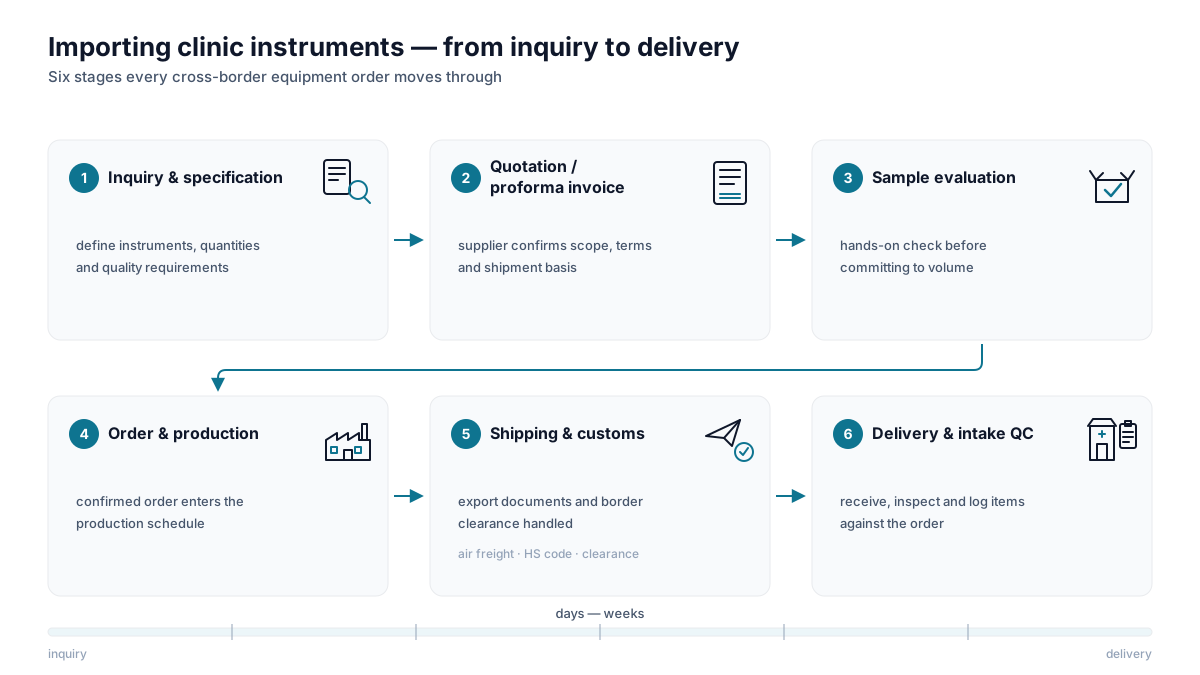
The distributor tier is the backbone. Specialist dealers headquartered in the city cover the peninsula from Madrid warehouses, and their clinic relationships — often decades old — are the practical route into independent practices. Chains behave differently: their procurement teams compare a Madrid distributor's quote against buying FOB from a manufacturer abroad, and increasingly split the difference by importing high-volume consumables directly while leaving capital equipment and service-heavy items with local partners. Goods physically arrive without friction: intra-EU replenishment from central European stock is customs-free, and third-country shipments clear once at any EU entry point before circulating freely — mechanics covered in the import from Turkey guide, with classification handled in the HS code reference.
Working Madrid well
Three habits separate suppliers who compound in this city from those who stall. First, sell upward: map which clinics belong to which group, and invest in the head office rather than duplicating effort site by site. Second, run the calendar: plan launches, samples and pricing reviews around the congress rhythm, because that is when decision-makers are receptive and reachable. Third, treat every Madrid meeting as potentially trans-Atlantic — the person across the table may control, or influence, purchasing well beyond Spain, and materials prepared once in Spanish serve both audiences.
There is also a habit worth unlearning. Suppliers accustomed to federal markets often distribute their Spanish effort evenly across cities, on the theory that coverage equals fairness. Madrid punishes the theory: because group purchasing, professional influence and the Latin American interface all concentrate here, an hour invested in the capital reliably outperforms an hour invested elsewhere, and the market's own actors know it — which is why the serious distributors keep their key-account managers, their demonstration stock and their trainers in Madrid even when their warehouses sit outside the ring road. The wider procurement fundamentals that sit underneath all of this are collected in the sourcing and import hub.
Frequently asked questions
Why do so many Spanish hair restoration clinics cluster in Madrid?
Three forces stack: the country's largest private-pay patient pool, the Madrid head offices of the health groups and chains that own clinics nationwide, and the professional circuit of trainers and opinion leaders who circulate through the capital. Demand, corporate decision-making and clinical influence all concentrate in one city.
Who licenses clinics in Madrid?
Facility authorisation is devolved in Spain, so Madrid clinics are licensed and inspected by the Comunidad de Madrid's health department. Device rules stay national and European — AEMPS oversight and CE marking — so suppliers face no Madrid-specific device approval, only professionally documented regional buyers.
How does Madrid function as a gateway to Latin America in practice?
Through Barajas airport's dense long-haul network, the Madrid headquarters of Spanish health groups with LatAm operations, and a congress calendar that Latin American buyers route their European trips around. Meetings, distributor auditions and framework deals for the region physically happen in Madrid offices and venues.
Should a supplier target Madrid distributors or clinic chains directly?
Usually both, deliberately split. Specialist Madrid distributors are the realistic route into independent clinics, where relationships and Spanish-language service decide. Chains buy through head-office procurement and increasingly import high-volume consumables directly, so they warrant a separate, framework-style commercial approach.
Which trade events in Madrid matter for this industry?
The IFEMA exhibition complex hosts the large health and beauty-sector fairs, while aesthetic-medicine, dermatology and trichology congresses rotate through the city's hotel and conference venues. Editions and programmes change, so always verify current dates and scope directly with the organisers before planning around any single event.
Does a Madrid presence require Spanish-language capability?
Yes, without exception. B2B in the city runs in Spanish — quotes, training, complaint handling — and buyers read language capability as a proxy for how the partnership will function. The consolation is leverage: materials built for Madrid work across Latin America with only regulatory localisation left to do.
Related articles
Sourcing & Import: Buying Medical Instruments Across Borders
The commercial mechanics of importing hair restoration instruments — customs, MOQs, samples, payment terms and how to evaluate a supplier before committing.
The European Hair Restoration Market: A Qualitative Overview for Distributors
What the European hair restoration landscape looks like from a distributor’s chair: the forces driving demand, how the major regions differ in character and buying culture, and where supply-side opportunities actually sit.
Distribution Agreement Terms: The Clauses That Decide Whether the Deal Works
A clause-by-clause walk through medical device distribution agreements: territory and exclusivity, minimum commitments, pricing structure, marketing obligations, IP use, termination and the post-term provisions most first-time distributors overlook.
Importing Hair Restoration Instruments from Turkey: A Practical Guide
Why Turkey became a manufacturing base for hair-restoration instruments, and the practical import mechanics — Incoterms, customs documents, duty and VAT logic — for buyers in the EU, UK and Gulf.