
Buying & Distributing Hair Transplant Instruments in Greece
Greece is entered through people, not catalogues: a compact, relationship-driven distributor scene supplies an Athens- and Thessaloniki-centred clinic market with genuine Mediterranean medical-tourism ambitions.
Nobody sells instruments into Greece by email. The Greek medical-trade scene is built out of small, often family-run distribution houses whose owners know their clinic customers by first name, and a foreign manufacturer's real market entry happens over coffee in Athens, not through a tender portal. Get the relationship right and you gain a partner who will champion your line for a decade; get it wrong, or try to skip it, and the market simply does not open. That personal texture, plus a clinic scene with real ambitions to catch Mediterranean medical-tourism flows, defines what selling here is actually like.
Key takeaways
- Greece is an EU member: CE-marked instruments circulate freely, with EOF as the national medicines and medical-device authority.
- Distribution runs through small, relationship-driven trading houses — personal trust is the entry ticket, and it is built in person.
- Demand centres on Athens, with Thessaloniki as the clear second pole serving the north and Balkan-adjacent patients.
- Greek clinics harbour genuine medical-tourism ambitions, positioning EU-standard care at Mediterranean prices against Turkey next door.
- Seal relationships with written agreements anyway: warmth and contractual clarity are complements here, not alternatives.
A market that runs on relationships
The defining structure of Greek instrument distribution is its scale: most players are small companies, frequently family businesses in their second generation, carrying broad portfolios across surgical, dental and aesthetic categories. There are no dominant national medical-device wholesalers in this niche — coverage is a mosaic of specialists who each own a set of loyal clinic accounts. For a manufacturer, this means partner selection is less about comparing balance sheets and more about mapping relationships: whose van is already parked outside the hair clinics you want to reach?
It also changes the courtship. Greek distributors expect to meet the people behind a brand before committing, and the first meeting is rarely the one where business is agreed. Visits, samples, patience and a certain personal warmth are part of the process — this is a culture where being a good guest matters commercially. When evaluating candidates, weigh three things above the company presentation: which hair clinics the firm already visits monthly, what adjacent lines it carries and whether yours would be championed or merely listed, and who will actually answer the phone when a clinic has a problem on a Friday afternoon — in a market this personal, that last name matters most. None of that removes the need for paperwork: agree territory, targets and exit terms in writing precisely because the relationship is warm, so that a future disagreement has rails to run on. The distributor's side of this bargain is described in our guide to becoming an instrument distributor, which is worth reading in mirror image when evaluating Greek candidates.
EOF in brief
Greece's competent authority for medicines and medical devices is EOF, the National Organization for Medicines, which carries out market surveillance and administers the national obligations that accompany the EU framework. Instruments reach the Greek market under the CE mark of the EU MDR, with the usual economic-operator duties applying nationally. Verify current requirements with EOF or a regulatory adviser rather than assuming Greek practice mirrors another member state's.
Athens, Thessaloniki and the tourism ambition
Greek demand has one large pole and one solid second. Athens concentrates the majority of aesthetic and hair-restoration clinics, from dermatology practices adding FUE services to purpose-built restoration clinics in the city's affluent districts. Thessaloniki anchors the north with a smaller but self-sufficient cluster and a catchment that reaches into the Balkans. Beyond the two cities, purchasing is thin and largely reached through the same Athens-based distributors.
What gives the market its forward energy is positioning. Greek clinics watch the enormous procedure flows passing them to Turkey and increasingly make a counter-offer: EU-regulated care, Mediterranean setting, prices well below Western Europe. Whether marketed to Balkan neighbours, to Western European patients pairing treatment with travel, or to the Greek diaspora returning in summer, this inbound ambition is reshaping clinic investment — newer clinics are built and equipped to be shown off, not merely used. For suppliers this cuts two ways: there is real appetite for instruments and presentation-grade equipment that support a premium story, but the buyers pursuing it remain price-disciplined, because their whole pitch rests on undercutting Western European costs. The winning offer is credible quality with a sharp pencil, not luxury pricing.
A seasonal note that is easy to learn the hard way: August is a genuine pause. Clinics thin out, decision-makers are on the islands, and a proposal sent mid-summer will be read in September. Plan launches and partner visits for autumn through late spring.
What Greek clinics buy, and how often
Purchasing rhythm in Greece is shaped by the market's scale in a way suppliers should plan around. Distributors here hold shallow stock — warehousing deep inventory against a compact clinic base ties up cash nobody wants tied up — so they reorder little and often, and your reliability on lead times matters more to them than the last percentage point of volume discount. A supplier who ships accurately in days becomes the easy recommendation; one who ships cheaply in six weeks forces the distributor to carry risk, and the relationship cools. Structure price breaks to reward annual volume rather than single large orders, and both sides get what they need.
On product mix, newer Greek clinics show a clear appetite for sterile single-use instrumentation — it suits the premium, EU-standard story they are selling to inbound patients — while established practices still run reusable sets and buy accordingly. Training carries unusual weight: clinics staffed by technicians who learned on one implanter system are loyal to it, so a supplier who backs its distributor with hands-on training sessions is buying future orders, not spending goodwill.
Import and customs
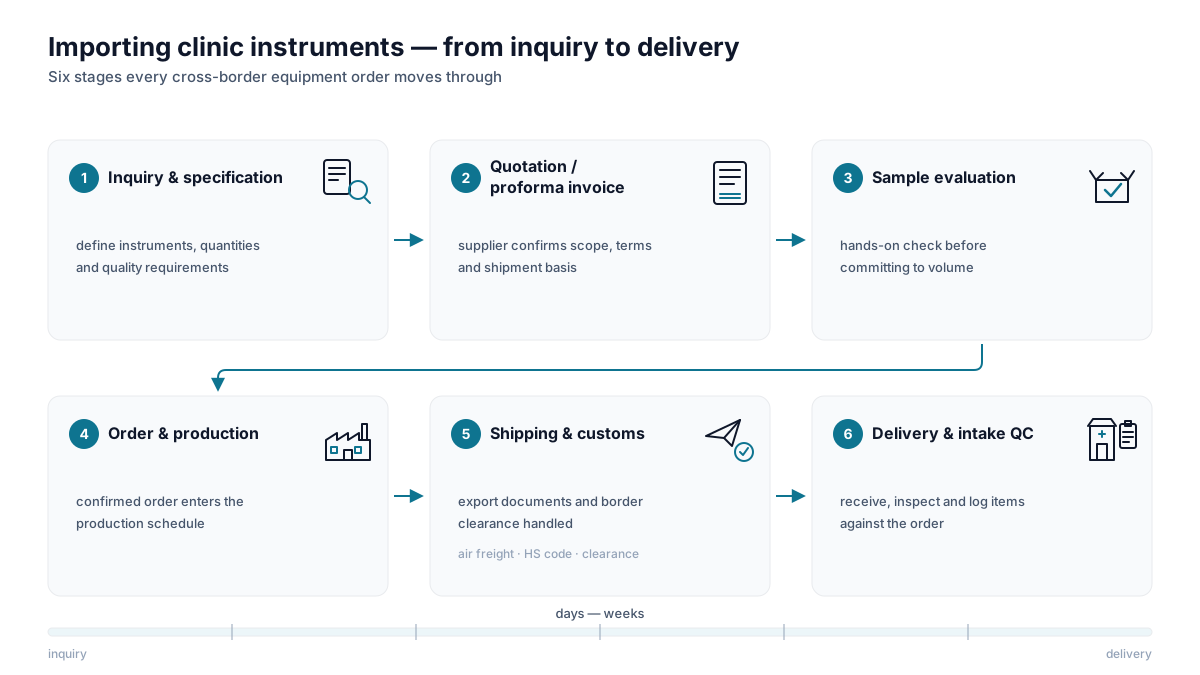
As an EU member, Greece presents no border for goods already in free circulation — a shipment from a German warehouse arrives like domestic freight, if a little more slowly than the distances suggest. Third-country goods enter under the common EU tariff, and Piraeus gives Greece a significant container port through which Asian- and Turkish-origin consignments can clear directly. Proximity to Turkey matters here more than anywhere else in the EU: substantial instrument volume crosses the Aegean, and the export documentation covered in our importing from Turkey guide is everyday reality for Greek importers. Duty outcomes turn on classification as usual — the lines in our HS code reference are the place to start when costing a third-country shipment.
Domestic logistics deserve one honest sentence: mainland delivery is straightforward, but island clinics — a small slice of demand — add ferry legs and lead time, which local distributors price in as a matter of routine. In practice most foreign suppliers serve Greece through a mix of consolidated freight for stocking orders and courier parcels for urgent restocks, and the courier leg matters more here than in bigger markets precisely because distributors hold stock so lean.
Payment customs, currency and language
Greece uses the euro, which keeps the financial mechanics simple; the habits around payment carry more history. The last decade and a half taught Greek businesses hard lessons about liquidity, and the residue is a cash-flow-conscious commercial culture: distributors manage receivables tightly, extend credit to clinics carefully, and appreciate suppliers who structure terms realistically rather than aggressively. New foreign suppliers should expect prepayment or partial prepayment on early orders, with a negotiated migration toward 30- to 60-day terms as the relationship matures — our overview of supplier payment terms maps the standard staging. Invoices flow through Greece's electronic bookkeeping regime, so precise, correctly issued paperwork is not optional courtesy but administrative necessity — get your invoicing details right the first time and the finance relationship stays as warm as the commercial one. Bank transfers are the standard settlement instrument for import trade; within the domestic leg your distributor will be extending credit to clinics on terms it manages closely, which is worth remembering when a partner asks for measured stock growth rather than a headline opening order. That caution is usually good receivables management, not weak commitment.
Language is a smaller barrier than in much of Southern Europe. English is strong across Greek B2B and near-universal among younger clinicians; commercial negotiation in English is normal. Greek-language IFUs and training materials still earn goodwill — and matter for clinic staff — but you will not need Greek to run the relationship. What you will need is presence: the distributor who champions your line was won in person, and is kept the same way.
Frequently asked questions
Do I need a Greek distributor, or can I sell direct to clinics?
Direct EU cross-border sales are legally straightforward, and the largest Athens clinics can buy that way. But most of the market purchases through small relationship-driven distributors who bundle delivery, credit and service — without one, you reach a handful of accounts and miss the rest.
Who regulates medical devices in Greece?
EOF, the National Organization for Medicines, is the national competent authority for medicines and medical devices, operating within the EU framework. Instruments circulate under the CE mark of the EU MDR.
How does Greece's proximity to Turkey affect the market?
Two ways: many Greek patients still travel to Turkey for procedures, which Greek clinics counter with an EU-standard, Mediterranean-priced offer; and significant instrument volume is Turkish-made, so Greek importers handle Turkey-origin customs paperwork routinely.
What payment terms are realistic with Greek partners?
Prepayment or partial prepayment early on, moving to negotiated 30- to 60-day terms as trust builds. Greek commercial culture is cash-flow-conscious, so realistic staging is respected far more than aggressive credit demands in either direction.
Is exclusivity expected by Greek distributors?
Frequently requested, because small houses invest personal capital in a line. Grant it, if at all, with written performance targets, a defined territory and clear exit provisions — the warmth of the relationship is precisely why the contract should be exact.
When is the best time to approach the Greek market?
Autumn through late spring. August is a near-total commercial pause, and mid-summer approaches simply wait until September. Plan first visits, launches and training for the active season.
Related articles
Sourcing & Import: Buying Medical Instruments Across Borders
The commercial mechanics of importing hair restoration instruments — customs, MOQs, samples, payment terms and how to evaluate a supplier before committing.
How to Become a Hair Transplant Instrument Distributor
A practical guide to building a distribution business in hair restoration instruments: how the revenue model actually works, how to build a starting portfolio, which manufacturer relationship to choose and how the first customers are won.
Importing Hair Restoration Instruments from Turkey: A Practical Guide
Why Turkey became a manufacturing base for hair-restoration instruments, and the practical import mechanics — Incoterms, customs documents, duty and VAT logic — for buyers in the EU, UK and Gulf.
Payment Terms with Medical Instrument Suppliers: Proforma, T/T and LC
How payment actually works when buying instruments internationally: the proforma invoice flow, common T/T split structures, when a letter of credit earns its cost, and the red flags that should stop a transfer.