
Opening a Hair Transplant Clinic in Spain
In Spain the licence comes from the region, not Madrid: each autonomous community's health department authorizes clinics on its own requirements and timelines, which makes choosing where to open a regulatory decision as much as a commercial one.
The first fact to absorb about opening a hair transplant clinic in Spain is that "Spain" is not the licensing jurisdiction — your autonomous community is. Health competences are devolved to the seventeen regions, and it is the consejería de sanidad of Madrid, Catalonia, Andalusia or wherever you plant the clinic that authorizes the centre, on requirements, forms and timelines that genuinely differ from one community to the next. Founders who plan a generic "Spanish" licensing project discover that the answer to almost every practical question — what documents, which inspections, how long — begins with "depends on the region," and the sensible response is to make the regional choice consciously and early.
Key takeaways
- Clinic authorization in Spain is granted by the autonomous community's health department (consejería de sanidad), and requirements vary materially between the seventeen regions.
- Many communities run a two-stage authorization — installation first, then operation — with the premises' technical project reviewed before works begin.
- Every practising doctor must be a member of the provincial colegio de médicos where they work.
- Authorized centres are classified by standardised care-unit codes, so what your clinic is licensed to do is defined precisely on paper.
- Sequence region choice, technical project and installation authorization before fit-out; equipment purchasing slots into the gap before the operating authorization inspection.
Regional authorization: the system behind the variance
Under Spain's devolved health system, private healthcare centres require administrative authorization from their region's health department, with the national Ministry of Health setting common frameworks and maintaining the register of authorized centres. In many communities the process runs in two stages: an installation authorization, granted on the strength of a technical project describing the premises, rooms and activity before construction or refurbishment, and an operating authorization, granted after inspection of the finished centre and its staffing. Authorized centres are classified against a standardised catalogue of centre types and care-unit codes — one clause worth knowing, because that classification defines exactly which activities your clinic may perform, and adding activities later means amending the authorization.
The variance is not cosmetic. Regions differ on documentation depth, on how strictly minor-surgery rooms are distinguished from full surgical theatres, on inspection wait times, and on how renewals and modifications are handled. Madrid and Catalonia process high volumes of aesthetic-clinic applications and have well-worn paths; smaller communities may see fewer comparable centres and examine yours more individually. A founder deciding between two cities should weigh the regulatory experience of each region alongside rent and patient demand — local gestores and consultants who work with the specific consejería are worth their fee for exactly this reason.
One further regional habit is worth knowing before you plan the calendar: authorizations in Spain are living documents. Several communities require periodic renewal, and material changes — new procedure rooms, expanded activity, even significant equipment shifts that alter what a room is used for — commonly trigger a modification filing with the same consejería. Founders should treat the authorization as an ongoing relationship with the regional administration rather than a one-time gate, and diarise its maintenance the way they diarise tax deadlines.
Doctors, the colegio, and who does what
Practitioner licensing is the nationally uniform half of the Spanish picture. Every physician must hold a recognised medical degree and be registered (colegiado) with the provincial colegio de médicos where they practise; the colegio system handles professional standing, conduct and certification of good standing. Hair transplantation is performed under medical responsibility, and the clinic's authorization file will name its medical staff and typically a technical or medical director responsible to the health authority for the centre's clinical activity. For foreign-trained surgeons, degree recognition (homologación) is its own administrative project with its own timeline — start it before the clinic project, not alongside it.
Premises and sterilization expectations
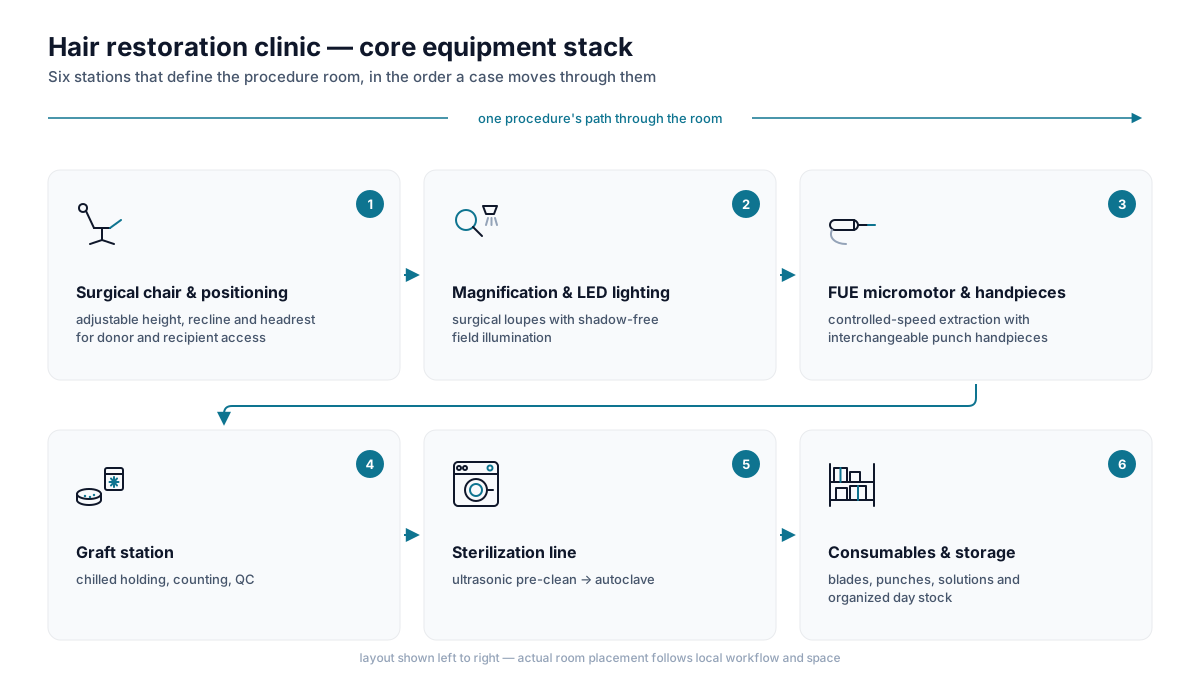
Because the technical project is reviewed before authorization, Spanish premises compliance is front-loaded: the plans you submit — room functions, surfaces, ventilation, circulation, waste routes — are what the inspector later verifies. Expect requirements distinguishing the procedure room's standard from ordinary consultation rooms, defined arrangements for the cleaning and sterilization of instruments with equipment appropriate to the activity, contracted removal of biosanitary waste, and coherent separation between clinical and public zones. Regions differ in prescriptiveness, but the shared logic is that the finished centre must match the authorized project. Design the reprocessing corner or room into the technical project from the first draft; adding an autoclave line to an already-authorized floor plan means paperwork as well as plumbing. The requirements in our clinic equipment packages overview pair naturally with the technical-project stage, when room-by-room equipment lists are being fixed.
Buying devices for a Spanish clinic
Device purchasing in Spain follows the EU single-market pattern: instruments and equipment carry CE marking under the MDR, national market oversight sits with the Spanish medicines and devices agency, and imports from outside the EU clear at the common external border before circulating freely. The practical founder's discipline is documentation: keep supplier records, instructions for use and maintenance logs organised per device, because the operating-authorization inspection and later renewals are moments when equipment paperwork is actually read. The clinic equipment hub breaks down the purchasing decisions category by category.
The realistic Spanish sequence
- Choose the autonomous community deliberately. Investigate the specific consejería's process, typical timelines and documentation style before committing to a city — this choice shapes everything downstream.
- Form the company and engage local expertise. A Spanish entity, tax registrations, and ideally an advisor who has filed clinic authorizations with your region's health department.
- Secure premises and commission the technical project. Architect and engineer produce the project the consejería will review; the installation authorization application goes in before major works.
- Build to the authorized project. Fit-out follows the approved plans; deviations discovered at inspection cost weeks.
- Register staff and prepare the operating file. Colegio certificates for the doctors, contracts, waste-management agreements, sterilization procedures, equipment inventory.
- Order equipment against the inspection date. The window between installation approval and the operating inspection is the natural purchasing phase — the clinic equipment budget guide shows how to phase capital and consumable spending, and the clinic startup checklist tracks the parallel threads so the inspection finds a complete clinic.
- Pass inspection, receive the operating authorization, open. Keep the authorization details displayed and diarise renewal obligations, which several regions impose periodically.
Staffing and the team question in Spain
Spain's clinical labour market is comparatively favourable to a new clinic. The country trains large numbers of nurses and auxiliary clinical staff, aesthetic medicine is an established career path, and the major cities have a genuine pool of personnel with hair-restoration experience thanks to the sector's growth over the past decade. The regulatory frame still needs respecting: procedures run under the responsibility of colegiado physicians, nursing staff work within their professional scope, and the clinic's staffing plan forms part of what the health authority reviews at the operating stage. Salary costs sit meaningfully below northern Europe, which is one reason Spanish clinics can offer competitive pricing without stripping quality — but it also means experienced staff are actively poached, so retention planning belongs in the business plan, not the afterthoughts.
Language planning is a distinctly Spanish consideration. In Catalonia, the Basque Country, Galicia and other communities with co-official languages, patient-facing operations benefit from bilingual staff, and some regional administrative processes run partly in the co-official language. Clinics targeting international patients — a realistic ambition in Madrid, Barcelona and the coastal cities — should additionally plan English-language patient coordination from the start, since inflows from Latin America arrive Spanish-speaking but northern European patients do not.
Market context worth pricing in
Spain combines a strong domestic aesthetic-medicine culture with meaningful patient inflows — Madrid and Barcelona draw patients from Latin America and Europe, and Spanish prices undercut northern Europe while sitting above the Mediterranean's lowest-cost destinations. That mid-position rewards clinics that can evidence quality: an authorized centre code, named colegiado surgeons and orderly premises are tangible differentiators against the informal end of the market, and marketing that leans on them converts sceptical patients researching from abroad. The domestic market itself is deep — Spanish patients treat aesthetic medicine as mainstream healthcare consumption — and the coastal expatriate population adds a stable, less price-sensitive segment that values receiving surgery under a regulated Spanish authorization while living locally. Price the regional choice into the plan one final time here: the same clinic concept faces different rent, salary and competitive intensity in Madrid than in Valencia, Seville or Bilbao, and the authorization variance discussed above compounds rather than offsets those differences.
Frequently asked questions
Who authorizes a private hair transplant clinic in Spain?
The health department (consejería de sanidad) of the autonomous community where the clinic is located. Requirements and timelines vary by region, with national coordination and the register of authorized centres maintained at ministry level.
Is the authorization process the same in every Spanish region?
No — this is the defining feature of the Spanish system. Documentation depth, room requirements, inspection timelines and renewal rules differ between the seventeen communities, so founders should study their specific region before choosing premises.
What is the two-stage authorization many regions use?
An installation authorization approves the technical project for the premises before works, and an operating authorization follows inspection of the finished, staffed centre. Building without the first or opening without the second exposes the clinic to sanctions.
Do doctors need to join the colegio de médicos?
Yes — membership of the provincial medical college where the doctor practises is mandatory, and colegio certificates form part of the clinic's authorization file. Foreign-trained surgeons must complete degree recognition first, which has its own timeline.
When should equipment be purchased in the Spanish sequence?
Principally between installation approval and the operating inspection: the technical project fixes what rooms need, and the inspection expects to find the equipment installed and documented. Long-lead items like sterilizers should be ordered early in that window.
Related articles
Hair Transplant Clinic Equipment: The Complete Stack
The full equipment stack of a hair transplant clinic, from operating table to autoclave — written for founders specifying their first operating room.
The Equipment Budget for a New Hair Transplant Clinic: Categories and Phasing
A budget structure for equipping a new hair transplant clinic: the three ledgers — capital, consumables, hidden costs — how to phase purchases so cash follows patients, where cheap equipment gets expensive, and an honest word on financing.
Hair Transplant Clinic Startup Checklist: Every Equipment Category, in Order
A category-by-category equipment walkthrough for opening a hair transplant clinic: what belongs in the OR, the sterilization line, instrument sets and consumables — and the order to buy it in.
Clinic Equipment Packages: What a Starter Setup Includes
A room-by-room look at hair transplant clinic starter packages: what belongs in the OR, sterilization line and graft-prep station on day one, what can wait until month two, and an honest view of when a package beats piecemeal buying — and when it doesn’t.