
Clinic Equipment Packages: What a Starter Setup Includes
A room-by-room look at hair transplant clinic starter packages: what belongs in the OR, sterilization line and graft-prep station on day one, what can wait until month two, and an honest view of when a package beats piecemeal buying — and when it doesn’t.
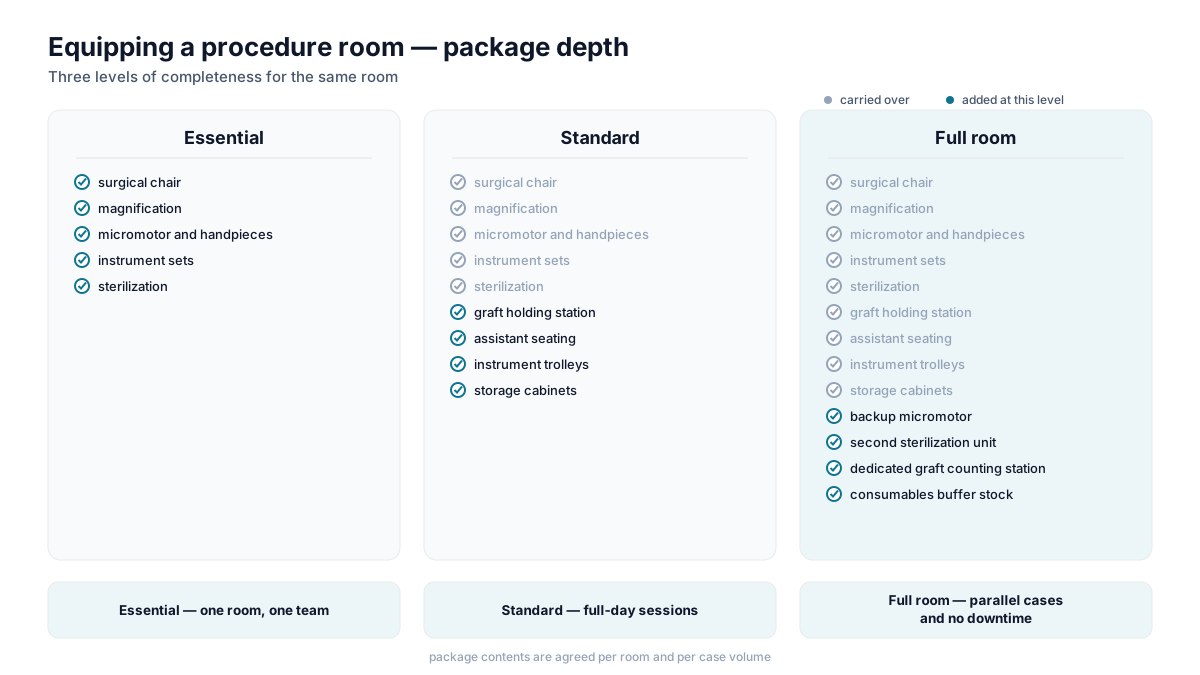
A clinic equipment starter package is a coordinated purchase of everything a hair transplant practice needs to run its first cases: the operating-room furniture and lighting, magnification, the sterilization line, instrument sets, graft-prep equipment and an opening consumable stock — specified together so the pieces actually work with each other. A good package is not a discount bundle; it is a compatibility guarantee with a single point of support behind it. This guide lays out what belongs in a package room by room, which purchases genuinely belong before the first patient and which can wait a month or two, and gives an honest answer to the question every founder eventually asks: is a package really better than buying each item where it is cheapest?
Key takeaways
- A complete starter setup spans four zones — OR, sterilization, graft prep and consultation — and the OR is the least frequently under-specified of the four.
- Phase the spend: a defined open-day minimum gets you operating; magnifier upgrades, PRP capability and capacity doublers belong in month two and beyond.
- Packages earn their premium through compatibility and one support line — instruments that fit the trays, trays that fit the sterilizer, one number to call.
- Piecemeal buying is genuinely fine for standalone commodity items; it gets expensive where interfaces meet — sterilization, instrument systems, graft-prep chains.
- Package quotations are consultations, not price lists: expect a room-by-room specification exchange before any serious number appears.
What a starter package actually is
Equipping a transplant clinic involves somewhere between eighty and a couple of hundred line items, spread across furniture, devices, instruments and consumables, ordered from suppliers who do not normally talk to each other. The founder doing this alone becomes the systems integrator by default: the person who discovers that the instrument trays do not fit the sterilizer chamber, that the OR chairs block the lamp's reach at full recline, or that the micromotor's foot pedal wants a socket where no socket is.
A packaged purchase moves that integration burden onto the supplier. The package is specified as a working whole — instruments sized to trays, trays to sterilizer, sterilizer throughput to planned case load, lighting and magnification to the actual room dimensions you provide — and delivered against one order, one delivery schedule and one support contact. That is the product. The hardware inside it is largely the same hardware you could buy separately, which is why the honest case for packages rests on integration and accountability rather than on the bundle being mysteriously cheaper. The broader equipment landscape, item by item, is mapped in the clinic equipment hub; the operational side of opening — licensing, staffing, workflow — is covered in the clinic startup checklist.
The package, room by room
| Zone | Core package contents | Easily forgotten |
|---|---|---|
| Operating room | Surgical chair or table with full recline, surgeon and assistant stools, LED surgical lighting, micromotor system, instrument trolleys, mayo stands, waste and sharps stations | Cable and pedal routing; a second trolley so extraction and placement don’t share one surface |
| Graft-prep station | Prep table with task lighting, magnification for technicians, chilled storage for graft dishes, counting and sorting surfaces, timer | Ergonomics for multi-hour sitting — the station staff occupy longest is the one specified fastest |
| Sterilization line | Autoclave sized to case load, ultrasonic cleaner, sealing device for pouches, instrument trays and cassettes, drying and storage racks | Water quality treatment for the autoclave; tray dimensions matched to chamber size |
| Instrument sets | Punch sets across working diameters, blade handles and blades, forceps in placement and extraction patterns, scissors, bowls and dishes — typically several complete sets to survive the sterilization cycle | Set count: one set per concurrent case plus one in reprocessing is the working minimum |
| Opening consumable stock | First months of punches, blades, needles, syringes, drapes, gloves, storage solution and the small perimeter items | Reorder points from day one — opening stock without a replenishment plan is a countdown |
| Consultation room | Examination lighting, dermoscope or scalp camera, photography setup with consistent background and lighting | Photo standardisation — inconsistent before/after lighting quietly damages the clinic’s own evidence |
Two observations from how these packages behave in real openings. The sterilization line is where undersizing hurts most: an autoclave chosen for the opening case load becomes the bottleneck the month a second daily case is added, because every instrument set must cycle through it between cases. Sizing that line for the clinic you intend to be in a year, not the clinic opening next month, is the single best over-specification in the package. And instrument set count is a throughput decision disguised as a shopping quantity — sets in the sterilizer are sets not in the OR, so the number of complete sets, not the number of chairs, caps your daily schedule.
Phasing: the open-day minimum and what waits
Not everything in a full catalogue belongs in the first order, and a supplier who pushes everything at once is optimising their invoice rather than your cash flow. A defensible phasing:
Before the first patient — everything in the table's core column for OR, sterilization, graft prep and instruments, plus opening consumables. These are the items without which a case cannot run safely or legally, and the items whose integration risk is highest. They belong in the package.
Month two and onward — the capability wideners: an upgraded magnification step for the surgeon once case rhythm is established, PRP capability if the treatment menu includes it (the equipment side of that decision is covered in the PRP systems buyer's guide), additional instrument sets as bookings thicken, a second graft-prep station seat, expanded photography. These purchases benefit from a month of operational learning — you buy better after twenty cases than after zero — and deferring them converts guesswork into evidence.
When demand proves it — the capacity doublers: second OR fit-out, higher-throughput sterilization, additional micromotor. These are investment decisions, not setup decisions, and no starter package should contain them.
Why packages beat piecemeal — and when they don't
The case for the package is concrete, so here it is concretely. Compatibility failures in a piecemeal setup are not hypothetical: trays that do not fit sterilizer chambers, chair heights that fight the lighting geometry, instruments scattered across five suppliers with five warranty processes. Each is small; together they consume the founder's weeks and delay opening day. A package assigns those interfaces to one supplier, and — equally valuable — assigns every future problem to one phone number. When the micromotor falters in week three, "call the supplier" is a plan; "work out which of five suppliers is responsible" is not. Add the quieter benefits — one delivery schedule aligned to your fit-out, training on the actual delivered equipment, a spec list a future second clinic can reorder from — and the package premium buys something real.
Now the honest other half. Piecemeal is genuinely fine, sometimes better, in three situations. Standalone items with no interfaces — stools, trolleys, waste stations, much of the consultation room — carry no integration risk, and buying them locally saves money and freight with no downside. An experienced founder opening a second or third clinic already owns a proven spec list and needs a supplier, not an integrator; they can shop line by line with confidence a first-time founder cannot. And a clinic inheriting usable equipment — from a predecessor practice or an aesthetic clinic adding transplant services — should build around what it has rather than paying for duplication a package would impose. The dividing line is interfaces: where equipment must fit other equipment or feed a workflow chain, integration has value; where an item stands alone, it does not.
What to reject is the false middle: assembling the interfaced core piecemeal to save single-digit percentages. The sterilization chain, instrument systems and OR geometry are exactly where the integration premium is cheapest insurance, because their failure modes cost opening days rather than money.
Where the money actually goes
Founders consistently misestimate the shape of the spend, so it is worth stating qualitatively even without price lists. The heavy capital sits in the rooms, not the hands: the surgical chair, lighting and sterilization line together usually dominate the equipment budget, with the autoclave alone often the single largest device line. Instruments — the items founders research hardest — are a moderate slice: punch sets, blade systems and forceps in multiple complete sets add up, but they are dwarfed by the furniture and the sterilization chain around them. Magnification spans an unusually wide range, from modest technician loupes to surgeon-grade optics that cost as much as furniture, which is exactly why it is the classic month-two upgrade rather than an opening-day maximum. And the opening consumable stock is small against the capital items but recurs forever — over a few years of operation, the consumable stream quietly outgrows the equipment budget that got all the attention.
Two budgeting consequences follow. First, economising on the capital core to afford premium instruments is backwards: a mid-range punch in a well-run OR outperforms a premium punch queued behind an undersized autoclave. Second, evaluate the package supplier as a consumable supplier too, because that is the relationship you are actually entering; the equipment order is the beginning of the account, not the account.
Ask every package supplier the same five questions before signing. Which items in this proposal are your own lines, and which are third-party equipment you resell — and who handles service for each? What are the lead times per zone, and which single item sets the critical path? What exactly does installation and training cover, in days and in scope? What happens when a device fails in the first year — response time, loaner availability, parts? And which items on this list would you defer if it were your money? The last question is the honesty test; a good supplier has a ready answer and it is never "none".
How package ordering actually works
Equipment packages do not have MOQs in the consumable sense — the minimum is the package itself, and the process is consultative rather than transactional. Expect a specification exchange before any serious price: room dimensions and layout, technique mix, planned cases per day, staff count, and what you already own. A supplier who quotes a package price without asking those questions is selling a box list, not a setup, and the missing questions will surface later as missing equipment.
The commercial mechanics that matter: quotations are itemised or should be — insist on seeing line items so deferrals and swaps are negotiable rather than bundled into opacity. Delivery is staged and lead times are mixed, with furniture and devices often on longer schedules than instruments; the delivery plan should key to your fit-out timeline, not to a single ship date. Installation, on-site training and a defined handover belong in the quotation explicitly, as does the support arrangement afterwards — response expectations, spare-part availability, and who answers the phone. And the consumable opening stock inside the package should come with reorder logic attached, because replenishment is where the supplier relationship actually lives after opening day; the wholesale mechanics of that ongoing basket are covered in the bulk consumables guide.
Payment typically follows equipment convention — a deposit at order, balance against delivery milestones — and the quotation stage is the right moment to align the payment schedule with the delivery stages rather than accepting a single up-front figure.
Talk to an equipment specialist
If you are planning a clinic opening or expansion, the fastest way to a real answer is a specification conversation. Describe your rooms, technique mix and planned case load below, and a specialist will come back with a room-by-room proposal and phasing plan — including an honest list of what you should not buy yet.
Frequently asked questions
What does a hair transplant clinic starter package include?
The core of a one-OR setup: surgical chair and lighting, micromotor, trolleys and stands, a sterilization line (autoclave, ultrasonic cleaner, sealer, trays), several complete instrument sets, a graft-prep station with magnification and chilled storage, an opening consumable stock, and consultation-room diagnostics. Contents flex with technique mix and planned concurrency.
How many instrument sets does a new clinic need?
One complete set per concurrent case plus at least one in reprocessing is the working minimum — sets cycling through the sterilizer are unavailable to the OR, so set count, not room count, caps the daily schedule. Growing clinics add sets before they add chairs.
What equipment can wait until after opening?
Capability wideners benefit from operational learning: magnifier upgrades, PRP capability, extra instrument sets, a second prep-station seat and expanded photography buy better after twenty cases than after zero. Capacity doublers — second OR, higher-throughput sterilization — are investment decisions that follow demand, not setup items.
Is a package cheaper than buying equipment separately?
Usually not dramatically, and honest suppliers don’t claim otherwise. The premium buys integration — instruments fitting trays, trays fitting the sterilizer, geometry that works in your actual rooms — plus one delivery schedule, training and a single support line. On interfaced equipment that insurance is cheap; on standalone items it buys little.
When is piecemeal buying the better choice?
For standalone, interface-free items like stools, trolleys and consultation furniture; for experienced founders reordering a proven spec for a second clinic; and for practices inheriting usable equipment. Keep the interfaced core — sterilization chain, instrument systems, OR geometry — with one supplier, and shop the rest freely.
How long does equipping a clinic take?
Lead times are mixed: instruments ship quickly while furniture and devices often run on longer production schedules, so packages deliver in stages keyed to your fit-out. Start the specification conversation early in the fit-out, not after it — the room dimensions drive the equipment choices, and the longest lead item sets the opening date.
Related articles
Hair Transplant Clinic Equipment: The Complete Stack
The full equipment stack of a hair transplant clinic, from operating table to autoclave — written for founders specifying their first operating room.
Hair Transplant Clinic Startup Checklist: Every Equipment Category, in Order
A category-by-category equipment walkthrough for opening a hair transplant clinic: what belongs in the OR, the sterilization line, instrument sets and consumables — and the order to buy it in.
Hair Transplant Consumables in Bulk: The Full Basket
A hair transplant session consumes over a dozen distinct disposables beyond punches and blades. This guide maps the full basket with per-session quantity logic, shows how to convert it into bulk orders, and weighs procedure kits against separate SKUs.
PRP Systems Buyer's Guide for Hair Clinics
How to buy PRP tubes, kits and centrifuges for a hair clinic: additives, kit completeness, rpm/rcf matching, cost per treatment, storage and honest claims.