
Hair Transplant Clinic Startup Checklist: Every Equipment Category, in Order
A category-by-category equipment walkthrough for opening a hair transplant clinic: what belongs in the OR, the sterilization line, instrument sets and consumables — and the order to buy it in.
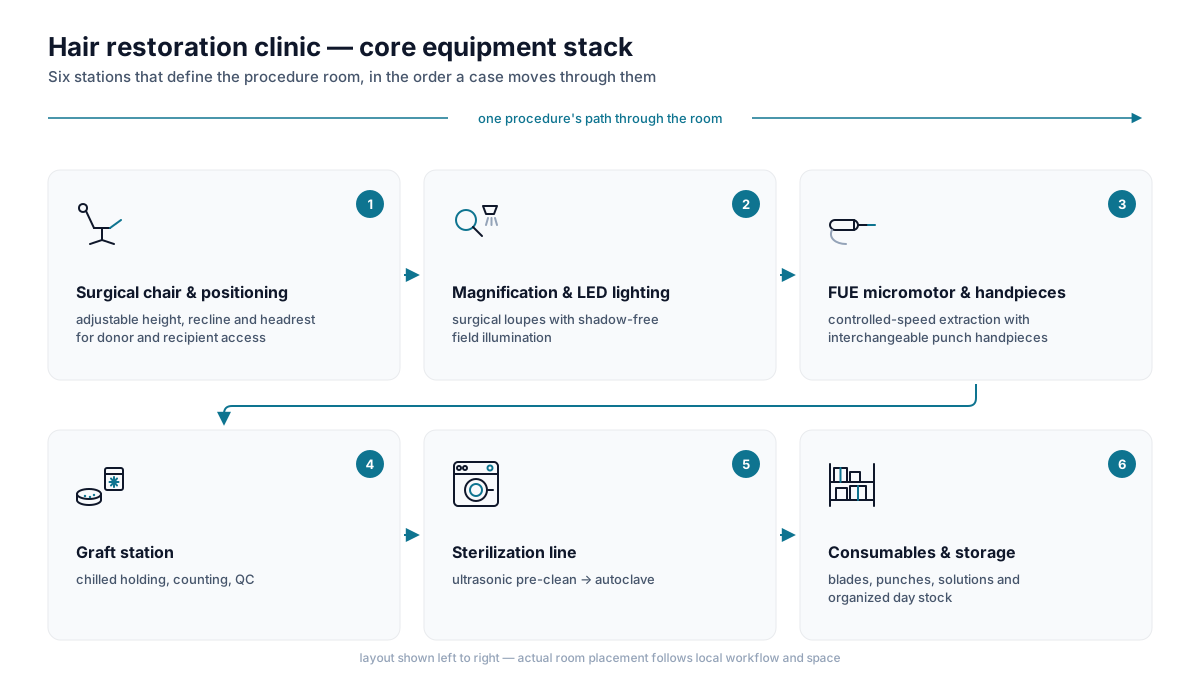
Equipping a hair transplant clinic comes down to six categories bought in a deliberate order: the operating room (chair, lighting, magnification), the sterilization line, surgical instrument sets, per-session consumables, cold-chain and storage infrastructure, and the documentation systems that tie them together. The most common founding mistake is not under-buying — it is buying in the wrong sequence: committing to instruments before the case mix is defined, or furnishing the OR before the sterilization workflow that every surgical day depends on has a room, a budget and an owner.
Key takeaways
- Define case mix and daily capacity first — every specification downstream, from punch diameters to autoclave chamber size, derives from those two decisions.
- The sterilization line is infrastructure, not an accessory: plan its room, workflow direction and capacity before ordering a single instrument set.
- Buy durable equipment once and well (chair, lighting, microscopes, autoclave); buy instruments and consumables through samples first, in restrained initial quantities.
- Consumables planning is per-session arithmetic multiplied by realistic volume — with a reorder system in place before the first patient, not after the first stock-out.
- Sequence spending so revenue-critical categories arrive early and nice-to-haves wait for cash flow.
Before any purchase: two decisions that specify everything
Every line on this checklist depends on two numbers the founding team must fix first. Case mix: which procedures will you actually offer — FUE only, or FUE and DHI placement, with or without adjunct treatments such as PRP? Each addition pulls a distinct instrument stack onto the tray; the differences are itemized in our FUE vs DHI instrument comparison. Capacity: how many sessions per day, on how many chairs, at what graft counts? Capacity determines the OR count, the sterilization throughput, technician headcount and every consumable quantity.
Founders who skip this step end up specifying by catalog browsing — buying what looks professional rather than what their surgical program requires. Write the two decisions down; they are the reference against which every quote should be checked.
The six categories at a glance
| Category | Core items | Budget logic |
|---|---|---|
| Operating room | Surgical chair/table, procedure lighting, surgeon and technician seating, loupes, stereo microscopes for graft work | Durable, decade-scale purchases; buy quality once — this is the wrong category for economizing |
| Sterilization line | Autoclave sized to daily throughput, ultrasonic cleaner, sealing device, water treatment, dirty-to-clean workflow furniture | Infrastructure; capacity must exceed peak surgical day with margin, and a failure here stops surgery entirely |
| Instrument sets | Punches, handpieces/micromotor, forceps sets, blades or implanter pens per case mix, holding-solution vessels | Specification-driven; sample before volume, then standardize and document the chosen SKUs |
| Consumables | Per-session surgical disposables, needles/blades, holding solutions, gloves, drapes, dressings, aftercare packs | Per-session arithmetic × realistic volume; reorder points set before opening |
| Storage & cold chain | Instrument cabinets, sterile-goods storage, refrigeration for temperature-sensitive items, inventory shelving | Modest spend, high failure cost; plan locations room by room during fit-out |
| Documentation systems | Instrument tracking, sterilization cycle logs, inventory records, supplier files, incident records | Mostly process and software; cheapest category and the one auditors and insurers ask about first |
The table is the map. The sections below walk each category in buying order.
Category 1: the operating room
The OR contains the clinic’s longest-lived purchases, and the selection logic is simple: these items survive several generations of instruments, so buy them for the decade. The surgical chair or table must position patients for both donor harvesting (prone or lateral) and recipient work (supine or seated) and adjust smoothly between them — a full surgical day exposes every ergonomic shortcut. Lighting means shadow-free procedure illumination over the field plus comfortable ambient light for the technician stations. Magnification splits in two: loupes for the surgical field, and stereo microscopes for the graft-preparation station — one per working technician, not one per room, because graft dissection and quality control happen under them continuously. Add ergonomic technician seating; sessions run for hours, and team endurance is a quality factor no instrument can replace.
Category 2: the sterilization line
Plan this category second and early, because it is a room, a workflow and an equipment set at once. The workflow direction is the non-negotiable part: contaminated instruments must move one way — receiving, cleaning, inspection, packaging, sterilization, sterile storage — without crossing back over clean zones.
The equipment follows the workflow: an ultrasonic cleaner for instruments with lumens and fine edges, an autoclave whose chamber size and cycle time are matched to the peak surgical day with margin (an undersized autoclave becomes the bottleneck that caps clinic capacity), a heat sealer for pouching, appropriate water treatment, and drying and inspection surfaces. Two rules of thumb serve founders well. First, buy sterilization capacity for the clinic you plan to be in year two, not the clinic opening next month — this is miserable equipment to replace under load. Second, give the line an owner: a named team member responsible for cycle documentation and instrument tracking from day one. Sterile-supply formats and packaging standards for purchased instruments have their own selection logic, worth reading before the first instrument order is placed.
Category 3: instrument sets
Only now — with case mix defined and the sterilization line planned — does instrument purchasing begin, because both decisions feed the specification. The FUE core: punches in two or three diameters around your expected case profile, a micromotor with handpieces (plus manual handles if the surgeon uses them), extraction forceps, placement forceps, and incision blades in the widths your graft calibers require. A DHI program adds the implanter pen fleet with needles across gauges. Adjunct treatments add their own kit — PRP, for instance, brings tubes and a centrifuge with its own selection criteria, covered in the PRP systems buyer’s guide.
Two disciplines separate well-equipped clinics from expensively equipped ones. Sample first: every instrument SKU you intend to standardize on should pass a hands-on evaluation by the people who will use it — the structured protocol in our punch selection guide generalizes to forceps, blades and pens. Buy restrained initial quantities: enough sets to run your planned schedule with a reprocessing buffer (typically enough instruments that surgery never waits on the autoclave), then reorder from experience. Founding inventories bought in bulk before the first patient are how storerooms fill with instruments nobody chose deliberately.
Category 4: consumables
Consumables are arithmetic. Build a per-session sheet for each procedure type: punches or needles consumed, blades, gloves per team member per stage, drapes, gauze and dressings, holding solution volumes, syringes and anesthesia supplies, aftercare pack contents. Multiply by the realistic (not aspirational) monthly session forecast, and you have the opening order and the monthly run rate.
The system matters more than the first order: set reorder points above lead-time demand for every critical item before opening day, and identify which items are single-source — those deserve deeper safety stock. Consumables are also where supplier consolidation pays: sourcing instruments and disposables through one manufacturer-direct channel simplifies incoming inspection, documentation and reordering while volumes are still small.
Category 5: storage, cold chain and the unglamorous rooms
Storage is cheap to plan during fit-out and expensive to improvise afterward. Sterile goods need dedicated closed storage on the clean side of the sterilization line, separated from unprocessed stock. General consumables need shelving with visual reorder cues. Anything temperature-sensitive — certain solutions, some aftercare and adjunct products — needs a monitored refrigerator, with a simple temperature log from day one. And instruments in circulation need a home per set, because a clinic that cannot say where instrument set number three is right now does not control its reprocessing cycle either.
One planning trick pays for itself: walk the physical path of an instrument set and of a consumable box through the floor plan before signing off on the fit-out. The instrument set travels from OR to dirty receiving to clean storage and back; the consumable box travels from delivery entrance to shelving to the surgical floor. Anywhere those paths cross a patient corridor or double back through a clean zone, the plan needs another pass — corrections cost a pencil now and a renovation later.
Category 6: documentation from day one
The cheapest category on the list, and the one that determines how audits, insurance reviews and incident investigations go. Minimum viable documentation for opening day: sterilization cycle logs tied to instrument sets, an instrument inventory with acquisition dates and retirement criteria, supplier files holding specifications and delivery documents for everything purchased, consumable lot records for items where traceability matters, and a written reorder procedure. Founders sourcing across borders should build the supplier file to the standards in the sourcing and import hub from the start — reconstructing procurement paperwork retroactively is somewhere between painful and impossible.
The mistakes that repeat across founding clinics
Four patterns account for most founding-equipment regret, and all four are avoidable at the planning stage. Catalog-first buying: specifying from what suppliers offer rather than from a written case-mix decision, which produces impressive storerooms and mismatched trays. The forgotten sterilization room: fitting out the OR beautifully while the reprocessing workflow inherits whatever space is left, then discovering that instrument turnaround caps the schedule. Bulk-buying instruments before validation: committing to volume pricing on SKUs nobody on the team has used, saving single-digit percentages and repurchasing entire categories within the year. No reorder system at opening: running the first months on the founding stock and managing consumables by crisis once it thins. A founding team that checks its plan against these four failure modes catches most of what goes wrong in practice.
The budget logic: sequencing beats size
Founding budgets fail more often through sequence than through size. The pattern that works: commit early to the categories that gate revenue and are slow to change — OR infrastructure and the sterilization line — because delivery and installation lead times put them on the critical path. Specify instruments next, but hold volume spending until samples are validated; the money saved by skipping evaluation is repaid with interest in re-purchases. Consumables are ordered late, close to opening, at modest depth with a reorder system doing the real work. And the temptations — premium upgrades, adjunct-treatment equipment for services not yet on the menu, decorative spending in the clinical zone — wait for cash flow. A clinic that opens with a validated workflow on solid mid-range instruments outperforms one that opened late and over-leveraged on flagship everything. The full category detail across the equipment stack lives in the clinic equipment hub.
Frequently asked questions
What equipment does a hair transplant clinic need to open?
Six categories: an equipped OR (chair, lighting, magnification), a sterilization line (autoclave, ultrasonic cleaner, sealing and storage), surgical instrument sets matched to case mix, per-session consumables, storage and cold-chain provisions, and documentation systems for tracking and traceability.
What should a founding clinic buy first?
Nothing — first fix case mix and daily capacity, since every specification derives from them. Then commit to the long-lead, revenue-gating categories: OR infrastructure and the sterilization line. Instruments follow after sample evaluation; consumables come last, close to opening.
How big should the autoclave be?
Sized so that your peak planned surgical day cycles through with margin to spare, and ideally sized for your year-two capacity rather than opening month. An undersized autoclave silently caps clinic throughput and is disruptive to replace under load.
How many instrument sets does a new clinic need?
Enough that surgery never waits on reprocessing: for each concurrent chair, at least one set in use plus one in the cleaning-sterilization cycle, with a margin for the unexpected. Start restrained and expand from real scheduling experience rather than bulk-buying upfront.
Should a new clinic buy premium instruments from day one?
Buy decade-scale items (chair, lighting, microscopes, autoclave) at quality once. For instruments, validated mid-range SKUs chosen through sample evaluation beat flagship purchases made from catalogs — upgrade specific items later, from experience and cash flow.
How do clinics plan consumable quantities?
Per-session arithmetic: list every disposable consumed per procedure type, multiply by a realistic monthly session forecast, and set reorder points above supplier lead-time demand before opening. Single-source items get deeper safety stock.
Related articles
Hair Transplant Clinic Equipment: The Complete Stack
The full equipment stack of a hair transplant clinic, from operating table to autoclave — written for founders specifying their first operating room.
Sourcing & Import: Buying Medical Instruments Across Borders
The commercial mechanics of importing hair restoration instruments — customs, MOQs, samples, payment terms and how to evaluate a supplier before committing.
FUE vs DHI: What Each Workflow Requires on the Instrument Tray
An instrument-set comparison of FUE and DHI workflows: tray contents, implanter pen logistics, team structure, per-session consumables and what each stack costs to run.