
Opening a Hair Transplant Clinic in Saudi Arabia
Saudi Arabia runs clinic licensing through two gatekeepers: the Ministry of Health licenses the facility, and the SCFHS classifies and registers every practitioner. Understanding how those two tracks interlock is the key to a realistic setup plan.
Saudi Arabia's clinic licensing system runs on two gatekeepers, and a hair transplant clinic cannot open until both have said yes. The Ministry of Health licenses the facility — the premises, the entity, the scope of services — while the Saudi Commission for Health Specialties (SCFHS) classifies and registers every individual practitioner, deciding not just whether a surgeon may work in the Kingdom but at what professional rank. The two tracks are formally separate but practically interlocked: the facility license assumes classified staff, and staff cannot practice outside a licensed facility. Founders who treat classification as an HR detail rather than a core project workstream are the ones whose finished clinics sit empty for months.
Key takeaways
- The Ministry of Health licenses private clinics as facilities; the SCFHS separately classifies and registers every physician, nurse and technician.
- SCFHS classification determines the rank at which each clinician may practice, based on verified qualifications and experience — start files early.
- Saudi labor policy includes nationalization expectations in private healthcare staffing, which belongs in the workforce plan from the outset.
- Devices reach clinics through SFDA-registered products and authorized local suppliers, so the equipment channel is domestic even when brands are foreign.
- The market backdrop is expansionary: private healthcare investment is a national priority, and demand for hair restoration in Riyadh and Jeddah is strong.
The two gatekeepers and how they interlock
Facility licensing for private health institutions sits with the Ministry of Health, which authorizes the clinic's legal existence as a healthcare provider: its ownership, its premises, its declared scope of services and its medical leadership. Practitioner licensing sits with the SCFHS, which runs the Kingdom's professional classification and registration system — every physician, nurse and allied health professional must have qualifications verified and be classified into a professional rank before practicing. For a hair transplant clinic the scope question matters more than founders expect: hair restoration is a surgical activity, and the declared scope, the specialty of the supervising physician and the classification of the team all have to tell the same story. A dermatologist-led clinic, a plastic-surgery-led clinic and a general-practitioner-staffed clinic are read differently by the system, and the right answer depends on who will actually perform and oversee procedures.
Foreign founders add one layer on top: investment in Saudi healthcare by non-Saudi entities runs through the Kingdom's investment licensing framework before health licensing begins. That is a well-trodden path in the current expansion climate, but it belongs at the front of the timeline, not the middle.
Staffing: classification, ranks and the workforce plan
The SCFHS process is document-driven and unforgiving of gaps. Each clinician's degrees, training certificates and experience letters are verified, and the outcome is a classification — the rank at which that person may practice. For surgeons recruited from abroad, assembling a verifiable file and completing registration takes real calendar time, and the clinic's opening date is hostage to the slowest file in the founding team. Recruit with classification in mind: a candidate whose paperwork is complete and whose qualifications map cleanly onto SCFHS categories is worth more to a startup clinic than a marginally more experienced one whose file will fight the system.
One further planning input is national labor policy: Saudization sets nationalization expectations for private-sector staffing, including healthcare roles, so the workforce plan should balance recruited international specialists with Saudi clinical and administrative staff from the beginning rather than treating it as a later adjustment. In practice this shapes the front office, nursing and coordination roles first, and good local hires in those positions are also simply how a clinic wins trust with Saudi patients.
Premises and sterilization: what inspectors expect
MOH facility standards for outpatient surgical clinics are concrete about the things that matter in hair restoration: a procedure room sized and finished for hours-long minor surgery, appropriate ventilation and lighting, separated clean and dirty utility provision, and hygiene infrastructure that supports a real reprocessing workflow. Inspection culture in the Kingdom has tightened as the private sector has grown, and new clinics should assume the first inspection will look at substance — is the autoclave commissioned and logged, is the instrument flow one-directional, is sharps and waste handling contracted — rather than just the floor plan. Our guide to operating room setup requirements translates the generic expectations into a hair-transplant-specific room plan.
Fitout quality also carries commercial weight. Riyadh and Jeddah patients increasingly compare local clinics with the Istanbul experience many of their peers have had, and the successful Saudi clinics compete on visible standards — modern premises, evident hygiene discipline, and staff presentation — as much as on surgical skill.
Documentation infrastructure deserves equal billing with the physical build. Saudi health oversight has been digitizing quickly, and a modern private clinic is expected to run on real systems: electronic patient records, appointment and consent workflows, and the reporting interfaces that connect private providers to the health system's data layer. Standing these up before opening is dramatically easier than migrating onto them under inspection pressure, and a clinic whose records discipline is genuine has a materially easier relationship with every subsequent inspection.
Equipping the clinic
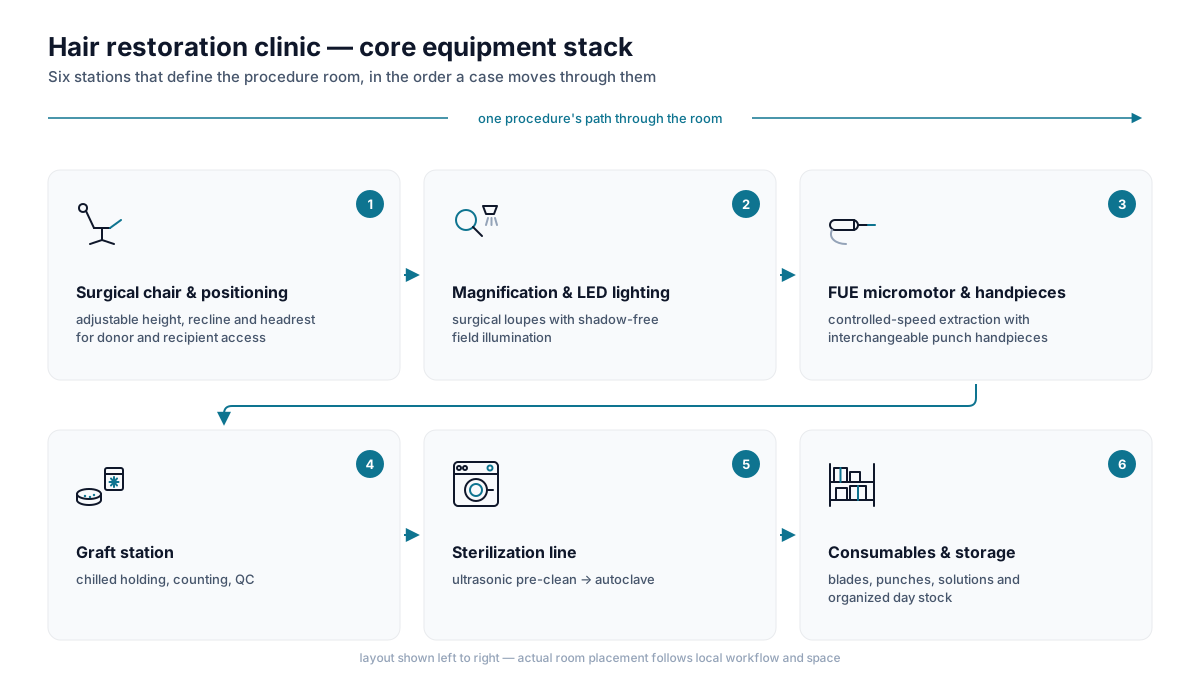
Equipment procurement in Saudi Arabia runs through a domestic channel even when every brand on the shopping list is foreign: medical devices are registered with the Saudi Food and Drug Authority, and clinics buy instruments, micromotors, autoclaves and consumables from authorized local suppliers of those registered products rather than importing directly. For a new clinic this means the equipment workstream is really a supplier-selection workstream — quotations, lead times, installation and training support all depend on distributor relationships that are worth establishing while the fitout is still underway. The clinic equipment hub walks through the full instrument landscape for a hair restoration practice, and the clinic equipment budget guide shows how the spend typically distributes across the procedure room, sterilization and recurring consumables. When comparing suppliers, weight after-sales substance heavily: installation support, technician training, autoclave service coverage and consumable availability in your city matter more over a clinic's first two years than a modest difference in list price, and the stronger Saudi distributors compete precisely on that service layer.
Sequencing the project realistically
The Saudi order of operations rewards parallel workstreams with one hard rule: nothing clinical happens before the licenses.
- Structure and investment approval. Form the entity; foreign investors clear the investment licensing step first. Decide the medical leadership and scope of services now, because they anchor every later filing.
- MOH initial approvals. Open the facility licensing track with the Ministry of Health for the declared scope and location.
- Premises and fitout. Secure premises suited to outpatient surgery and build out against the applicable facility standards — with the sterilization workflow designed in, not bolted on.
- SCFHS classification in parallel. Run verification and classification for the surgeon, supervising physician and nursing team from the earliest possible date; this is usually the schedule-critical path.
- Equipment and commissioning. Contract authorized suppliers, install and commission the procedure room and autoclave, and start the documentation habits inspection will test.
- Inspection and facility license. The finished, equipped, staffed clinic is inspected against its declared scope; the license issues on success.
- Open and operationalize compliance. Records, sterilization logs and consent documentation are ongoing obligations, and the early months set the pattern.
A checklist discipline helps more here than in almost any other market, because the two-track system multiplies the number of small dependencies. Our clinic startup checklist is built to keep those threads visible, and the long-form startup walkthrough explains the reasoning behind each item.
The commercial backdrop
It is worth saying plainly: the demand side of this market is unusually good. Private healthcare expansion is a stated national priority, hair restoration carries little stigma among Saudi men, and a large share of the patients who historically flew to Istanbul or Dubai are increasingly open to a high-standard domestic option. The competitive bar is rising with the opportunity — new entrants are well-capitalized and internationally benchmarked — but a clinic that clears the licensing process with its quality systems genuinely in place is entering one of the strongest hair restoration markets in the region.
City choice frames the competitive picture. Riyadh concentrates purchasing power, corporate patients and the sharpest new-clinic competition; Jeddah combines a large consumer market with a more relationship-driven commercial culture; the Eastern Province cities offer substantial, less contested demand with a patient base accustomed to traveling for premium care. There is no single right answer, but the marketing plan, pricing architecture and even the clinic's opening hours should be designed for the specific city rather than for an abstract national market — and founders relocating from abroad consistently underestimate how distinct the three regions feel in practice.
Frequently asked questions
Who licenses a private hair transplant clinic in Saudi Arabia?
The Ministry of Health licenses the facility itself — entity, premises, scope of services — while the Saudi Commission for Health Specialties (SCFHS) classifies and registers every individual practitioner. Both approvals are required before the clinic can operate.
What does SCFHS classification actually involve?
Verification of each clinician's qualifications, training and experience, resulting in a professional classification that determines the rank at which they may practice. For internationally recruited surgeons, assembling a complete, verifiable file early is the single best way to protect the opening date.
Can a foreign investor own a clinic in Saudi Arabia?
Foreign investment in Saudi healthcare runs through the Kingdom's investment licensing framework before health licensing begins. It is an established path in the current expansion climate, but it adds a step at the front of the timeline that should be planned for.
How does Saudization affect a small clinic?
National labor policy sets nationalization expectations for private-sector staffing, so the workforce plan should include Saudi hires — typically strongest in front-office, coordination and nursing roles — from the outset rather than as a retrofit.
Can the clinic import its own instruments and devices?
In practice clinics buy from authorized local suppliers of SFDA-registered products rather than importing directly. Supplier selection is therefore an early workstream: lead times, installation and training all depend on it.
Which specialty should lead the clinic?
The declared scope of services, the supervising physician's specialty and the team's classifications need to tell one consistent story. Dermatology-led and plastic-surgery-led models are both established; the right answer depends on who will genuinely perform and oversee procedures.
Related articles
Hair Transplant Clinic Equipment: The Complete Stack
The full equipment stack of a hair transplant clinic, from operating table to autoclave — written for founders specifying their first operating room.
The Equipment Budget for a New Hair Transplant Clinic: Categories and Phasing
A budget structure for equipping a new hair transplant clinic: the three ledgers — capital, consumables, hidden costs — how to phase purchases so cash follows patients, where cheap equipment gets expensive, and an honest word on financing.
Hair Transplant Clinic Startup Checklist: Every Equipment Category, in Order
A category-by-category equipment walkthrough for opening a hair transplant clinic: what belongs in the OR, the sterilization line, instrument sets and consumables — and the order to buy it in.
Operating Room Setup for Hair Transplantation: Space, Light and Flow
The operational logic of a hair transplant OR: how to zone the room, position the table and team, layer the lighting, secure power and climate, and build ergonomics that survive eight-hour sessions.