
Operating Room Setup for Hair Transplantation: Space, Light and Flow
The operational logic of a hair transplant OR: how to zone the room, position the table and team, layer the lighting, secure power and climate, and build ergonomics that survive eight-hour sessions.
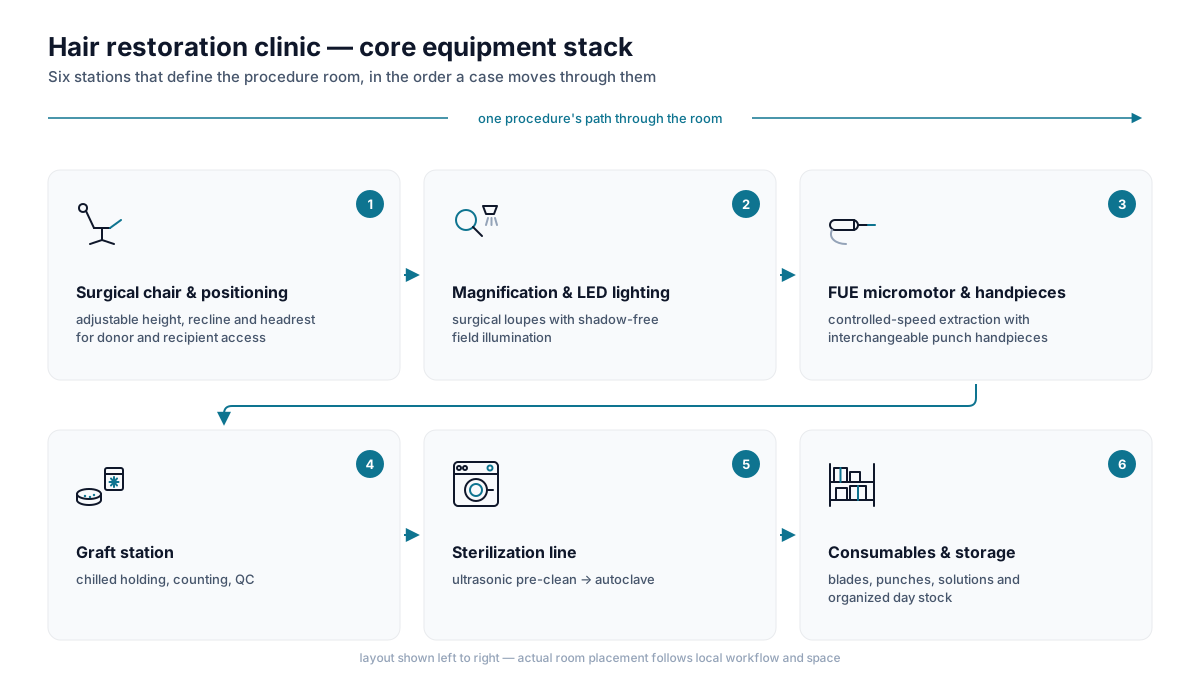
A hair transplant operating room is set up around four fixed facts: sessions run six to nine hours, the team works seated at millimeter scale, instruments must move in one direction from sterile to used, and the patient changes position several times per case. Everything else follows — a room zoned into sterile field, circulation path and support stations; a convertible surgical chair at the center with operator seating on both sides; lighting built in three layers from ambient to task; power and climate treated as clinical systems rather than office comfort; and ergonomics planned as deliberately as the instrument list, because the team's posture at hour seven decides the quality of the last thousand grafts.
Key takeaways
- Zone the room before you furnish it: sterile field, circulation path, graft workstation and storage each need their own territory, and instrument flow should run one way from sterile supply to used collection.
- The patient chair is the anchor purchase — it must convert between supine, prone and seated positions and leave 360-degree team access; every other position in the room is derived from it.
- Lighting works in three layers: bright uniform ambient light, a shadow-free procedure light on the field, and magnification-level task light at the graft bench — one bright ceiling fixture is not a lighting plan.
- Power and climate are session-continuity systems: dedicated circuits, a backup arrangement for the micromotor and graft cooling, and a climate setup that keeps a gowned team and an exposed patient comfortable at once.
- Walk a full mock session through the finished room before the first patient — layout mistakes are cheap to fix on paper and expensive to fix around a booked calendar.
Start with zones, not equipment
The most common setup mistake is buying the equipment list first and arranging it later. A better sequence starts with a floor plan divided into working zones, because zone boundaries — not furniture — are what keep a long session orderly.
Four zones cover a single-room hair transplant OR. The sterile field is the patient chair plus the instrument tables serving it, sized so that every tray is reachable without anyone crossing behind an operator. The circulation path is the corridor a technician uses to move between door, storage and field without brushing the sterile zone — if two people cannot pass each other without touching a draped table, the room is furnished too densely. The graft workstation is the seated bench where grafts are counted, sorted and held in chilled dishes; it needs its own light, its own surface and enough separation that bench work never competes with field work for space. The support zone holds the day's stock — sealed instrument packs, consumables, solutions — arranged so the circulating technician restocks the field without leaving the room mid-case.
Flow through these zones should be one-directional for materials: sterile packs enter from storage, are opened at the field, and used instruments leave toward a closed collection container by the door — never back across the clean side. The same one-way logic governs the sterilization room at larger scale, and rooms that respect it need far less mid-case correction. National facility regulations set binding requirements for clinical room construction and ventilation in each market, and the layout logic here operates inside whatever those rules prescribe.
Furniture and positioning
The room is arranged around one purchase: the patient chair. Hair restoration is unusual in requiring supine work (recipient incisions and placement at the hairline), prone or lateral work (donor extraction), and seated or semi-seated phases — so the chair must convert through those positions smoothly, support stable head positioning in each, and adjust in height across the full seated-operator range. A chair that does 90 percent of this forces the team to work around the missing 10 percent several hundred times per session. This is the item where, as the clinic startup checklist argues, buying cheap is expensive.
Around the chair: saddle or surgeon stools with height and tilt adjustment for every seated team member, one per operator plus one spare, because a failed gas lift mid-session is a genuine problem; a mayo stand or over-patient table for the phase currently running; a back table for the full phase-organized tray; and the graft workstation bench positioned so the technician passes dishes to the placer without standing or turning fully around. Wheeled bases with locks on everything — the room reconfigures between extraction and placement phases, and furniture that fights repositioning gets left in the wrong place.
Positioning has a simple test: for each procedure phase, every person should reach their instruments and their working area without twisting their spine or extending their arms past a relaxed range. If reaching the tray requires a stretch, the tray is in the wrong place, not the technician.
Lighting in three layers
Lighting is where hair transplant ORs differ most from general treatment rooms, because the work object is a graft under a millimeter wide. Think in three layers rather than in fixtures.
Ambient light should be bright, uniform and diffuse — high general illumination across the whole room, without the dim-periphery-bright-center pattern of a single ceiling fixture. Uniformity matters because the team's eyes move constantly between the field, the trays and the graft bench; large brightness jumps between those points cost adaptation time and fatigue with every glance. Field light is a dedicated, positionable procedure lamp delivering shadow-free light onto the donor or recipient area — multi-source LED heads do this well because the operator's own hands and instruments stop blocking single-point light. Color rendering quality belongs in the purchase decision: judging tissue condition, bleeding and graft quality depends on seeing color honestly, and poor-rendering light flattens exactly the cues the team reads. Task light serves the graft workstation, where counting and sorting happen under magnification; it needs its own lamp at bench height, not a share of the ambient layer.
The qualitative rule of thumb: the field and bench should be markedly brighter than the ambient layer, and the ambient layer itself should be brighter than an office. If any team member shades the work with their hand to see it better, or leans in closer as the session runs, the lighting plan — not their eyesight — is the first suspect.
Power and backup
List every powered device in a running session: micromotor console, procedure light, chair, graft cooling (plates or refrigeration), magnification lights, monitoring where used, chargers. Then plan sockets by zone with headroom — walls near the field and bench want generous outlet counts at working height, so no cable crosses the floor where the team's stool wheels run. Extension cords across a circulation path are the classic improvised-OR signature and a genuine trip hazard around a seated team.
Backup deserves specific thought rather than a generic generator assumption. The two loads that matter during an outage are the micromotor — a session can continue manually, but not at the same rhythm — and graft cooling, because harvested grafts in dishes do not pause for the electricity to return. A modest uninterruptible supply covering the graft station and one working light bridges the gap that matters; whole-room backup is a facility-level decision that varies by building and market.
Climate and airflow
Climate in a hair transplant OR manages a built-in conflict: a gowned, masked team generating heat over lamps for eight hours wants the room cool, while a lightly covered, motionless patient loses heat and wants it warmer. The workable pattern is to set the room for the team — sustained concentration degrades quickly in a warm room — and warm the patient locally with blankets or a warming pad, rather than heating the room and cooking the operators.
Airflow basics are qualitative but real: steady air exchange keeps the room fresh across a long day, and airflow should not blow directly across the sterile field or the graft dishes, where it accelerates drying of exposed tissue and grafts. Stable moderate humidity helps both comfort and static behavior. The engineering specifics — air-change rates, filtration classes, pressure regimes — are set by national facility rules and are a planning conversation with the building engineer, not a purchasing afterthought.
Ergonomics for six-hour-plus sessions
Ergonomics is the setup topic with the most direct line to clinical output, because extraction and placement quality are motor-skill tasks and motor skills degrade with static-posture fatigue. The levers are unglamorous: stools adjusted so each operator's forearms work near horizontal at the field; the chair height re-adjusted at every phase change instead of once at case start; loupes with a working distance matched to an upright neck rather than a bent one; anti-fatigue matting where the circulating technician stands; and scheduled micro-breaks treated as part of the protocol rather than as slack.
Two setup details earn their cost many times over. First, adjustability everywhere — a room shared by operators of different heights cannot be ergonomic with fixed-height furniture. Second, the graft workstation as a real seated workplace: technicians spend the longest continuous seated hours of anyone in the room, and a bench with poor leg clearance or a stool without back support shows up as sorting errors late in the day.
Zone-by-zone requirements and common mistakes
| Zone | Core requirements | Common mistakes |
|---|---|---|
| Sterile field | Convertible patient chair with 360° access; mayo stand and back table in reach; shadow-free field light; sockets at working height nearby | Chair against a wall blocking donor access; trays placed behind operators; single-point light casting hand shadows |
| Graft workstation | Seated bench with leg clearance; dedicated task light; chilled dish capacity with cooling; direct pass line to the placer | Treated as a shelf corner instead of a workplace; sharing ambient light; positioned so dish transfer crosses the sterile field |
| Circulation path | Clear corridor door-to-storage-to-field; two people can pass; no cables or wheeled bases parked in it | Furnishing the room until the path disappears; extension cords across the floor; used-instrument container far from the exit line |
| Support zone | Day-stock of packs and consumables in labeled order; used-instrument collection at the outbound end; restock possible mid-case | Storing stock outside the room so the technician leaves mid-case; mixing sterile stock with used-instrument collection |
The mock-session test
Before the first booked case, run the whole room empty: set the tray, position every stool, convert the chair through supine, prone and seated, pass dishes from bench to field, restock a consumable from the support zone, and carry a used instrument container out. Every snag found this way costs a note on a floor plan; the same snag found during a 3,000-graft session costs open-wound minutes. Teams that repeat this walkthrough whenever the room changes — new chair, new bench, new equipment package — keep the layout honest as the clinic grows.
Frequently asked questions
How should a hair transplant operating room be laid out?
In four zones: the sterile field around a convertible patient chair with full team access, a seated graft workstation with its own light, a clear circulation path, and a support zone holding the day’s stock with used-instrument collection at the outbound end. Materials should flow one way — sterile in, used out — without crossing back.
What furniture does a hair transplant OR need?
A patient chair that converts between supine, prone and seated positions; height-adjustable operator stools (one per seated team member plus a spare); a mayo stand or over-patient table; a back table for the full tray; and a proper seated bench for graft sorting. Wheeled, lockable bases throughout, because the room reconfigures between phases.
What lighting is required for hair transplant surgery?
Three layers: bright, uniform ambient lighting; a positionable multi-source procedure light giving shadow-free illumination on the field; and a dedicated task light at the graft bench. Good color rendering matters for judging tissue and grafts, and the field should be clearly brighter than the ambient layer.
Does a hair transplant OR need backup power?
The loads that matter mid-session are graft cooling and, secondarily, the micromotor and one working light — harvested grafts do not pause for an outage. A modest uninterruptible supply covering the graft station bridges the critical gap; whole-room backup is a building-level decision.
How warm should the operating room be?
Set the room for the gowned, working team — cool enough to sustain concentration over a long session — and warm the patient locally with blankets or a warming pad. Avoid airflow blowing directly across the sterile field or graft dishes, where it accelerates tissue drying.
Related articles
Sterilization Room Setup: One-Way Flow, Equipment and Space Planning
The reprocessing room from the floor plan up: why one-way dirty-to-clean-to-sterile flow is the whole design, what equipment each zone needs and why, how to plan a small footprint honestly, and where water quality and documentation fit.
Hair Transplant Clinic Startup Checklist: Every Equipment Category, in Order
A category-by-category equipment walkthrough for opening a hair transplant clinic: what belongs in the OR, the sterilization line, instrument sets and consumables — and the order to buy it in.
The Complete FUE Surgical Tray: Instruments, Quantities and Setup
What actually belongs on an FUE surgical tray, phase by phase — anesthesia, extraction, graft storage, incision and placement — with the quantity logic behind each item, sterile setup practice and the restock triggers that keep sessions from stalling.
Hair Transplant Clinic Equipment: The Complete Stack
The full equipment stack of a hair transplant clinic, from operating table to autoclave — written for founders specifying their first operating room.