
Opening a Hair Transplant Clinic in Poland
Poland pairs a workable, registry-based licensing route — entry in the RPWDL as a medical entity — with a genuine commercial thesis: a cost base that lets a well-run clinic serve Polish patients profitably and attract Western Europeans at prices they cannot find at home.
Poland is one of the few European countries where the business case for a new hair transplant clinic can rest on two markets at once. Domestic demand is real and growing — but the sharper opportunity is the price gap with Western Europe: a clinic with Polish costs can quote figures that undercut London, Amsterdam or Munich by a wide margin while operating entirely inside the EU's regulatory and consumer-protection framework. The licensing route that unlocks it is registry-based and navigable: entry in the RPWDL, the national register of entities performing medical activity, kept at voivodeship level, with the medical chambers licensing the physicians and the sanitary inspection passing judgment on the premises.
Key takeaways
- A clinic operates as a registered medical entity: entry in the RPWDL register, administered by the regional voivode, is the gate to lawfully providing treatment.
- Physicians hold their license to practice (PWZ) from the district medical chamber (okręgowa izba lekarska), which also handles recognition for foreign-trained doctors.
- Premises are assessed against national facility requirements, with the sanitary inspection (Sanepid) reviewing hygiene and layout in practice.
- Mandatory professional liability insurance for medical entities is a registration prerequisite, not an optional extra.
- The commercial thesis is the cost advantage: EU-framework care at Polish prices, serving domestic patients and inbound Western Europeans simultaneously.
Registration and practitioner licensing
Providing medical treatment commercially in Poland means becoming — or contracting with — a registered medical entity. The core step is entry in the RPWDL register, the nationwide electronic register of entities performing medical activity, which for company-operated clinics is administered by the voivode of the region where the activity is based. Registration is a substantive filing rather than a discretionary approval: the entity declares its organizational structure, the kinds of activity it will perform, its premises and its insurance, and may begin operating once entered. Smaller setups sometimes start as a physician's individual or group practice registered with the medical chamber instead, but a clinic built for scale, hired staff and investor ownership belongs in the medical-entity route from the outset.
Physicians are licensed by the self-governing medical chambers: the district chamber (okręgowa izba lekarska) issues the right to practice — the PWZ — and maintains the professional register, with the national chamber above it. EU-qualified doctors go through recognition into the same system, and a genuine practical point for founders follows from Poland's price advantage: experienced Polish surgeons are internationally mobile and in demand, so securing your lead physician early, and confirming chamber registration of every doctor on the roster, belongs at the top of the project plan rather than its tail.
How the doctors are engaged deserves a note of its own, because Polish private healthcare runs to a large degree on the kontrakt: physicians operating as self-employed contractors through their own registered practices, billing the clinic rather than joining its payroll. The model is deeply established, gives both sides scheduling flexibility, and shapes recruiting conversations — a surgeon weighing your clinic against competitors is comparing contract terms, session volumes and equipment quality, not just a salary figure. It also means the clinic's RPWDL entry, the surgeon's own practice registration and the contract between them must line up cleanly; a founder building the staffing plan should have those three documents drafted as a set.
Two further prerequisites are easy for foreign founders to underestimate. First, mandatory professional liability insurance: a medical entity must hold the required OC policy, and proof of it is part of the registration file. Second, the sanitary inspection: Sanepid, the state sanitary authority, reviews clinic premises against hygiene requirements, and in practice its view of your layout — treatment room, reprocessing arrangements, patient flows — determines whether the property you leased can actually house the clinic you registered.
What the premises must deliver
National regulations define facility requirements for entities performing medical activity — the rooms, finishes, sanitary provision and functional layout appropriate to the type of activity declared — and a clinic performing surgical hair restoration is assessed accordingly, not as a consulting office. Plan for a treatment room built for invasive procedures, a defined path from contaminated instruments to sterile storage, reprocessing capacity that matches a daily-session instrument load, and waste arrangements that survive inspection. Polish fit-out and construction costs sit well below Western European levels, which tempts founders to over-build; the discipline that pays is matching the layout precisely to the declared activity, because the declaration, the premises and the Sanepid assessment must tell the same story. The clinical-side layout logic is covered in our OR setup requirements guide.
Expect the whole file to run in Polish. Registration documents, architectural plans, the insurance policy, staff credentials and the correspondence around them are Polish-language artifacts, and the professionals who move them — the architect who knows the facility regulations, the lawyer who has filed RPWDL entries before, the accountant handling the sp. z o.o. — are the foreign founder's real project team. Their fees are modest by Western standards and their local knowledge routinely saves months; economizing on them is the classic false saving of a Polish clinic project.
Equipment: one honest paragraph
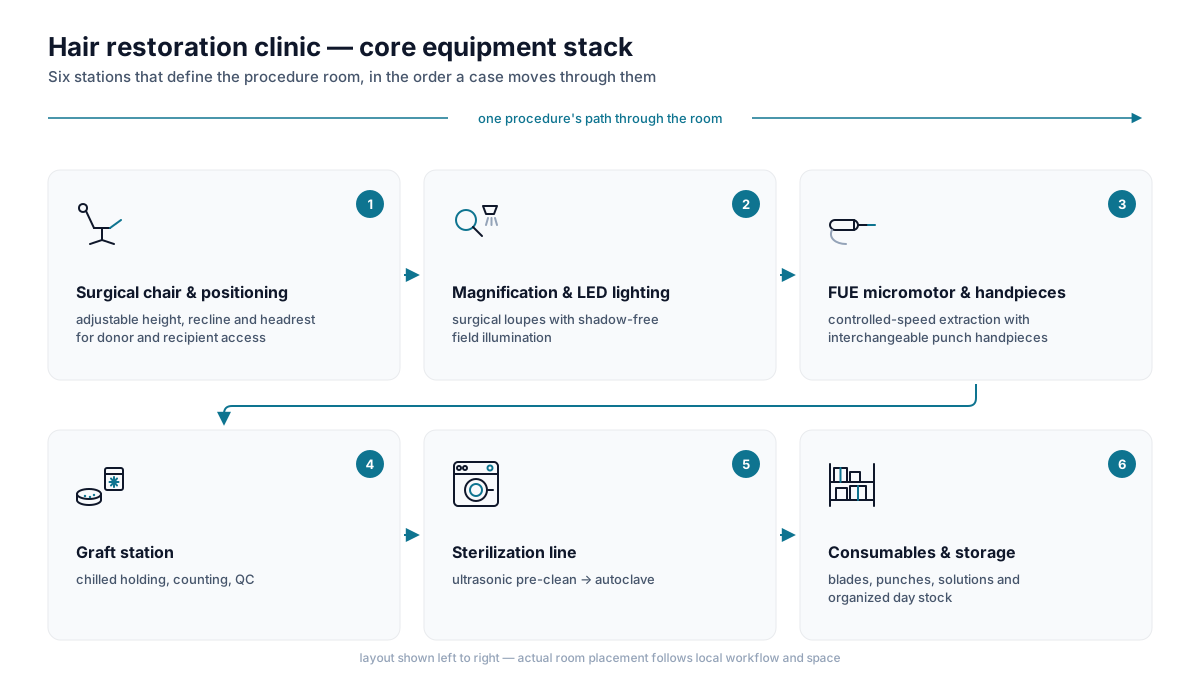
Poland's EU membership makes equipment purchasing uncomplicated: CE-marked instruments under the MDR move freely into the country, Polish medical-device dealers are price-competitive and used to serving the private aesthetic sector, and direct purchasing from European or Turkish manufacturers is routine for clinics that want tighter unit economics — with the złoty exchange rate worth watching on euro-denominated orders. The category-by-category map of what a new clinic buys is in our clinic equipment hub, and the budget phasing that keeps cash aligned with booked sessions is set out in the equipment budget guide.
The setup sequence that works in Poland
- Model the two-market demand. Decide the domestic/international patient mix first — it drives location, language capacity, pricing and how much you spend on the fit-out.
- Form the company. A sp. z o.o. entered in the KRS is the standard vehicle for a medical entity; get the declared scope of activity right at formation.
- Secure premises with Sanepid in mind. Choose property a compliant layout fits into, and have the hygiene assessment logic shape the architectural plan from day one.
- Arrange the mandatory insurance. The OC policy for medical entities must be in place for the registration file.
- File the RPWDL entry with the voivode. Declare structure, activity types, premises and insurance; operation may begin once the entity is entered.
- Contract chamber-registered physicians and staff. Verify each PWZ, define the surgeon–technician division of labor, and lock in the lead surgeon early.
- Fit out and equip in phases. Sterilization line first, OR core next, instruments sized to the planned case mix — the printable clinic startup checklist gives the full buying order.
- Open and build the inbound channel. English-language patient materials, transparent package pricing and airport-accessible logistics are what convert the cost advantage into Western European bookings.
Where the opportunity concentrates
Warsaw and Kraków carry the deepest domestic demand and the best international access; Wrocław and Poznań serve the German-border catchment; Gdańsk has a natural line to Scandinavian patients. The inbound pitch works because it is not merely cheap: Polish clinics offer EU-jurisdiction care — with its consumer protections, its complaint routes and its familiar legal environment — at prices Western European patients otherwise find only in Turkey. That framing, honestly presented, is the differentiator. The domestic market, meanwhile, is price-aware but quality-rising, and a clinic that treats Polish patients as its foundation rather than filler builds steadier utilization than one chasing medical tourism alone.
Domestic marketing has its own texture worth learning. Polish private-healthcare patients expect visible, itemized pricing — published price lists are the norm, and vagueness reads as a warning sign rather than exclusivity. Financing matters too: paying for elective procedures in installments is an established habit in Polish private medicine, and clinics that arrange consumer-financing options widen their addressable domestic base considerably. Online reputation carries unusual weight, with patients researching individual surgeons by name across review platforms before they ever contact a clinic — one more reason the lead surgeon's profile is a commercial asset, not just a licensing requirement. None of this is expensive; all of it separates clinics that fill their calendars from clinics that wait.
On timing: the registration route itself is among the faster in Europe once the file is complete, and the long poles in the schedule are the premises fit-out and the Sanepid-aligned design work before it. A disciplined project with suitable property can realistically target opening within a year of company formation; what stretches timelines is redesign after a failed hygiene assessment, which is precisely what early Sanepid-aware planning prevents.
Frequently asked questions
What license does a hair transplant clinic need in Poland?
Operation runs through registration as a medical entity in the RPWDL — the national register of entities performing medical activity — administered by the regional voivode. The filing covers the entity's structure, declared activity, premises and mandatory liability insurance, and operation may begin once the entry is made.
Who licenses the doctors?
The district medical chambers (okręgowe izby lekarskie) issue the right to practice (PWZ) and maintain the professional register; EU-trained physicians pass through recognition into the same system. Every physician in the clinic must hold a valid PWZ, and confirming the lead surgeon early is a practical priority.
What role does Sanepid play in opening a clinic?
The state sanitary inspection assesses clinic premises against hygiene requirements — treatment room, reprocessing arrangements, patient and instrument flows, waste handling. In practice its assessment determines whether your property can house the activity you declared, so let it shape the architectural plan from the start.
Is liability insurance really a prerequisite?
Yes. Medical entities must hold the mandatory professional liability (OC) policy, and proof belongs in the RPWDL registration file. Arrange it before filing, not after.
Can a Polish clinic realistically attract Western European patients?
Yes, and many do: the pitch is EU-framework care — consumer protections, complaint routes, a familiar legal environment — at a Polish cost base, which undercuts Western European prices substantially. Converting it requires English-language patient service, transparent pricing and easy airport logistics, not just a low number.
Does Poland use the euro for clinic costs?
No — costs run in złoty (PLN), which is part of the cost advantage but adds an exchange-rate dimension to euro-denominated equipment purchases and to pricing for international patients. Many clinics quote inbound patients in euros while carrying złoty costs, and should manage that spread deliberately.
Related articles
Hair Transplant Clinic Equipment: The Complete Stack
The full equipment stack of a hair transplant clinic, from operating table to autoclave — written for founders specifying their first operating room.
The Equipment Budget for a New Hair Transplant Clinic: Categories and Phasing
A budget structure for equipping a new hair transplant clinic: the three ledgers — capital, consumables, hidden costs — how to phase purchases so cash follows patients, where cheap equipment gets expensive, and an honest word on financing.
Hair Transplant Clinic Startup Checklist: Every Equipment Category, in Order
A category-by-category equipment walkthrough for opening a hair transplant clinic: what belongs in the OR, the sterilization line, instrument sets and consumables — and the order to buy it in.
Operating Room Setup for Hair Transplantation: Space, Light and Flow
The operational logic of a hair transplant OR: how to zone the room, position the table and team, layer the lighting, secure power and climate, and build ergonomics that survive eight-hour sessions.