
Opening a Hair Transplant Clinic in Italy
Italy authorizes private clinics region by region, not nationally: the autorizzazione sanitaria you need in Lombardy differs in detail from the one in Lazio, and every authorized facility must appoint a direttore sanitario who answers for its clinical governance.
The single most important thing to understand about opening a hair transplant clinic in Italy is that there is no single Italy to open it in. Healthcare authorization is a regional competence: the national framework sets the outline, but each of the twenty regions writes its own detailed requirements for private health facilities, runs its own application process and conducts its own inspections. Add the mandatory appointment of a direttore sanitario — a registered physician who carries personal responsibility for the facility's clinical governance — and you have the two pillars around which every Italian clinic project is actually built.
Key takeaways
- Authorization to open and operate a private health facility (autorizzazione sanitaria) is issued regionally, and requirements differ in real, practical detail from region to region.
- A hair transplant clinic is generally treated as an outpatient surgical facility, a category with stricter structural and organizational requirements than a simple medical office.
- Every authorized facility must appoint a direttore sanitario — an Ordine-registered physician responsible for hygiene, organization and clinical conduct.
- Physicians must be enrolled with the provincial Ordine dei Medici; EU-trained doctors go through qualification recognition first.
- Sequence the project region-first: confirm the local requirements before signing a lease, because the premises must fit the regional standard, not the other way round.
Who licenses the clinic, and who may operate
Italy's Ministry of Health defines the national rules of the game, but the authorization that actually lets you open the doors comes from the region — in some regions via the regional health department directly, in others through the local health authority (ASL/ATS) or the municipality acting on regional criteria. The practical consequence is that advice from a consultant who opened a clinic in Milan does not transfer cleanly to a project in Rome or Bari: application forms, required documents, inspection style and timelines all vary. Established practice in most regions treats a facility performing hair transplantation as an ambulatorio chirurgico — an outpatient surgical facility — rather than a plain doctor's office, which raises the bar on premises, equipment and organization. Confirm the classification with the competent regional office before anything else, because it determines the whole cost and timeline of the project.
On the practitioner side, medicine in Italy may only be practiced by physicians enrolled with the provincial Ordine dei Medici, the medical association that maintains the professional register. Italian-trained doctors enroll after their qualifying examination; EU-trained doctors first pass through recognition of their qualification, a well-trodden path within the single market. Which procedures a physician may perform, and what role technicians and nurses may take in graft handling, is governed by professional-practice rules that the direttore sanitario is expected to enforce — one of many reasons that appointment matters more than founders initially assume.
The direttore sanitario deserves its own paragraph because it is a genuinely Italian institution. Every authorized private health facility must name one: a registered physician, typically with seniority requirements, who assumes formal responsibility for the facility's hygiene, its clinical organization, the credentials of everyone practicing in it and the propriety of its health-related advertising. In a small clinic the founding surgeon often takes the role personally; investor-led projects must recruit for it, and should do so early, because regions expect the direttore sanitario to be named in the authorization application, not added after approval.
Premises, hygiene and sterilization expectations
Italian regions publish minimum structural, technological and organizational requirements — requisiti minimi — for each facility category, and an outpatient surgical facility sits well above a consultation office in all three dimensions. Expect requirements covering the surgical room itself (dimensions, finishes, ventilation), separate clean and dirty pathways, dedicated space for instrument reprocessing, patient recovery provision and defined waste-management arrangements. The architectural review is not a formality: regions examine floor plans as part of the application, and premises that cannot accommodate a compliant layout fail on paper before any inspector visits. This is why experienced founders engage a technical consultant who knows the specific region's standards before committing to a property.
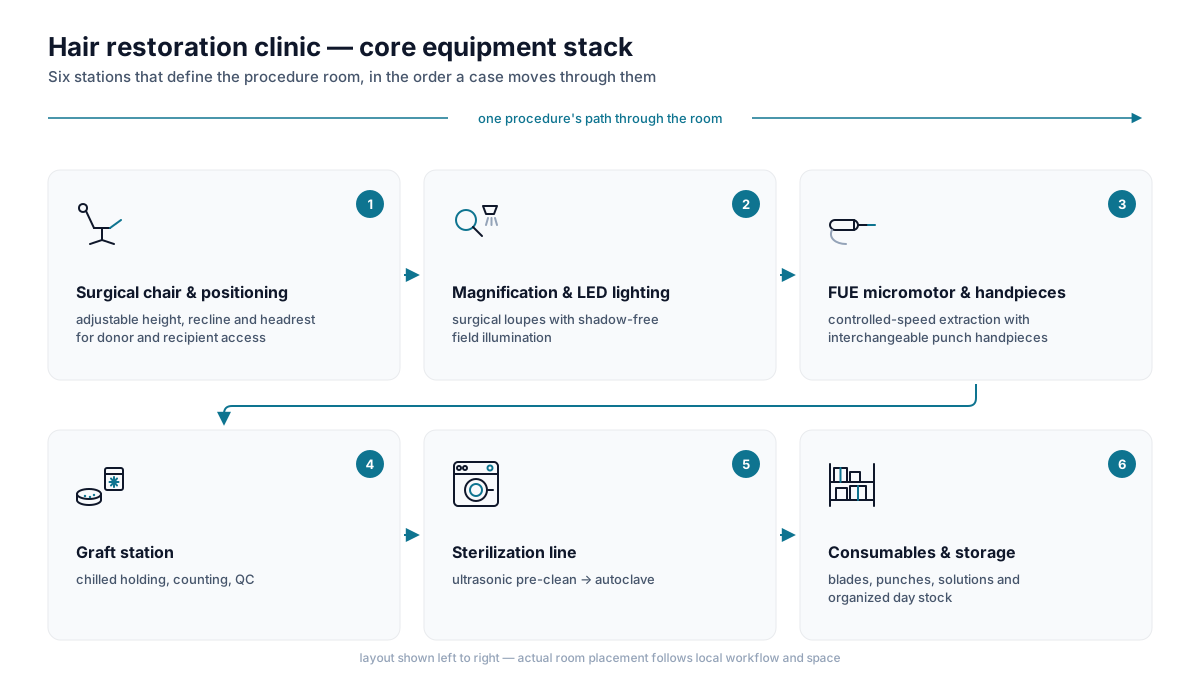
Sterilization capacity is examined with particular care. A clinic performing daily FUE sessions needs an on-site reprocessing line — cleaning, packaging, steam sterilization, documented release — sized for its instrument turnover, in a space that keeps contaminated and sterile flows apart. Our guide to operating room setup requirements walks through the clinical-side expectations that inspectors in most European jurisdictions, Italy included, look for in practice.
Buying the equipment
Equipping the clinic is the most internationally straightforward part of an Italian project: instruments and devices circulate freely in the EU single market, CE marking under the MDR is the applicable conformity requirement for what you buy, and both Italian dealers and direct European suppliers serve the market — with Italian-language documentation and local service presence carrying real weight in a relationship-driven business culture. What belongs in the purchase plan, category by category, is collected in our clinic equipment hub, and the phasing logic — what the first patient requires at full quality versus what booked volume should pull forward later — is treated in depth in the equipment budget guide.
A realistic sequence for an Italian clinic project
- Fix the region and verify the classification. Obtain the current regional requirements for an outpatient surgical facility and confirm how hair transplantation is classified locally. Everything downstream depends on this.
- Form the company. An SRL is the common vehicle for clinic operators; sole-practitioner structures exist but fit investor projects poorly.
- Secure premises against the regional standard. Verify the property's permitted use (destinazione d'uso) and have a technical consultant confirm a compliant layout is achievable — including, where the region requires it, a separate authorization step for building or converting the premises.
- Appoint the direttore sanitario and plan staffing. Name the medical director, confirm every physician's Ordine enrollment, and define nurse and technician roles within professional-practice rules.
- Fit out and equip. Build to the approved plans, install the sterilization line, and purchase instruments and OR equipment in phases. The category-by-category order is laid out in our printable clinic startup checklist.
- Apply for the authorization to operate and pass inspection. Submit the regional application with plans, staffing and the named direttore sanitario; host the inspection; remedy any findings.
- Open — and keep the file live. The authorization is a living obligation: regions expect the documented hygiene plan, reprocessing records and staffing register to stay current, and the direttore sanitario to be able to produce them.
Timelines vary with the region and the property. A project with compliant premises and complete paperwork can move in months; one that needs building conversion in a slower region should plan in longer horizons and treat the authorization date as the anchor for hiring and marketing commitments, not an afterthought.
Three words not to confuse: autorizzazione, accreditamento, pubblicità
Italian healthcare vocabulary contains a distinction that saves founders real money once understood. The autorizzazione is what a private-pay clinic needs: the regional permission to open and operate. Accreditamento — institutional accreditation — is a separate, heavier status that qualifies a facility to provide services under contract with the public health system, and a hair transplant clinic serving self-paying patients does not need it. Consultants occasionally quote for the full accreditation pathway by default; a founder who knows the difference buys only the authorization the business model requires.
The third word is advertising. Health-related publicity in Italy operates under professional rules with real teeth: claims must be verifiable and sober, the Ordine system polices tone as well as content, and the direttore sanitario carries responsibility for the facility's public communications. Before-and-after marketing that would pass unremarked in other markets can draw professional-conduct attention in Italy, so the clinic's marketing plan should be reviewed against the professional rules from the start — ideally by the direttore sanitario who will answer for it.
Market context worth knowing
Italy's aesthetic-medicine culture is strong and its patients are discerning, but the hair-restoration market has a particular shape: a substantial share of Italian patients travels to Istanbul on price, which means a domestic clinic competes on proximity, follow-up care, surgeon reputation and the reassurance of an Italian-authorized facility rather than on cost. Clinic density follows the country's economic geography — Milan and the northern regions carry the deepest private aesthetic demand, Rome anchors the center, while the south is served more thinly, which cuts both ways: less competition, but also a patient base more inclined to travel north or abroad for elective procedures. Word-of-mouth within a region counts for more than national advertising, and building the direttore sanitario's name and the facility's authorization status into the clinic's public identity is not just compliance — in Italy it is marketing.
On costs, the qualitative picture is that the authorization process itself is not where the money goes: the spend concentrates in premises conversion to the regional standard, the technical consultants who navigate it, and the recruitment of the direttore sanitario and surgical team. Founders comparing Italy with other EU markets should budget generously for the architectural and administrative phase and expect the equipment phase — traded in the open single market — to be the most predictable line in the plan.
Frequently asked questions
Who issues the license to open a private hair transplant clinic in Italy?
The region — directly or through the local health authority or municipality acting on regional criteria. The Ministry of Health sets the national framework, but the autorizzazione sanitaria itself, its requirements and its inspection process are regional, and details differ meaningfully between regions.
Is a hair transplant clinic treated as a surgical facility in Italy?
In established practice, generally yes: facilities performing hair transplantation are typically classified as outpatient surgical facilities (ambulatorio chirurgico), which carry stricter structural, technological and organizational requirements than a consultation office. Confirm the classification with your region before committing to premises.
What does the direttore sanitario actually do?
The direttore sanitario is a registered physician formally responsible for the facility's hygiene, clinical organization, staff credentials and health-related advertising. Every authorized private facility must appoint one, named in the authorization application — in founder-led clinics often the surgeon, in investor projects a recruited role.
Can an EU-trained doctor perform hair transplants in Italy?
Yes, after recognition of the qualification and enrollment with the provincial Ordine dei Medici. Practicing without Ordine enrollment is not lawful, and the direttore sanitario is expected to verify the registration of every physician working in the facility.
How long does it take to open a clinic in Italy?
It depends heavily on the region and the premises. With property that already fits the regional layout requirements and complete paperwork, months; with building conversion or a slower regional office, considerably longer. Verify the local timeline early and anchor hiring and marketing to the authorization date.
Do I need Italian-specific approval for the instruments I buy?
No separate national approval applies to purchasing: CE-marked instruments under the EU MDR circulate freely in the single market. Your obligations concern how devices are used, maintained and reprocessed within the authorized facility — areas the regional inspection and the direttore sanitario oversee.
Related articles
Hair Transplant Clinic Equipment: The Complete Stack
The full equipment stack of a hair transplant clinic, from operating table to autoclave — written for founders specifying their first operating room.
The Equipment Budget for a New Hair Transplant Clinic: Categories and Phasing
A budget structure for equipping a new hair transplant clinic: the three ledgers — capital, consumables, hidden costs — how to phase purchases so cash follows patients, where cheap equipment gets expensive, and an honest word on financing.
Hair Transplant Clinic Startup Checklist: Every Equipment Category, in Order
A category-by-category equipment walkthrough for opening a hair transplant clinic: what belongs in the OR, the sterilization line, instrument sets and consumables — and the order to buy it in.
Operating Room Setup for Hair Transplantation: Space, Light and Flow
The operational logic of a hair transplant OR: how to zone the room, position the table and team, layer the lighting, secure power and climate, and build ergonomics that survive eight-hour sessions.