
Opening a Hair Transplant Clinic in France
France frames hair transplantation inside its regulated world of aesthetic medicine: the regional health agency (ARS) is the authority your project answers to, the Ordre des médecins governs who practises, and patient-protection rules shape how you sell.
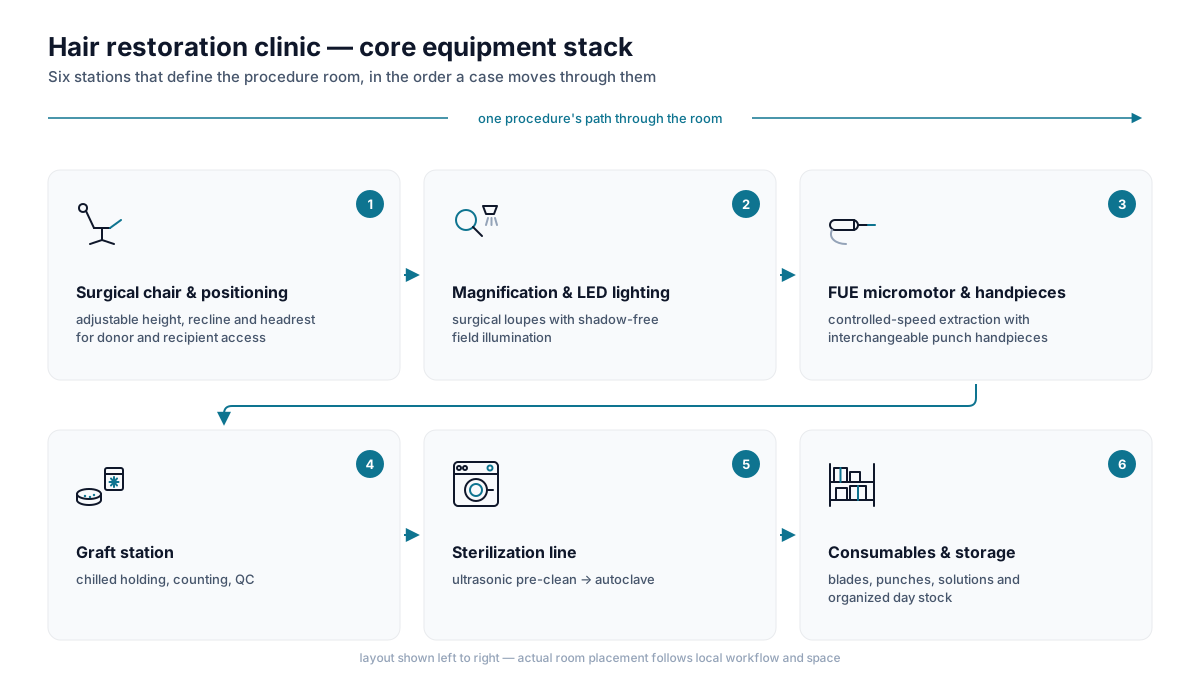
What makes France distinctive is not a clinic licence as such but the frame around the procedure: French law treats aesthetic medicine as a specially protected territory, with defined rules on who may perform aesthetic acts, how facilities for aesthetic surgery are authorized, and how patients must be informed before they commit. A hair transplant venture in France therefore begins with a classification question — where does your intended activity sit within the French categories of medical and aesthetic practice? — and the answer determines whether your interface with the regional health agency, the ARS, is a declaration, a dialogue or a formal authorization. Getting that framing right at the start, with French professional advice, is the single highest-leverage move a founder can make.
Key takeaways
- The agence régionale de santé (ARS) of your region is the health authority a French clinic project answers to — engage it early rather than after decisions are made.
- Practising doctors must be inscribed on the roll (tableau) of the Ordre des médecins; the Ordre also polices titles, advertising and professional conduct.
- France's aesthetic-surgery framework imposes authorization and patient-protection obligations on facilities performing aesthetic surgical acts — how your activity is classified matters commercially.
- Patient-information duties, written quotes and a reflection period before aesthetic procedures are part of French practice and shape the sales process.
- Sequence professional registration, activity classification and ARS dialogue before premises works; equipment purchasing follows the validated room concept.
The ARS interface and the aesthetic frame
France administers healthcare through regional health agencies, and the ARS covering your region is the authority that supervises healthcare facilities, receives declarations and authorizations, and inspects. How much of its machinery applies to you depends on classification. A physician's private practice (cabinet médical) performing acts within the doctor's competence sits at the lighter end; facilities carrying out aesthetic surgery fall under France's specific authorization regime for such installations, with premises and safety conditions verified before activity begins. Hair transplantation occupies a debated middle ground in French practice — it is an invasive act performed for aesthetic purposes — and precisely because the boundary questions are technical, serious founders resolve them with a French health-law advisor and the ARS itself rather than by analogy with other countries. Expect written positions, and keep them in the clinic's file.
What is not debatable is the patient-protection layer. French rules for aesthetic procedures include detailed prior information, a written quote (devis), and a mandatory reflection period between quote and procedure for aesthetic surgery — obligations that shape the whole commercial funnel. A French clinic cannot compress consultation, decision and surgery into one visit the way some markets tolerate; the compliant patient journey has built-in pauses, and your scheduling and marketing must be designed around them from the start.
The Ordre des médecins and who may practise
Every doctor practising in France must be registered on the tableau of the departmental council of the Ordre des médecins, the body that governs professional conduct, verifies qualifications and controls the use of titles. The Ordre's code of conduct reaches into territory founders sometimes treat as marketing freedom: medical advertising in France has liberalised in recent years but remains supervised, with dignity-of-profession limits that make aggressive promotion a disciplinary risk. Non-EU medical qualifications require completion of French recognition procedures before practice, a process measured in years rather than weeks for many candidates — factor it into any plan built around a foreign surgeon. Nurses and assistants work within their own defined scopes, and the division of tasks in a hair transplant team should be written down against those scopes, because task delegation in aesthetic acts is a known focus of French professional scrutiny.
Premises and sterilization expectations
French expectations for procedure premises follow the activity's risk level. An installation hosting surgical aesthetic activity must satisfy verified conditions covering the operating environment, hygiene and asepsis organisation, emergency preparedness and continuity of care; a lighter interventional activity still requires premises appropriate to invasive acts — dedicated, well-separated procedure space, controlled asepsis, and documented instrument reprocessing or a single-use policy, with traceability of sterilization cycles. French practice puts particular weight on formalised protocols: written hygiene procedures, named responsibilities and traceability records are what an inspection reads first. Our operating room requirements guide maps the physical standards decision by decision, and it is worth aligning the room concept with your classification outcome before any fit-out contract is signed — the gap between a cabinet-grade room and an authorized surgical installation is structural, not decorative.
Buying devices for a French clinic
Equipment purchasing sits inside the EU framework — CE marking under the MDR, with French market surveillance by the national agency for medicines and health products — and France adds a strong administrative culture around maintenance and traceability of the devices in service. Practically, French clinics favour suppliers who provide French-language instructions for use and responsive after-sales support, both because staff work in French and because complete, French-accessible documentation smooths inspections. The clinic equipment hub organises the categories from punches and implanters to sterilization equipment.
The realistic French sequence
The French order of operations differs from most of Europe in one respect: classification and the ARS conversation come before premises, because what the regulator decides your activity is determines what your rooms must be. Founders who sign a lease first routinely pay for that inversion in refit costs.
- Resolve practitioner status first. Ordre registration for each doctor, recognition procedures completed for foreign qualifications, and clarity about the titles and specialties that will appear publicly.
- Classify the activity and open the ARS dialogue. With a health-law advisor, establish which regime your intended procedures fall under and what the regional ARS expects; obtain positions in writing.
- Choose the corporate structure. French professional-exercise vehicles for medicine (a SEL-type company, one clause) carry ownership rules tied to practitioners — structure follows the classification and the founders' roles.
- Secure premises against the validated room concept. Design procedure rooms, asepsis workflow and reprocessing space to the standard your classification requires, then build once.
- Formalise the protocol backbone. Hygiene and sterilization procedures, traceability systems, the patient-information pack with devis templates and reflection-period scheduling, insurance including mandatory professional liability.
- Equip in phases and open. Purchase the day-one clinical core against the room concept and defer volume-driven additions — the clinic equipment budget guide structures that phasing, and the clinic startup checklist keeps licensing, premises, staffing and purchasing moving in parallel until opening.
Staffing, delegation and insurance
Team design in France runs into the delegation question faster than elsewhere, because French professional bodies have publicly scrutinised hair-transplant models in which non-physicians perform substantial parts of the act. The defensible French configuration keeps the medical acts with doctors, assigns nurses and assistants tasks squarely within their legal scopes, and documents the division in writing; a founder importing a technician-heavy model from another market should stress-test it against French rules before building the business plan on it. Recruitment itself is manageable — France trains excellent surgical nurses, and Paris and the large regional cities have aesthetic-medicine ecosystems to hire from — but French employment law is protective and procedural, so contracts, working time and dismissal exposure deserve professional handling from the first hire.
Insurance is the quiet prerequisite. French physicians performing surgical and aesthetic acts carry mandatory professional liability cover, premiums scale with the risk classification of the declared activity, and insurers ask precise questions about procedures, volumes and facilities. Arrange cover before opening rather than in parallel with it: the insurer's questionnaire is, in effect, a second regulatory review of your clinic concept, and an activity your insurer will not cover is an activity your clinic cannot perform regardless of what other approvals say.
Market realities
France's aesthetic-medicine tradition is deep, Paris exerts strong gravity, and French patients — culturally attentive to medical legitimacy — respond to Ordre-registered practitioners and visible compliance rather than discount pricing. Outbound medical tourism to lower-cost destinations is a real competitive force, which makes the domestic clinic's case rest on proximity, follow-up and the protections of French practice: the reflection period, the devis, the accountable French practitioner. Geography offers more room than the Paris reflex suggests: Lyon, Bordeaux, Marseille, Toulouse and Lille each anchor prosperous regional catchments with thinner specialist competition and materially lower costs, and French patients show strong loyalty to credible regional providers. Administrative pacing deserves a final honest word — French processes are thorough, written and rarely fast, and the founders who fare best are those who front-load every dossier, respond to authority queries completely the first time, and build their opening timeline around the administration's rhythm instead of fighting it. Selling the protections of French practice openly, rather than resenting them as friction, is how successful French clinics position themselves.
Frequently asked questions
Which authority oversees a hair transplant clinic in France?
The regional health agency (ARS) of the clinic's region supervises healthcare facilities and receives the declarations or authorizations the activity requires, while the Ordre des médecins governs the practitioners. How much ARS machinery applies depends on how the activity is classified.
Is hair transplantation treated as aesthetic surgery in France?
It is an invasive act performed for aesthetic purposes, and its exact placement within France's aesthetic-medicine categories is a technical question with real consequences for premises and authorization requirements. Resolve it with a French health-law advisor and the ARS in writing before committing to premises.
What is the reflection period for aesthetic procedures?
French rules require detailed prior information and a written quote, with a mandatory waiting period between quote and procedure for aesthetic surgery. It shapes the patient journey: consultation, quote and surgery cannot be compressed into a single visit.
Can a foreign-trained surgeon open a clinic in France?
Only after registration with the Ordre des médecins, which for non-EU qualifications means completing French recognition procedures first — often a multi-year path. EU qualifications benefit from recognition mechanisms but still require inscription on the tableau before practice.
What do French inspections expect on hygiene and sterilization?
Formalised, documented systems: written hygiene protocols, a defined reprocessing workflow or single-use policy, traceability of sterilization cycles, and named responsibilities. Premises must match the standard of the activity's classification, from dedicated procedure rooms up to authorized surgical installations.
Related articles
Hair Transplant Clinic Equipment: The Complete Stack
The full equipment stack of a hair transplant clinic, from operating table to autoclave — written for founders specifying their first operating room.
The Equipment Budget for a New Hair Transplant Clinic: Categories and Phasing
A budget structure for equipping a new hair transplant clinic: the three ledgers — capital, consumables, hidden costs — how to phase purchases so cash follows patients, where cheap equipment gets expensive, and an honest word on financing.
Operating Room Setup for Hair Transplantation: Space, Light and Flow
The operational logic of a hair transplant OR: how to zone the room, position the table and team, layer the lighting, secure power and climate, and build ergonomics that survive eight-hour sessions.
Hair Transplant Clinic Startup Checklist: Every Equipment Category, in Order
A category-by-category equipment walkthrough for opening a hair transplant clinic: what belongs in the OR, the sterilization line, instrument sets and consumables — and the order to buy it in.