
Milan: Italy's Aesthetic-Medicine Capital
A city snapshot for instrument suppliers: how Milan's fashion economy and private-healthcare wealth built Italy's densest aesthetic-medicine scene, how Lombardy licenses its clinics, and how a relationship-driven supply chain actually reaches them.
Milan is where Italian aesthetic medicine concentrates, and hair restoration has grown up inside that concentration. The city's image economy — fashion, design, media, finance — produces a clientele for whom appearance is professional capital, and Lombardy's strongly private healthcare infrastructure gives that clientele the densest network of private clinics and day-surgery facilities in Italy. For an instrument supplier, Milan is less a regional market than the stage on which the Italian aesthetic sector performs: win credibility here and the rest of the country hears about it.
Key takeaways
- Milan's aesthetic demand is structural, not seasonal: the fashion, media and finance economy treats appearance as professional capital, and male grooming spend follows.
- Lombardy's part-private healthcare model built Italy's thickest layer of private clinics and accredited day-surgery facilities — the physical infrastructure aesthetic practice needs.
- Clinic authorisation runs through the Lombardy Region's health system; devices themselves remain a national and EU matter under CE marking.
- The MiCo convention centre and the city's congress circuit make Milan the natural Italian venue for aesthetic-medicine meetings — verify any event's current edition with its organisers.
- Distribution is relationship-driven and showroom-flavored: Milanese buyers expect to see, handle and discuss instruments in person before committing.
How the fashion economy manufactures demand
Every explanation of Milan's aesthetic-medicine density starts with the same engine. The city is Italy's business capital and one of the world's fashion capitals simultaneously, and the two identities compound: a large population of professionals in image-conscious industries, above-average disposable income, and a cultural setting in which investing in appearance is read as competence rather than vanity. Male grooming sits unusually high on that curve — the industries that define Milan normalized cosmetic self-maintenance for men earlier and more completely than anywhere else in Italy — and hair restoration is a direct beneficiary.
The fashion calendar amplifies the effect. The city's fashion weeks and design events keep an international, appearance-focused population cycling through Milan and keep its beauty-and-aesthetics service economy dense, competitive and visible. Clinics here operate in a market where patients compare providers the way they compare brands, which pushes practices toward visible quality signals — modern equipment, branded consumables, polished patient experience — and that pressure travels straight up the supply chain to instrument choice.
The infrastructure behind the demand
Demand alone does not make a clinic cluster; Lombardy's healthcare model supplied the second ingredient. The region runs Italy's most developed private and private-accredited hospital sector, which means Milan has an unmatched stock of surgical facilities, day-surgery licenses and specialist medical real estate for aesthetic practices to plug into. Surgeons can rent accredited operating time rather than build it, which lowers the barrier to opening a restoration practice and multiplies the number of independent operators a supplier can sell to.
The result is a clinic landscape with a particular shape: many small, surgeon-owned premium practices; a layer of multi-specialty aesthetic centres; and comparatively few of the high-throughput volume chains that define other European cities. Order sizes reflect it — more accounts, smaller baskets, higher expectations per unit — and so does the sales motion, which rewards patient, personal cultivation over tender-style pricing. For a supplier's planning, the arithmetic matters: revenue per account will look modest against volume markets, but account density per square kilometre is exceptional, churn is low once trust is established, and the same visit schedule that services one practice reaches a dozen of its neighbours.
Licensing through the Lombardy Region
Healthcare authorisation in Italy is regionalized, and clinics operating in Milan are authorised and overseen through the Lombardy Region's health system, including the accreditation regime for private surgical facilities. Instruments and consumables remain governed at national and EU level — Ministry of Health oversight and CE marking under the EU MDR — so the regional layer affects the supplier only indirectly, through buyers who take documentation seriously because their own accreditation depends on it.
Congresses, and the city as a stage
Milan's congress economy is the other city-specific asset. The MiCo convention centre — among the largest in Europe — plus the city's university hospitals and hotel venues host a rotating circuit of aesthetic-medicine, dermatology and surgical meetings, and Italian societies favor Milan for editions aimed at an international audience precisely because the city is easy to reach and easy to sell. Specific programmes move around from year to year, so verify current editions and dates with the organisers rather than planning on memory; the industry events calendar frames which categories of gathering matter most to instrument suppliers.
The commercial subtext is that Milan functions as Italian aesthetics' shop window. A launch, a training workshop or a well-run congress booth here reaches the opinion leaders whose endorsement carries into practices in Rome, Turin and the south — leverage a supplier cannot buy through discounting.
Milan as the entry point to a fragmented country
Italy's aesthetic market is famously uneven — clinic density, purchasing power and treatment culture all thin as one moves south — and that unevenness makes the choice of entry city consequential in a way it is not in more homogeneous countries. Milan is where the fragmentation resolves into something workable. The distributors based here carry lines across the wealthy northern arc from Turin to Venice, where the majority of Italy's aesthetic purchasing power sits within a few hours' drive; the surgeons who teach here draw trainees from the whole peninsula; and the standards set in Milanese practices become the reference point that ambitious clinics elsewhere measure themselves against.
The city also runs its own quiet version of medical-tourism dynamics. Inbound, Milan's international business population and its steady flow of affluent visitors supply foreign private-pay patients who choose treatment here for discretion and perceived quality. Outbound, Italian patients comparing local premium pricing against cheaper procedures abroad keep Milanese clinics under pressure to justify their positioning — a pressure they answer with visible quality, which again feeds back into instrument selection. Neither current is dramatic on its own; together they keep the market honest and keep equipment choices strategic rather than incidental.
How instruments reach Milanese clinics
Supply flows through a distribution culture that prizes presence. Northern Italian specialist distributors — most with Milan offices or showrooms — carry the relationships into surgeon-owned practices, and the buying ritual matters: Milanese clinicians expect to handle instruments, compare them against what they use, and talk through the engineering with someone who knows it. Suppliers who support their distributors with demonstration stock and a structured trial process fit the culture; the mechanics of running one well are covered in the sample orders guide.
| Channel | Role in Milan |
|---|---|
| Specialist distributors with showrooms | Primary route into surgeon-owned practices; relationship and demonstration driven |
| Multi-specialty aesthetic centres | Procurement-led, negotiate framework pricing across specialties |
| Direct import by surgeons | Minority channel, used for niche instruments discovered at congresses |
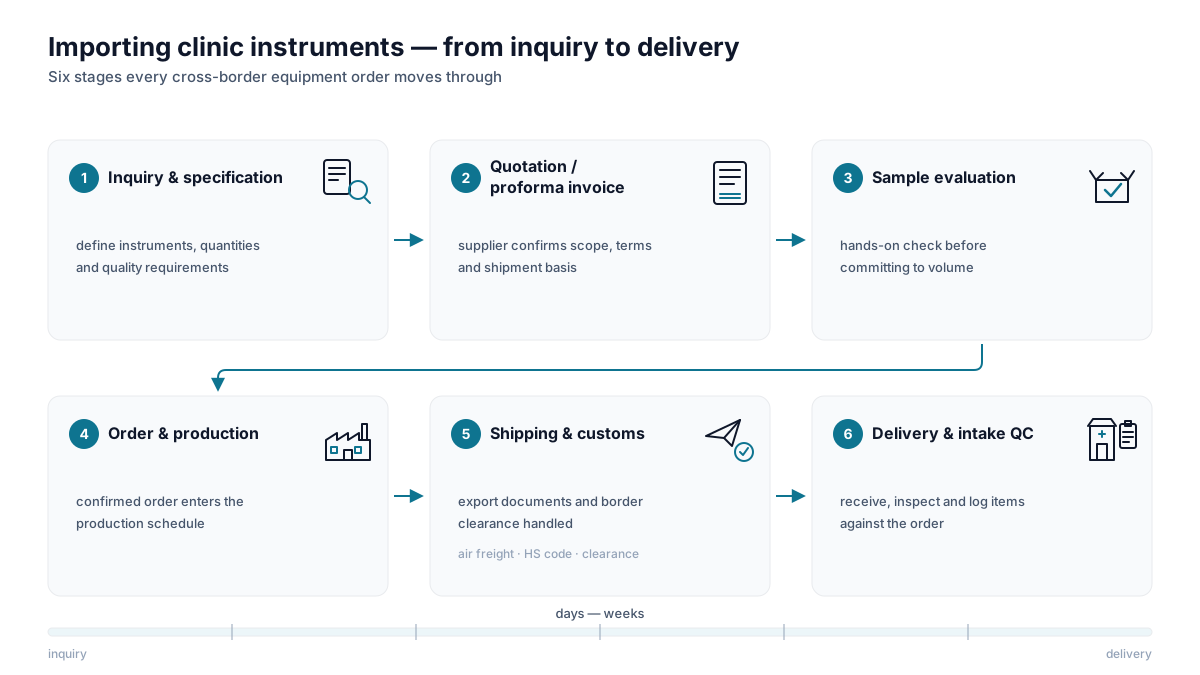
Logistics are the easy part. Milan sits inside the EU single market, replenishment from anywhere in the Union is customs-free, and third-country goods — including from the Istanbul manufacturing cluster — clear once at an EU entry point before circulating freely, with classification per the HS code reference. Malpensa's cargo capacity keeps air freight routine for urgent replenishment. The harder part is commercial patience: Italian payment terms run long by northern standards, invoices stretch, and the suppliers who thrive treat credit management as part of the relationship rather than a fight. Electronic invoicing through Italy's mandatory national system is a fixed administrative fact of selling here, and a supplier's Italian partner will expect it handled fluently rather than discovered mid-transaction. The broader groundwork for entering markets like this is collected in the sourcing and import hub.
Reading the city correctly
Milan rewards suppliers who match its self-image. Present instruments the way the city presents everything — precisely, aesthetically, with the engineering story told well — and invest in the people who influence taste: the surgeons who teach, the nurses who train others, the distributors whose showrooms function as the market's meeting rooms. Price matters less here than in volume-driven markets, but consistency and presentation matter more; a chipped box or a vague specification answer costs disproportionate credibility in a city that notices finish.
Timing deserves the same respect as presentation. The city's professional life orbits its event calendar — congresses, fashion weeks, the trade seasons that fill its hotels — and buyers are alternately saturated and available in a rhythm outsiders misread. Launching into a saturated week buys expensive invisibility; the productive windows are the quieter stretches when a distributor can assemble surgeons for an unhurried workshop. Local partners know the rhythm instinctively, which is one more argument for choosing them well and listening to them once chosen.
Frequently asked questions
Why is Milan considered Italy's aesthetic-medicine capital?
Because demand and infrastructure coincide. The fashion, media and finance economy produces an appearance-conscious, high-income clientele — including unusually strong male grooming demand — while Lombardy's part-private healthcare system supplies Italy's densest stock of private clinics and accredited surgical facilities for aesthetic practice to use.
What does Milan's clinic landscape look like for a supplier?
Many small, surgeon-owned premium practices and multi-specialty aesthetic centres rather than high-throughput chains. That means more accounts with smaller baskets, high per-unit expectations, and a sales motion built on personal cultivation, demonstration and clinical credibility rather than tender pricing.
Who authorises clinics in Milan?
Clinic authorisation and private-facility accreditation run through the Lombardy Region's health system, reflecting Italy's regionalized healthcare governance. Devices stay a national and EU matter — Ministry of Health oversight and CE marking — so suppliers meet the regional layer only through buyers' documentation expectations.
Which events make Milan commercially important for this industry?
The MiCo convention centre and the city's hospital and hotel venues host a rotating circuit of aesthetic-medicine, dermatology and surgical congresses, and the fashion-week economy keeps the city's aesthetic sector internationally visible. Verify any specific event's current edition, venue and dates directly with the organisers.
How do instruments typically reach Milanese clinics?
Mainly through northern Italian specialist distributors with Milan offices or showrooms, who own the practice relationships and run the demonstration culture buyers expect. Multi-specialty centres buy through procurement on framework terms, and a minority of surgeons import niche instruments directly after congress discoveries.
Is Italian-language capability essential for selling into Milan?
For sustained business, yes. Congress conversations happen in English comfortably, but quotes, training materials, instructions and service follow-up are expected in Italian, and the relationship-driven distribution culture makes language fluency part of how seriously a supplier is taken.
Related articles
Sourcing & Import: Buying Medical Instruments Across Borders
The commercial mechanics of importing hair restoration instruments — customs, MOQs, samples, payment terms and how to evaluate a supplier before committing.
The European Hair Restoration Market: A Qualitative Overview for Distributors
What the European hair restoration landscape looks like from a distributor’s chair: the forces driving demand, how the major regions differ in character and buying culture, and where supply-side opportunities actually sit.
Hair Restoration Industry Events: The Congresses and Trade Fairs That Matter
A working map of the recurring events that matter in hair restoration — the scientific congresses, the aesthetic industry meetings and the supply-chain fairs — and a practical method for getting real sourcing value out of them.
Instrument Samples Before a Bulk Order: How Professionals Evaluate
A clinic buyer's guide to sample orders: how to request the exact SKUs you intend to buy, what paid and free samples really signal, a structured evaluation protocol, and how to convert results into a safe first order.