
Buying & Distributing Hair Transplant Instruments in Mexico
For an international manufacturer or exporter, Mexico offers one of the largest procedure markets in the Americas — a two-speed clinic landscape, a US-border medical-tourism circuit, and a market-entry path that runs through established distributors holding COFEPRIS registrations.
For an international instrument manufacturer weighing market entry, Mexico is one of the largest and fastest-moving hair-restoration markets in the Americas — big domestic demand, a distinctive US-border medical-tourism circuit billing in dollars, and clinic volumes that consume consumables at an industrial rhythm. The entry path, however, is defined by regulation before it is defined by sales: devices are subject to national sanitary registration under COFEPRIS, which is why foreign suppliers almost always enter through an established Mexican distributor that already holds registrations and runs imports.
Key takeaways
- Mexico is a two-speed market: a large price-driven volume base and a premium private tier in the major cities that buys with North American expectations.
- COFEPRIS is the federal health authority; devices are subject to registro sanitario, a national registration that CE marking does not substitute.
- The realistic entry route for exporters is partnership with an established distributor that holds registrations and import infrastructure.
- The northern-border medical-tourism circuit — led by Tijuana — serves US patients, bills in dollars and combines high volumes with premium expectations.
- Imports clear through an agente aduanal (customs broker); trade agreements such as the USMCA grant tariff preferences depending on certified origin.
The regulatory frame, in brief
Mexico's federal health authority is COFEPRIS, which regulates medical devices alongside medicines and other health inputs. Medical devices marketed in Mexico are subject to the registro sanitario, a national authorization that foreign approvals such as CE marking do not replace, though recognized international authorizations can support certain pathways. Which products need which route is a matter for specialist regulatory counsel; for market-entry planning it is enough to know the registration exists and determines who may import and sell each product.
That single fact explains the shape of the channel. Because the registration sits with a Mexican holder, most foreign instruments enter through established medical distributors that already combine current registrations, customs experience and a national sales infrastructure — and for an exporter, allying with such a partner is nearly always faster and safer than building that apparatus independently.
Reading the market: two speeds, three cities
The most useful thing an exporter can understand about Mexico is that there is no single Mexican buyer. At the base sits a large, price-driven volume segment: high-throughput clinics competing aggressively on procedure price and purchasing consumables on cost-per-case logic, where the winning supplier holds a competitive price with genuinely consistent lot quality — this buyer punishes variability as quickly as it rewards a discount. At the top sits a premium private tier — prominent surgeons in Mexico City, Guadalajara and Monterrey — that buys the way North American accounts do: brand, technical evidence, after-sales service and immediate availability outweigh unit price. One commercial proposal does not cover both; the same catalogue sells into each tier with different arguments, margins and channel emphasis, and a distributor should be evaluated on its ability to serve both.
Geography concentrates the opportunity. Mexico City holds the greatest clinic density plus the congresses and the head offices of national medical distribution; Guadalajara contributes a medical-technology pole with its own purchasing culture; Monterrey pairs strong purchasing power with operational proximity to Texas. A distribution partner claiming national coverage should demonstrate a physical presence — people, stock, service — in at least two of the three, because Mexican surgeons buy from suppliers who can visit, solve a same-day inventory emergency and show up in person when a lot disappoints.
The border circuit: dollars, volume and US patients
Mexico's most distinctive segment is the medical-tourism corridor along the northern border. Tijuana — minutes from San Diego — concentrates clinics sized for American patients crossing for procedures at a fraction of US prices, with similar dynamics at other border points and in cities connected by direct flights. These clinics bill in dollars, operate in English, and compete in global review ecosystems against Istanbul as much as against each other, so their standards for presentation, instrument quality and perceived hygiene run high while their consumable burn-rate runs constant on full surgical schedules.
For an exporter this circuit is effectively its own market segment: clinic-volume economics with premium-tier expectations. Border clinics benchmark input prices against US references, weigh supply reliability above the last point of discount — a full schedule of patients who crossed a border does not tolerate postponed surgeries for missing punches — and reward suppliers who can react in days. The circuit is also small, competitive and talkative: a supplier who serves it well acquires a reputation that travels clinic-to-clinic faster than any campaign.
Shipping, clearance and the agente aduanal
Instrument shipments to Mexico travel overwhelmingly by air, with Mexico City as the main gateway, and clear through an agente aduanal — the licensed customs broker at the center of Mexican foreign trade. Broker choice matters as much as carrier choice: one experienced with medical devices classifies correctly the first time, anticipates the documentation the authority will request, and avoids the holds that stretch a week of transit into a month. Mexico classifies goods on the same six-digit Harmonized System base covered in our HS code reference, applying its national tariff at its own line level; trade agreements — the USMCA foremost — grant tariff preferences according to certified origin, so the same punch can land at different cost depending on the certificate of origin accompanying it. The concrete assessment belongs to the transaction's broker.
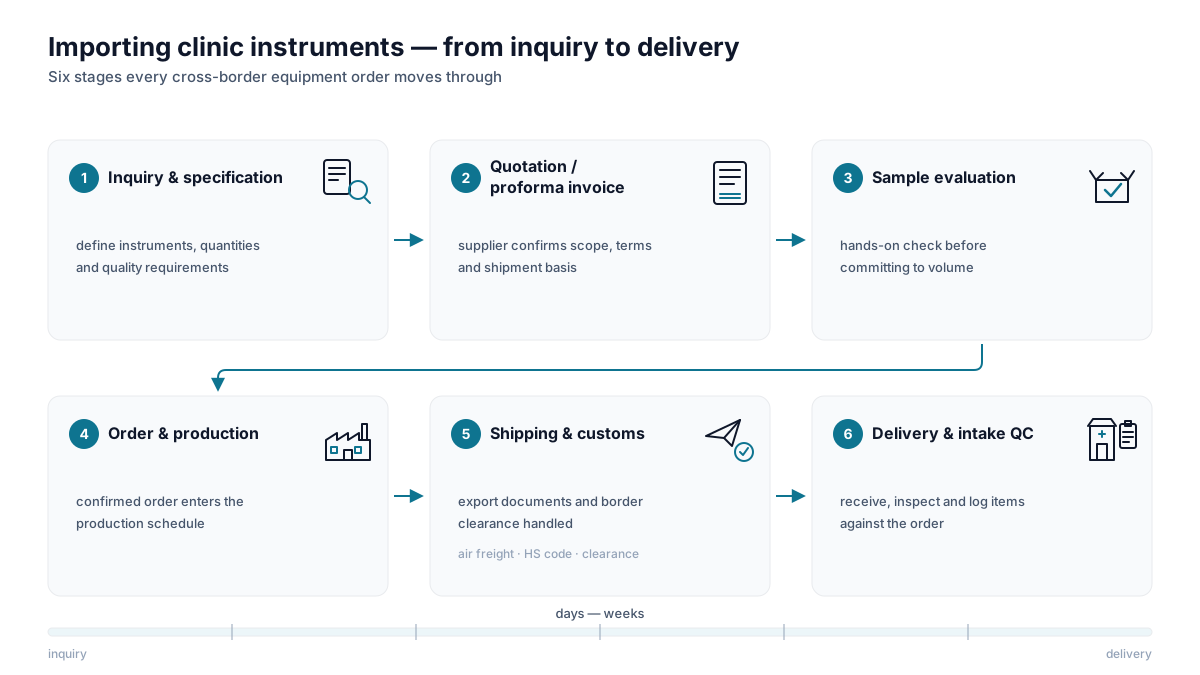
For recurring consumable flows, air consolidation — grouping several product lines into a scheduled shipment — spreads fixed clearance costs and stabilizes the replenishment calendar. The general groundwork of international supply — proforma, Incoterms, minimums, evaluation — works as it does everywhere and is collected in our sourcing and import hub; given how deliberately Mexican clinics evaluate before committing, a structured sample-order program fits this market's buying culture particularly well.
Commercial terms and the relationship
Mexican commercial practice runs on proforma and advance payment: orders confirm against a proforma invoice, a deposit secures production or stock allocation, and the balance settles against delivery or shipping documents, with terms loosening gradually as commercial history accumulates on both sides. Quoting straddles two currencies — importers buy in dollars and resell in pesos, managing the exchange exposure between them — and every domestic transaction requires a CFDI electronic invoice, the fiscal document without which a Mexican business cannot deduct the purchase.
The selling culture is relational and patient, and it runs in Spanish: negotiation, labeling and support are expected in the language, with English workable mainly in the border segment. Visits, congresses and surgeon-to-surgeon recommendation carry the weight; clinics evaluate calmly, consult colleagues and trial before committing; and the most underrated commercial argument in the country is supply continuity — where imported replenishment takes weeks, the distributor holding constant local stock keeps the large accounts. An exporter's distribution agreement should therefore address stock depth and territory seriously from the start; the clauses that matter are mapped in our guide to distribution agreement terms.
Evaluating a Mexican partner
Because so much rides on the distributor, the diligence conversation deserves structure. Four lines of questioning separate credible Mexican partners from hopeful ones. First, the regulatory portfolio: which registrations does the company currently hold or manage, in which device categories, and who inside the organization owns regulatory affairs — an answer of "our consultant handles that" merits a follow-up. Second, the import operation: which agente aduanal does it work with, how long is the relationship, and can it describe its last classification disagreement and how it was resolved. Third, physical footprint: warehouses, sales staff and service capability city by city, checked against the three-city standard and the border circuit rather than accepted as a national claim. Fourth, the clinic list: reference customers across the volume base, the premium tier and the border segment, because a partner strong in only one will quietly confine your line to it.
Expect the diligence to run both ways. Established Mexican distributors are courted constantly and evaluate foreign principals on supply reliability, territorial honesty and willingness to invest in training and congress presence — the relationship starts healthiest when both sides treat the first year as a mutual trial with defined expectations.
| Entry decision | The realistic answer for Mexico |
|---|---|
| Direct sales vs. local partner | Partner — registration, clearance and peso invoicing favor an established holder |
| One national distributor vs. regional split | Start national with proven presence in two of the three big cities; revisit as volume grows |
| Border circuit coverage | Verify the partner can service border clinics at their required speed, or treat it as a defined sub-territory |
| Currency of contract | USD supplier-side; expect the partner to manage USD-MXN exposure on resale |
Frequently asked questions
Does CE marking allow me to sell instruments in Mexico?
No. Medical devices marketed in Mexico are subject to the registro sanitario under COFEPRIS, a national authorization that CE marking or other foreign approvals do not substitute, though they may support certain recognition pathways. Verify each product's status with regulatory counsel before committing inventory.
What is the realistic entry route for a foreign instrument manufacturer?
Partnership with an established Mexican medical distributor that already holds registrations, works with an experienced agente aduanal and sells nationally. Building that regulatory and import infrastructure independently is possible but slow; a well-negotiated distribution agreement converts months of setup into a working channel.
How important is the US-border medical-tourism segment?
Large and growing. Border clinics led by Tijuana operate full schedules of American patients, billing in dollars and consuming punches, blades and consumables constantly, with premium expectations for presentation and supply continuity. It combines volume-clinic economics with premium-tier standards and rewards fast, reliable suppliers.
How do USMCA and other trade agreements affect landed cost?
They grant tariff preferences based on certified origin, so identical products can pay different duty depending on where they were made and what documentation accompanies them. The specific tariff line, applicable preference and documentary requirements are determined with the customs broker handling the transaction.
What payment terms should an exporter expect from Mexican partners?
Proforma invoice with an advance deposit and balance against shipment is the standard opening structure, easing with track record. Domestically, advance payments are also customary on significant orders, credit terms are earned over time, and every local sale requires a compliant electronic invoice for the buyer to deduct it.
Which cities matter most for distribution coverage?
Mexico City, Guadalajara and Monterrey concentrate the clinic density, congresses and distribution infrastructure, with Tijuana heading the distinct border circuit. A credible national partner shows real physical presence in at least two of the three major cities plus the ability to service border clinics quickly.
Related articles
Sourcing & Import: Buying Medical Instruments Across Borders
The commercial mechanics of importing hair restoration instruments — customs, MOQs, samples, payment terms and how to evaluate a supplier before committing.
HS Codes for Hair Transplant Instruments and Supplies
A heading-level HS/CN classification reference for the hair-restoration product basket: instruments, consumables, equipment and hair-care products, with the pitfalls that cause misclassification.
Distribution Agreement Terms: The Clauses That Decide Whether the Deal Works
A clause-by-clause walk through medical device distribution agreements: territory and exclusivity, minimum commitments, pricing structure, marketing obligations, IP use, termination and the post-term provisions most first-time distributors overlook.
Instrument Samples Before a Bulk Order: How Professionals Evaluate
A clinic buyer's guide to sample orders: how to request the exact SKUs you intend to buy, what paid and free samples really signal, a structured evaluation protocol, and how to convert results into a safe first order.