
Istanbul: Inside the Hair Transplant Industry's Capital City
Istanbul is the one city where the world's densest hair-transplant procedure market and the industry's specialised instrument-making and export layer share the same streets — a co-location that shapes how the global supply chain works and how buyers should approach it.
Istanbul holds a position no other city in this industry does: it is simultaneously the world's busiest hair-transplant procedure market and the home of the specialised manufacturing, converting and trading layer that supplies that market — and, increasingly, everyone else's. For a clinic or distributor sourcing instruments, that makes Istanbul less a "market to sell into" and more the upstream node most supply chains eventually touch, whether or not the invoice says so. Understanding how the cluster is built — what is genuinely made here, what is traded here, and how goods leave here — is the difference between sourcing well from Istanbul and merely sourcing cheaply.
Key takeaways
- Istanbul's cluster is demand-made: an enormous local procedure market created specialised instrument and consumable suppliers around it, layered on Turkey's older surgical-manufacturing base.
- Co-location is the real advantage — product feedback moves from high-volume operating rooms to workshops in days, an iteration speed no other city can replicate.
- The cluster has two layers, factory and trading house, and the export-facing company is not always the maker; qualification work matters more here, not less.
- Device regulation is national (TİTCK), not municipal — what is city-specific is commercial: districts, showrooms, fairs and the airport cargo gateway.
- For EU buyers the Customs Union keeps duty off most instrument shipments; Istanbul Airport's cargo capacity makes air freight the cluster's default outbound mode.
Why the cluster exists here and nowhere else
Every industrial cluster starts with a reason, and Istanbul's is unusually clean: the customers arrived first. Through the 2000s and 2010s the city became the world's dominant destination for hair-transplant treatment, drawing patients from Europe, the Gulf, and increasingly everywhere else, on the strength of surgical capacity, price and flight connectivity. That created something rare — hundreds of clinics running high-volume schedules in one metropolitan area, consuming punches, implanters, blades, forceps and the full consumable basket every working day.
Concentrated, specification-literate demand at that scale pulls a supply industry into existence. Local workshops that once served general surgery began grinding FUE punches; converters and packers built consumable lines around what the clinics actually used; trading houses formed to aggregate product ranges and handle export paperwork as foreign visitors started asking to buy what they saw in use. Beneath the specialty layer sits Turkey's longer-standing surgical-instrument manufacturing tradition — much of it historically based in Anatolian industrial cities rather than Istanbul itself — which supplies forgings, machining capacity and metalworking skill that the Istanbul firms design against, finish, brand and export.
The result is a feedback loop with no equivalent anywhere. A punch geometry revision or an implanter needle change can be trialled across high-volume operating rooms within weeks and either die quietly or spread through the cluster; suppliers here iterate against daily clinical feedback rather than annual conference impressions. That loop — not labour cost — is the cluster's durable advantage, and it is why instrument lines conceived in Istanbul so often end up carried by distributors on other continents.
The two layers: factories and trading houses
The practical thing a buyer must understand about Istanbul is that the cluster has two distinct layers that present identically online. The factory layer designs and makes product — sometimes end-to-end, sometimes finishing components machined elsewhere in Turkey. The trading layer aggregates: it assembles catalogues from multiple workshops, brands them, and sells the range abroad with polished export service. Neither layer is inherently better — a good trading house offers breadth and painless logistics, and a good factory offers control and OEM depth — but you should know which one you are talking to, because quality consistency, pricing power and private-label capability all differ between them.
That is why supplier qualification is worth more effort in Istanbul than in thinner markets: the process in how to evaluate an instrument manufacturer — factory evidence, lot traceability, retained-sample discipline — is exactly the toolkit that separates the layers, and a structured sample round per the sample orders guide tests both the product and the paperwork before real money moves. Visiting helps more here than almost anywhere: the cluster is compact enough that two or three factory visits and a showroom day fit into one trip, and what a supplier lets you see is itself information.
A cluster you can walk
Unusually for a global industry hub, Istanbul's cluster has a geography measured in taxi rides. Clinics concentrate along the European side's hospital and business corridors — the districts around Şişli, Fulya and Nişantaşı carry a dense band of them — with a second concentration across the water on the Asian side around Ataşehir and Kadıköy. Suppliers position themselves within courier distance of those corridors: showrooms and sales offices sit near the clinic districts even when production happens in the industrial zones on the city's periphery, because the daily rhythm of the trade runs on same-day delivery and drop-in visits.
For a visiting buyer this compresses due diligence remarkably. A single working day can move from a factory floor in an industrial estate, to a showroom shelf where the full range sits in hand's reach, to — with the right introductions — observing instruments in clinical use that afternoon. No brochure survives contact with that itinerary, which is precisely its value: the cluster's density lets you verify claims at a speed that remote sourcing never matches, and suppliers who resist showing you around are telling you something too.
Regulation: national rules, city commerce
There is no Istanbul-specific licensing regime to learn — device regulation in Turkey is national. TİTCK, the Turkish Medicines and Medical Devices Agency, oversees medical devices under legislation aligned with the EU framework, so CE marking is the reference credential in the export conversation, while products sold domestically are additionally listed in the national ÜTS product-tracking system; clinic licensing sits with the Ministry of Health. For a foreign buyer the operative rules are therefore export mechanics rather than local approvals: correct classification per line — see the HS code reference — and, for EU-bound goods, the A.TR movement certificate under the Customs Union that keeps duty off most industrial products. The full commercial sequence is covered in importing from Turkey.
Where the industry meets in Istanbul
The city's fair calendar reflects its production role. Expomed Eurasia, Istanbul's medical-technology trade fair, is the natural venue for meeting the cluster's manufacturers and trading houses in one hall, comparing instrument lines side by side and starting OEM conversations; schedules change, so verify current editions directly with the organisers. Around it runs a dense, less formal circuit — aesthetic-medicine congresses, hair-restoration workshops and manufacturer-hosted training days — that rotates through the city year-round precisely because the operating rooms and the factories are both here. For visiting buyers, these events double as due-diligence opportunities: the supplier who is a fixture on the local circuit is usually the one with a real local footprint.
How supply flows through the city
Domestically, supply lines are startlingly short. Istanbul clinics buy direct from makers and stockists, often on same-day courier terms, at prices set by intense local competition — which is why foreign brands rarely sell into Istanbul, and why the city functions almost purely as an origin market for the rest of the world.
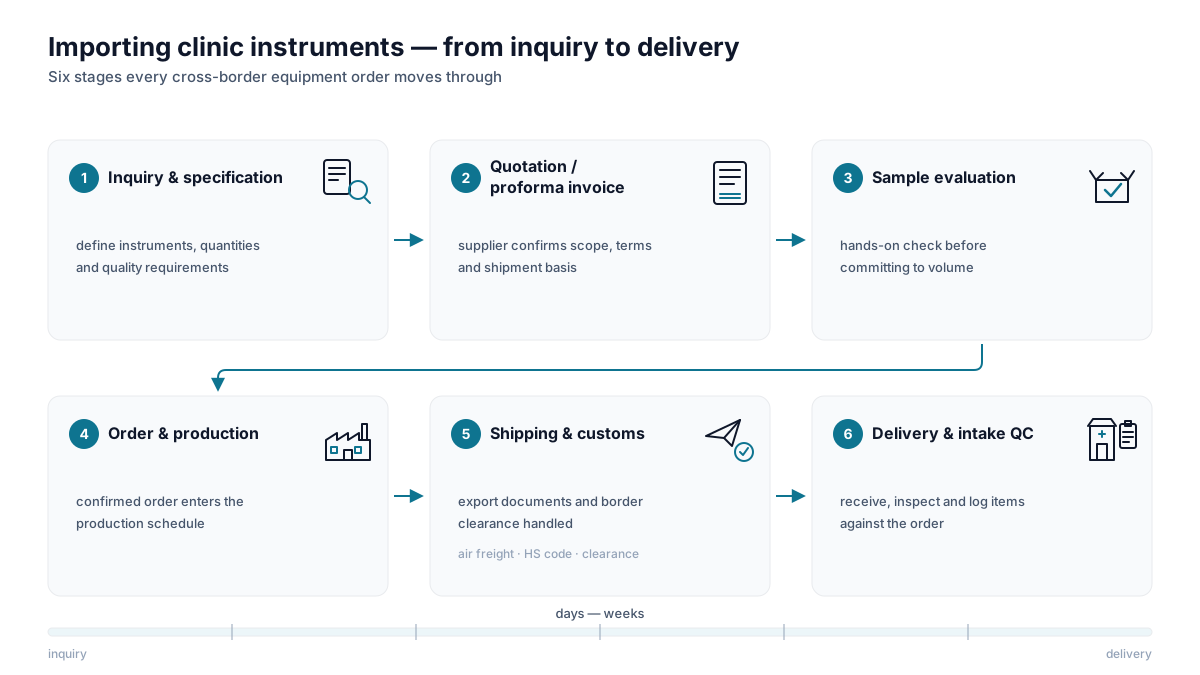
Outbound, three flows dominate. Sample and repeat consumable orders leave by international courier, cleared as parcels. Production orders consolidate into air freight through Istanbul Airport, whose cargo capacity — built for far bigger industries — gives the cluster fast, frequent lift to Europe, the Gulf and Asia; forwarders here handle medical shipments daily and consolidation across multiple suppliers into one entry is routine and worth asking for. Sea freight matters only for heavy equipment. A fourth, quieter flow is OEM: instruments manufactured in and around Istanbul that ship out under other companies' brands, which is worth remembering when comparing "European" catalogues.
Two commercial habits of the cluster are worth knowing before you negotiate. First, currency: although local costs run in lira, export quotes are almost universally issued in euros or dollars, and suppliers hold those prices with reasonable stability — do not build a sourcing case on the assumption that lira movements will flow through to your invoice, because exporters price to insulate themselves from exactly that. The cluster's genuine price advantage comes from competition and cost structure, not exchange-rate timing. Second, pace: Istanbul suppliers negotiate directly and answer fast, minimum order quantities are more flexible than European makers typically offer, and OEM conversations that would take a quarter elsewhere can reach samples in weeks. The tempo cuts both ways — a supplier who quotes in hours may also expect decisions in days, and sustaining the relationship takes the same responsiveness in return.
| Buyer type | How they typically engage the cluster |
|---|---|
| Visiting distributor | Factory visits plus a fair or showroom day; negotiates OEM or exclusivity face to face |
| Remote clinic buyer | Courier-first sampling, then consolidated air-freight repeat orders through one or two vetted suppliers |
| Private-label brand | Works the factory layer directly for OEM production, with tighter audit and documentation demands |
The broader groundwork — supplier evaluation sequences, payment structures, import mechanics — lives in our sourcing and import hub; Istanbul is the city where most of it gets applied.
Frequently asked questions
Why are so many hair-transplant instrument suppliers based in Istanbul?
Because the customers were there first. The city's dominance in hair-transplant procedures created massive, concentrated daily demand for specialised instruments and consumables, and a supply industry of workshops, converters and trading houses grew around it, drawing on Turkey's older surgical-manufacturing base. Serving high-volume clinics locally gave those suppliers iteration speed that generic exporters lack.
Is everything sold from Istanbul actually made in Istanbul?
No. The cluster has a factory layer and a trading layer, and components are often machined elsewhere in Turkey before finishing and branding in Istanbul. Both layers can be good suppliers, but they differ in quality control, pricing and OEM capability, so establish which you are dealing with during qualification.
Do I need to visit Istanbul to source there?
Not strictly — courier-based sampling and remote qualification work — but visiting pays off unusually well because the cluster is compact. Factory visits, showroom days and a trade fair can fit into a single trip, and physical access to a supplier's production is one of the strongest signals you can collect.
Is there a trade fair in Istanbul for this industry?
Yes — Expomed Eurasia is the city's medical-technology fair and a practical venue for meeting instrument manufacturers and trading houses in one place, alongside a rotating circuit of aesthetic congresses and workshops. Dates and editions change, so verify current schedules with the organisers before planning a trip.
Are instruments from Istanbul CE marked?
Turkey applies EU-aligned medical-device legislation under TİTCK, so export-oriented manufacturers work to the CE framework and it is the reference credential in export deals. Verify certification documents per product and per manufacturer as part of qualification rather than assuming coverage across a catalogue.
What do EU buyers pay in duty on Istanbul shipments?
Under the EU–Turkey Customs Union, most industrial goods including instruments travel duty-free with an A.TR movement certificate arranged by the exporter; import VAT still applies in your country. Non-EU buyers should check their own tariff schedules against the relevant HS codes.
Related articles
Sourcing & Import: Buying Medical Instruments Across Borders
The commercial mechanics of importing hair restoration instruments — customs, MOQs, samples, payment terms and how to evaluate a supplier before committing.
Importing Hair Restoration Instruments from Turkey: A Practical Guide
Why Turkey became a manufacturing base for hair-restoration instruments, and the practical import mechanics — Incoterms, customs documents, duty and VAT logic — for buyers in the EU, UK and Gulf.
How to Evaluate an Instrument Manufacturer
A balanced seven-criterion framework distributors and clinics can use to vet instrument manufacturers before committing a territory or a large order.
Instrument Samples Before a Bulk Order: How Professionals Evaluate
A clinic buyer's guide to sample orders: how to request the exact SKUs you intend to buy, what paid and free samples really signal, a structured evaluation protocol, and how to convert results into a safe first order.