
Buying & Distributing Hair Transplant Instruments in Belgium
Belgium is one country but two commercial cultures: selling instruments here means serving Dutch-speaking Flanders and French-speaking Wallonia on their own terms, with Brussels' international medical scene layered on top.
Belgium is a compact instrument market with one defining feature: it is bilingual all the way down. A supplier who treats it as a single audience will quietly lose half of it, because Dutch-speaking Flanders and French-speaking Wallonia buy through different networks, read different trade media and expect service in their own language. Get the language architecture right, though, and Belgium rewards you twice — a stable, quality-minded domestic clinic base, plus Antwerp and Liège freight infrastructure that makes physically supplying the country trivially easy.
Key takeaways
- Plan for two commercial cultures from day one: Dutch-language service for Flanders, French for Wallonia, and both for Brussels.
- The FAMHP regulates the Belgian device market; CE-marked instruments circulate freely under the EU MDR.
- Belgium sits inside the EU single market, and Antwerp's port plus Liège's cargo airport give it heavyweight import infrastructure for a small country.
- The clinic landscape is compact and relationship-driven, with Brussels adding an international, expat-heavy medical scene.
- Distribution usually happens at Benelux scale; a Belgium-only distributor is rare, but bilingual Belgian teams often lead Benelux coverage.
Two languages, one buying decision
Language in Belgium is not a courtesy issue; it is commercial infrastructure. Flanders, the Dutch-speaking north, holds the larger share of economic activity and tends toward the direct, efficiency-first style familiar from the Netherlands — though with a touch more formality and relationship patience than Dutch buyers show. Wallonia, the French-speaking south, does business closer to the French pattern: warmer to establish, more relationship-led, and firmly French-language in correspondence and service. Brussels is officially bilingual and practically international, with English common in its hospital and academic circles.
For an instrument supplier this cashes out in concrete decisions. Quotations, IFU packs and support need to exist in Dutch and French, not one or the other; a sales contact who can switch languages mid-call is worth more than two monolingual ones; and marketing sent in the wrong language to the wrong region is often simply discarded. Belgian buyers rarely complain about this — they just quietly choose the competitor who got it right.
The regulator
Medical devices in Belgium fall under the FAMHP, the Federal Agency for Medicines and Health Products — known as the AFMPS in French and FAGG in Dutch, a naming trio that itself illustrates the country's structure. Instruments carry the CE mark under the EU MDR and circulate freely from other member states, while economic operators active on the Belgian market have their own obligations toward the agency. Confirm your status as importer or distributor with the FAMHP before taking on Belgian customers.
Importing into Belgium
Belgium's customs position is the EU standard: purchases from suppliers in other member states arrive without customs formalities as intra-Community acquisitions, and third-country imports clear once into free circulation, after which they move anywhere in the single market. What sets Belgium apart is capacity. Antwerp is one of Europe's largest ports, Liège has grown into a major air-cargo hub with a strong pharmaceutical and healthcare logistics cluster, and Brussels sits within a day's trucking of most of northwestern Europe. Belgium also offers its own import-VAT deferment mechanism, under which licensed importers account for import VAT through the periodic return rather than paying it at the border — the same working-capital logic that draws importers to neighbouring gateways.
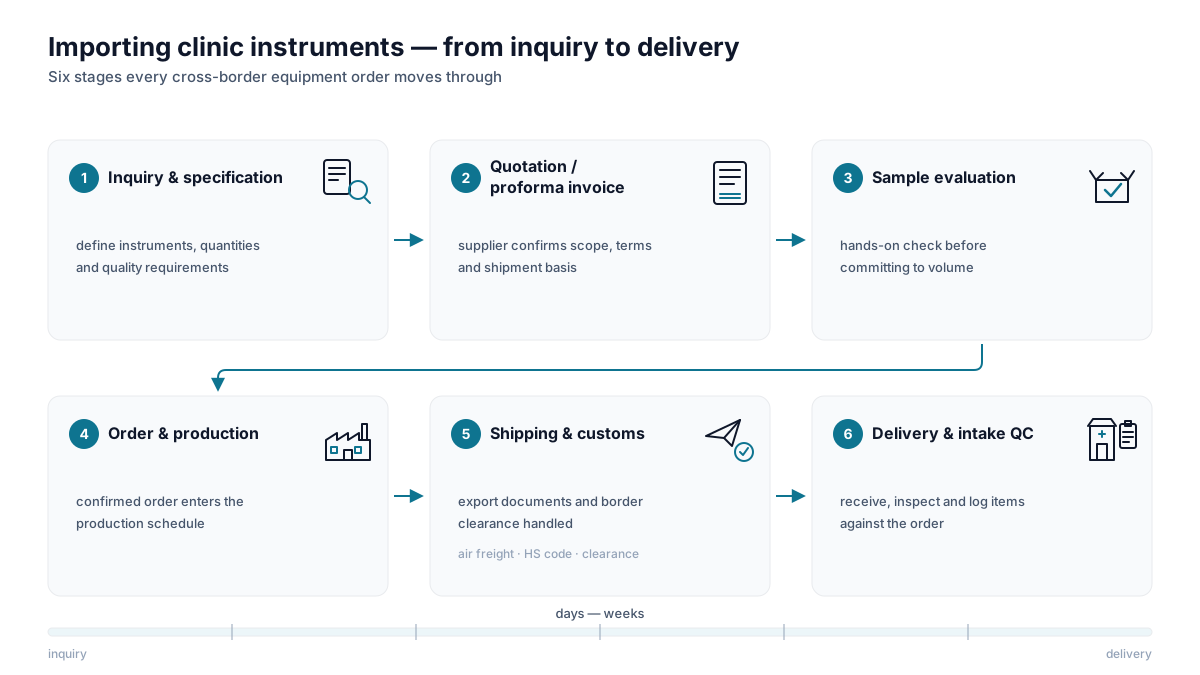
If you are importing instruments from outside the EU, classification comes before clearance: our HS code reference for hair-transplant supplies covers the tariff lines your broker will need, and the broader mechanics of third-country sourcing are laid out in the sourcing and import hub.
The clinic landscape
Belgium's hair-restoration scene is small but mature. The country has a long-standing tradition in dermatology and aesthetic surgery, procedures are privately paid, and clinics cluster around Brussels, Antwerp and Ghent, with a thinner spread through Wallonia's cities. Brussels deserves separate mention: as the EU's administrative capital it carries a large international and expatriate population, which supports clinics accustomed to English-speaking patients and international referral patterns — a small pocket of demand that behaves differently from either linguistic region around it.
The academic layer beneath the private clinics is unusually strong for a country this size. Belgium's university hospitals — Leuven and Ghent on the Dutch-speaking side, Liège and the Brussels academic centres on the French-speaking side — sustain serious dermatology and plastic-surgery training, and many of the practitioners running private hair-restoration work trained and still teach within that system. For a supplier this has two practical consequences: clinical credibility travels through the academic network faster than advertising does, and a product that earns a good reputation with one respected practitioner tends to surface in conversations across the relevant language community. Congress and society meetings in the region are correspondingly productive places to be seen.
Belgian buyers as a group are careful rather than fast. Expect a longer evaluation than in the Netherlands, more weight on references and existing relationships, and real attention to documentation quality in the buyer's language. Price matters, but Belgian clinics are not a discount market; they will pay for instruments that arrive on time, perform consistently, and come with a support contact who answers in Dutch or French as required. Patient flows run in both directions — some Belgians travel abroad for lower-cost procedures, while Belgian clinics draw on cross-border and international patients through Brussels — but neither flow dominates the market's character the way outbound tourism does in some neighbouring countries.
Distribution and payment customs
Belgium is almost never a standalone distribution territory. The economics point to Benelux-wide coverage, and in practice bilingual Belgian companies frequently anchor that coverage precisely because they can serve Dutch- and French-speaking customers with one team — a structural advantage a Netherlands-only or France-only distributor lacks. Manufacturers granting territories should write Benelux as one unit and ask hard questions about genuine French-language capacity, not just Dutch; our guide to distribution agreement terms covers how to pin territory and service commitments down in writing, and becoming an instrument distributor walks through the role from the candidate's side.
Direct import by clinics happens, particularly in Flanders where the trading reflex is strong, but the intermediated share is higher than in the Netherlands: many Belgian practices prefer a local counterparty who handles stock, returns and paperwork in their language. Payment runs on SEPA transfer against invoice, with terms of thirty days common and sixty days not unusual in longer relationships — Belgian payment behaviour is solid, if a shade slower than Dutch. Electronic invoicing is expanding rapidly under Belgian and EU e-invoicing initiatives, so B2B suppliers should be prepared to issue structured e-invoices to Belgian customers. New foreign suppliers typically start on prepayment and graduate to invoice terms as trust builds; pushing for open account on the first order reads as naive rather than confident.
Matching service to region
| Region | Working language | Commercial style | Practical implication for suppliers |
|---|---|---|---|
| Flanders (north) | Dutch | Direct, efficiency-first, Dutch-adjacent | Dutch-language quotes and support; fast follow-up expected |
| Wallonia (south) | French | Relationship-led, closer to French norms | French-language everything; invest in the personal relationship |
| Brussels-Capital | Dutch + French, much English | International, institutional, expat-heavy | Bilingual materials; English acceptable in international clinics |
The table understates one point worth repeating: these are not preferences you can average. A single "Belgian" campaign in one language is effectively a half-Belgium campaign.
Practical notes for suppliers entering Belgium
A few habits smooth the entry disproportionately. Verify counterparties early: every Belgian business carries an enterprise number in the Crossroads Bank for Enterprises, the public company register, and a quick check there is standard due diligence before extending terms. Match invoice and correspondence language to the customer's region from the first document — a French-language invoice to a Ghent clinic, or a Dutch one to Namur, is a small error that lands badly. Build your catalogue and price list as parallel Dutch and French documents with identical structure, so your sales conversations reference the same page numbers in either language. And plan territory conversations honestly: if your Benelux distributor's team sits entirely in Flanders, ask who exactly answers a Walloon clinic's service call in French on a Tuesday afternoon, because that question is the difference between nominal and real national coverage.
Delivery logistics, by contrast, need little thought. Belgium is small, densely networked and saturated with courier capacity, so next-day delivery from a Belgian or Dutch warehouse is the default expectation, and clinics treat anything slower as a supplier choice rather than a constraint.
Currency and language notes
Belgium uses the euro, so eurozone suppliers carry no currency risk and non-EU suppliers will find Belgian buyers entirely accustomed to euro invoicing. On language, the safe default for any document a customer will touch — quotation, delivery note, IFU, support ticket — is to prepare Dutch and French versions in parallel from launch. English works as a bridge in Brussels and in academic or hospital procurement, but relying on it across the country signals a supplier who has not committed to the market.
Frequently asked questions
Can I serve Belgium with English-language sales and support?
Only partially. English functions in Brussels' international clinics and some academic settings, but Flanders expects Dutch and Wallonia expects French in commercial relationships. Suppliers without both languages consistently underperform in one half of the country.
Who regulates medical devices in Belgium?
The FAMHP — the Federal Agency for Medicines and Health Products, called AFMPS in French and FAGG in Dutch. Instruments carry the CE mark under the EU MDR, and economic operators on the Belgian market have obligations toward the agency.
Are there customs duties when buying instruments from another EU country into Belgium?
No. Intra-EU purchases are intra-Community acquisitions with no customs formalities or duty; VAT is handled through the buyer's Belgian VAT return. Customs only enters the picture for goods arriving from outside the EU.
Does Belgium need its own dedicated distributor?
Usually not. Distribution is typically organised at Benelux level, and bilingual Belgian firms often lead that coverage because one team can serve Dutch- and French-speaking customers. Manufacturers should define Benelux as a single territory and verify genuine capacity in both languages.
What payment terms are normal with Belgian clinics?
SEPA transfer against invoice, commonly at thirty days and sometimes sixty in established relationships. Payment discipline is reliable. New foreign suppliers normally start on prepayment or proforma and move to invoice terms once a track record exists.
Why do Antwerp and Liège matter to an instrument importer?
Antwerp is one of Europe's largest seaports and Liège a major air-cargo hub with a strong healthcare logistics cluster, so third-country stock clears efficiently in Belgium and then moves freely across the EU single market. For a small country, Belgium has disproportionate import capacity.
Related articles
Sourcing & Import: Buying Medical Instruments Across Borders
The commercial mechanics of importing hair restoration instruments — customs, MOQs, samples, payment terms and how to evaluate a supplier before committing.
HS Codes for Hair Transplant Instruments and Supplies
A heading-level HS/CN classification reference for the hair-restoration product basket: instruments, consumables, equipment and hair-care products, with the pitfalls that cause misclassification.
How to Become a Hair Transplant Instrument Distributor
A practical guide to building a distribution business in hair restoration instruments: how the revenue model actually works, how to build a starting portfolio, which manufacturer relationship to choose and how the first customers are won.
Distribution Agreement Terms: The Clauses That Decide Whether the Deal Works
A clause-by-clause walk through medical device distribution agreements: territory and exclusivity, minimum commitments, pricing structure, marketing obligations, IP use, termination and the post-term provisions most first-time distributors overlook.