
Instrument Sterility and Packaging: A Buyer's Guide
What clinic buyers need to know about sterile and non-sterile supply formats, sterile barrier packaging, sterilisation methods, receipt inspection, shelf life and storage.
Surgical instruments and consumables arrive at a clinic in one of two states: sterile, meaning the manufacturer has sterilised the product inside a validated barrier package that keeps it sterile until opened; or non-sterile, meaning the clinic sterilises it on site before use. Neither format is inherently better — sterile supply buys convenience, traceability and a guaranteed state at the point of use, while non-sterile supply costs less per unit and suits instruments designed for repeated reprocessing. What a buyer must understand is how each format is packaged, how to verify integrity on receipt, and how shelf life, lot tracking and storage keep a sterile product actually sterile until the day it is opened.
Key takeaways
- Sterile supply means sterilised inside a validated barrier package; non-sterile supply shifts sterilisation to the clinic. Both are legitimate — the choice is workload, cost and traceability.
- The package, not the product, maintains sterility. A perfect instrument in a compromised pouch is a non-sterile instrument.
- EO, gamma and autoclave are different tools: EO and gamma are industrial methods used by manufacturers; steam autoclaving is the standard for on-site reprocessing of reusables.
- Every sterile delivery deserves a receipt check: packaging damage, indicator status, lot number and expiry date — before it goes on the shelf.
- Shelf life is event-related as much as time-related: crushed, wetted or repeatedly handled packages lose sterility regardless of the printed date.
Sterile vs non-sterile supply: what each format really means
Sterile supply is the format most disposable hair-restoration consumables use: punches, blades, implanter needles, syringes, PRP tubes. The manufacturer seals the product in a barrier package, sterilises it in that package, tests the process against a validated standard, and labels it with a lot number, sterilisation method and expiry date. From the buyer's perspective the product arrives ready for the sterile field — no reprocessing, no in-house validation, and a paper trail linking every unit to a production batch.
Non-sterile supply is common for reusable steel instruments — forceps, needle holders, scissors, reusable punch handles — and for some bulk consumables. The product ships clean but not sterile, often in simple protective packaging, and the clinic's own sterilisation line brings it to a sterile state before each use. Unit prices are lower because the manufacturer skips sterilisation, barrier packaging and the associated documentation, but the clinic inherits that work along with the responsibility for doing it properly.
| Aspect | Sterile supply | Non-sterile supply |
|---|---|---|
| Typical products | Disposable punches, blades, needles, syringes, PRP tubes, procedure kits | Reusable forceps, scissors, needle holders, punch handles, some bulk consumables |
| State on arrival | Sterilised in a validated barrier package, ready for the sterile field | Clean but not sterile; must pass through the clinic's sterilisation line before use |
| Unit price | Higher — includes sterilisation, barrier packaging and documentation | Lower — sterilisation cost and labour shift to the clinic |
| Traceability | Lot number, sterilisation method and expiry printed on every unit | Clinic's own reprocessing records carry the traceability burden |
| Clinic workload | Receipt check and correct storage only | Full reprocessing cycle: cleaning, inspection, packaging, autoclaving, records |
| Failure mode to watch | Packaging damage in transit or storage | Inadequate reprocessing or worn instruments staying in rotation too long |
The economics follow the instrument's life. Single-use items are almost always bought sterile: sterilising disposables in-house wastes staff time and creates traceability gaps. Reusables are almost always bought non-sterile, because they will pass through the clinic's autoclave hundreds of times anyway and factory sterility would be spent on the first cycle. The genuinely debatable middle ground — items a clinic could buy either way — comes down to session volume, sterilisation capacity and how much the team values a factory-documented state at the point of use. Sterile packaging is also one of the visible price drivers separating instrument tiers, as covered in the FUE punch price guide.
Sterile barrier systems: what the packaging does
The core concept is the sterile barrier system: the minimum packaging that prevents microorganisms from entering and allows the product to be presented aseptically. In practice a buyer will meet a few common constructions.
Peel pouches — the familiar paper-and-film or Tyvek-and-film pouch — are the standard for single instruments and small kits. The porous side lets the sterilising agent in during processing and then acts as a microbial barrier; the sealed edges are the critical feature, and the chevron-shaped end allows aseptic peel-open presentation.
Blisters with lidding — a rigid thermoformed tray sealed with a porous or foil lid — protect products that must not flex or tangle, such as implanter needles or preloaded devices. The tray also fixes the product's position, which matters for sharp edges that a loose pouch would let rattle.
Double packaging — a pouch within a pouch, or an inner blister in an outer pouch — supports the operating-room ritual of an outer layer opened by circulating staff and a sterile inner layer received onto the field. Kits intended for direct OR use are often packed this way.
Most sterile packaging carries a process indicator: a printed patch that changes colour when exposed to the sterilisation process. It confirms the package went through processing — it is not a sterility guarantee, but an unchanged indicator on a delivered product is an immediate stop signal.
EO, gamma and autoclave: three methods, three jobs
Buyers do not need to run sterilisation processes, but understanding the three names on labels and spec sheets prevents real purchasing mistakes.
Ethylene oxide (EO) is a gas process operating at relatively low temperatures. Manufacturers use it for products that heat or radiation would damage — devices with plastics, adhesives, electronics or fine coatings. EO-processed goods require aeration before release, which is the manufacturer's problem, not yours; on the label it typically appears as "STERILE EO".
Gamma irradiation (and its industrial siblings, e-beam and X-ray) sterilises by radiation dose, penetrating sealed cartons at scale. It is the workhorse for high-volume disposables — syringes, blades, tubes, many punches. Some polymers discolour or grow brittle under radiation, which is why the manufacturer, not the buyer, chooses the method to suit the materials.
Steam autoclaving is the standard method inside clinics: pressurised saturated steam at high temperature. It is fast, effective and inexpensive, but only suitable for products that tolerate heat and moisture — which is precisely why reusable instruments are made from steels designed for hundreds of autoclave cycles, and why single-use devices with plastic hubs are not candidates for a second life via the clinic autoclave.
The practical purchasing consequence: match the format to your intent. If you plan to reprocess, buy instruments specified as reusable and autoclave-compatible. If you buy sterile disposables, the industrial method is the manufacturer's validated choice — what you verify is the labelling and the packaging, not the physics.
The receipt check: five minutes that protect every case
Packaging integrity is checked at the door, not in the operating room. A workable routine for any delivery of sterile goods takes minutes per shipment.
Start at carton level: crushed corners, punctures and water staining are grounds to document damage before accepting the delivery, because a compressed carton can breach pouches deep inside. Then open a representative sample of units and inspect the packs themselves — seals should be continuous with no channels or wrinkles through the seal area, films free of tears and pinholes, and process indicators visibly changed. Check that lot numbers and expiry dates on the units match the delivery paperwork, and that a single delivery does not silently mix lots you were not told about. Finally, record what arrived: lot numbers, quantities, expiry dates, and where it was shelved.
Anything that fails goes into quarantine, photographed, and back to the supplier — a supplier's response to a documented packaging complaint tells you a great deal about how they will handle a bigger problem later, which is worth remembering when evaluating a manufacturer.
Shelf life, expiry and lot tracking
Sterile products carry expiry dates typically measured in years, based on validated ageing of the packaging. Two ideas keep those dates meaningful in practice.
First, shelf life is event-related as much as time-related. The modern view of package sterility is that loss of sterility is caused by events — a tear, a crushed seal, moisture, repeated handling — rather than by time alone. The printed date assumes the package lives on a clean, dry shelf; a pouch that has been dropped behind a radiator for a year does not get the benefit of its date.
Second, lot tracking is your recall mechanism. Every sterile unit is labelled with a lot number linking it to one production and sterilisation batch. A clinic that records which lots arrived and, ideally, which lot was used per case can respond to a supplier notification in minutes rather than by discarding an entire storeroom. A simple spreadsheet — date received, product, lot, expiry, storage location — is enough at clinic scale; what matters is that it exists and is kept.
Rotation follows automatically: first-expiry, first-out. New deliveries go behind existing stock, and a monthly scan for short-dated items prevents quiet write-offs. Clinics that buy in larger wholesale quantities should size orders against realistic consumption — a pallet price that looks attractive per unit stops being attractive when a third of the goods expire on the shelf. When comparing suppliers, remaining shelf life on delivery is a fair negotiating point — goods arriving with most of their dated life already consumed are worth less, a detail worth raising alongside the commercial terms discussed in the sourcing and import hub.
Storage practice that preserves what you paid for
Sterile stock needs unremarkable but consistent conditions: dry, moderate temperature, out of direct sunlight, off the floor, and away from anything that compresses or abrades packaging. A few habits carry most of the value. Keep sterile goods in closed cabinets or covered bins rather than open shelving in traffic areas. Do not rubber-band pouches into bundles or cram them into overfilled drawers — most packaging damage in clinics is self-inflicted during storage and retrieval, not transit. Keep the storeroom's cleaning regime and pest control boringly reliable. And resist the urge to "check" pouches by flexing them; every handling event is a small withdrawal from the package's integrity budget.
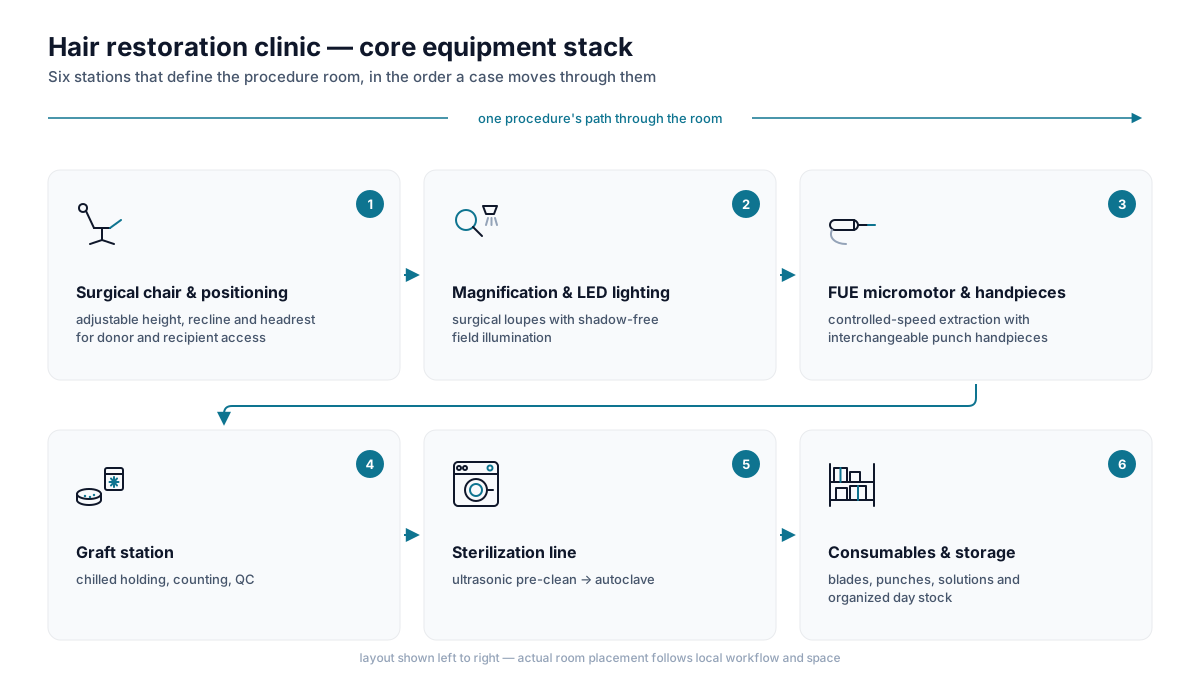
Non-sterile reusables have a parallel discipline — cleaning, inspection, packaging in wraps or containers, autoclaving and dated storage — which belongs to the clinic's reprocessing workflow and its own documentation. The buyer's contribution is upstream: purchase reusables actually specified for repeated reprocessing, from suppliers whose materials and construction hold up to it. The clinic equipment hub covers how the sterilisation line fits into the wider equipment stack.
What this means at purchasing time
Condensed to a checklist, sterility-aware purchasing looks like this: decide deliberately per product whether you are buying sterile or non-sterile, rather than defaulting to whatever the quote offers; require lot-numbered, expiry-dated, indicator-marked packaging on everything sterile; ask what barrier format the product ships in and how units are protected inside the carton; confirm remaining shelf life on delivery as a term, not a surprise; and give every delivery the five-minute receipt check before it disappears onto a shelf. None of this requires regulatory expertise — it is ordinary supply-chain hygiene applied to products where the packaging is part of the product.
Frequently asked questions
Should a clinic buy instruments sterile or non-sterile?
Buy single-use consumables sterile — in-house sterilisation of disposables wastes labour and breaks traceability. Buy reusable steel instruments non-sterile, since they pass through your autoclave before every use anyway. For items available both ways, weigh unit-price savings against the reprocessing workload and the value of factory lot documentation.
What is a sterile barrier system?
The minimum packaging that keeps a sterilised product sterile and allows it to be presented aseptically — typically a peel pouch or a sealed blister tray. The barrier, not the instrument, maintains sterility, which is why packaging condition is checked as carefully as the product itself.
What is the difference between EO and gamma sterilisation for a buyer?
Both are validated industrial methods chosen by the manufacturer to suit the product's materials: EO is a low-temperature gas process suited to plastics and delicate assemblies, gamma is a radiation process suited to high-volume disposables. As a buyer you verify the labelling and packaging integrity — the method choice is the manufacturer's engineering decision.
Can single-use instruments be autoclaved and reused?
No. Single-use devices are not designed or validated for reprocessing: materials may not tolerate heat, geometries may not clean reliably, and edges are not made to survive a second cycle. Reuse of single-use devices also carries legal and liability implications in most markets. If reuse is your model, buy instruments specified as reusable.
How long do sterile instruments last in storage?
Until the printed expiry date, provided the package stays intact — dates are typically several years from sterilisation. Sterility loss is driven by events like tears, crushing and moisture rather than time alone, so storage conditions and handling discipline matter as much as the calendar.
What should I check when a sterile delivery arrives?
Carton condition first, then a sample of individual packs: intact seals, no tears or pinholes, changed process indicators, correct lot numbers and expiry dates matching the paperwork. Record the lots you received, quarantine anything questionable, and shelve the rest first-expiry-first-out.
Related articles
Hair Transplant Clinic Equipment: The Complete Stack
The full equipment stack of a hair transplant clinic, from operating table to autoclave — written for founders specifying their first operating room.
PRP Systems Buyer's Guide for Hair Clinics
How to buy PRP tubes, kits and centrifuges for a hair clinic: additives, kit completeness, rpm/rcf matching, cost per treatment, storage and honest claims.
FUE Punch Price Guide: What Punches Cost and Why
A professional buyer's guide to FUE punch pricing: the six drivers that separate cheap punches from premium ones, realistic price tiers, and how wholesale pricing actually works.
Sourcing & Import: Buying Medical Instruments Across Borders
The commercial mechanics of importing hair restoration instruments — customs, MOQs, samples, payment terms and how to evaluate a supplier before committing.