
Autoclave
An autoclave is a pressure-vessel sterilizer that uses saturated steam at high temperature to sterilize reusable, heat-stable instruments, the standard on-site clinic method.
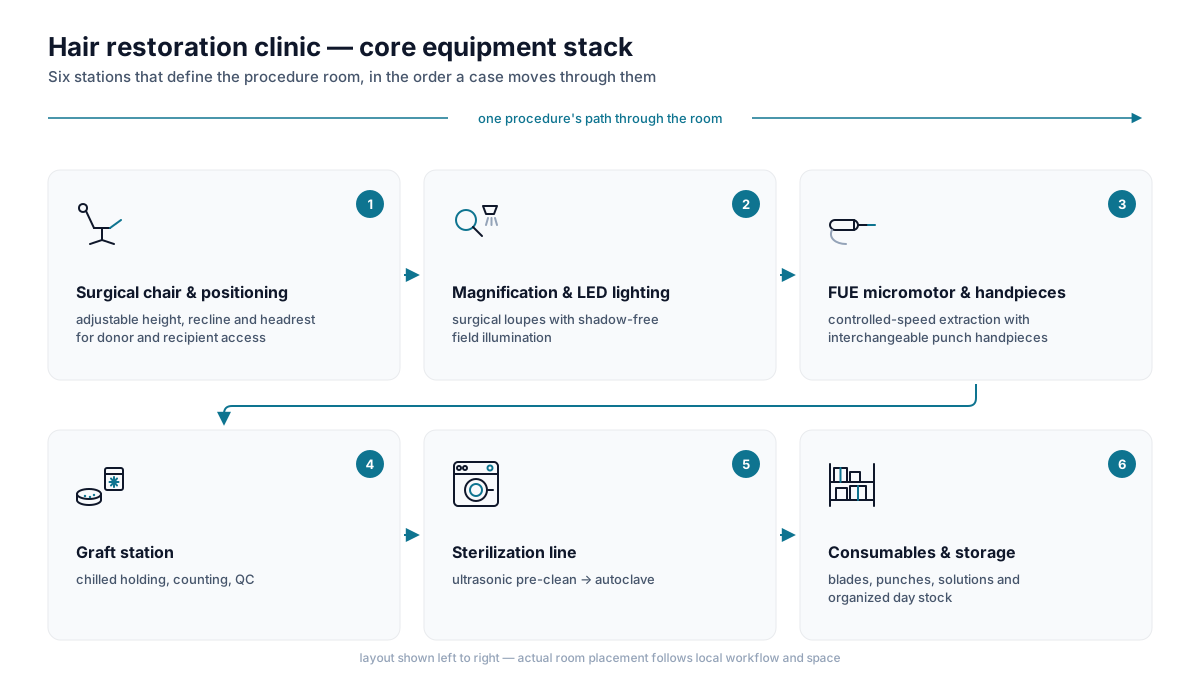
An autoclave is a pressure-vessel sterilizer that uses saturated steam at high temperature to kill microorganisms on heat-stable instruments. Unlike the industrial radiation and gas methods used to sterilize disposables, the autoclave is the standard on-site clinic method for reusable tools — the machine a hair restoration practice runs itself, day in and day out, on forceps, needle holders, reusable punch handles and instrument trays. Steam under pressure reaches temperatures water cannot at atmospheric pressure, and that heat, held for a set time, is what achieves sterilization.
In practice, the autoclave sits at the end of a clinic's reprocessing line: instruments are cleaned and dried, packaged in a pouch or wrap that forms a sterile barrier system, loaded so steam can circulate, and cycled. Steam contact is the whole mechanism, so anything that blocks contact — a lumen full of debris, an overpacked tray, trapped air in a poorly designed cycle — undermines the result. This is why autoclave types differ in how thoroughly they remove air and penetrate loads, and why hollow and wrapped instruments demand a machine capable of handling them. The pairing of a validated cycle with correct loading is what makes the outcome dependable.
Buyers should treat the autoclave as capital equipment specified against the clinic's actual load, not by headline temperature alone. Chamber size, cycle types, air-removal capability, and drying performance all determine whether the machine suits pouched, hollow and heavier instrument sets. The autoclave buying guide walks the selection criteria in detail. Whatever the machine, the instruments and pouches going into it carry their own limits: read each item's instructions for use to confirm it is steam-compatible and to note the maximum number of cycles it tolerates, since repeated heat gradually stresses edges and materials.
For consumables, the autoclave is also a boundary to respect. A single-use disposable that arrived gamma- or EO-sterilized should not be re-autoclaved to "reuse" it — steam heat can deform plastics and it falls outside the item's intended use. On the reusable side, a processed pack has its own effective shelf life: the sterile state holds only while the barrier stays sealed and dry, so store pouches protected and rotate them, tracing loads and batches against a lot number where records demand it. For the full path from soiled to sterile, see the instrument reprocessing workflow.