
Shelf Life
Shelf life is the period a sealed device stays fit for use under stated storage conditions, indicated by an expiry date and conditional on the package remaining intact.
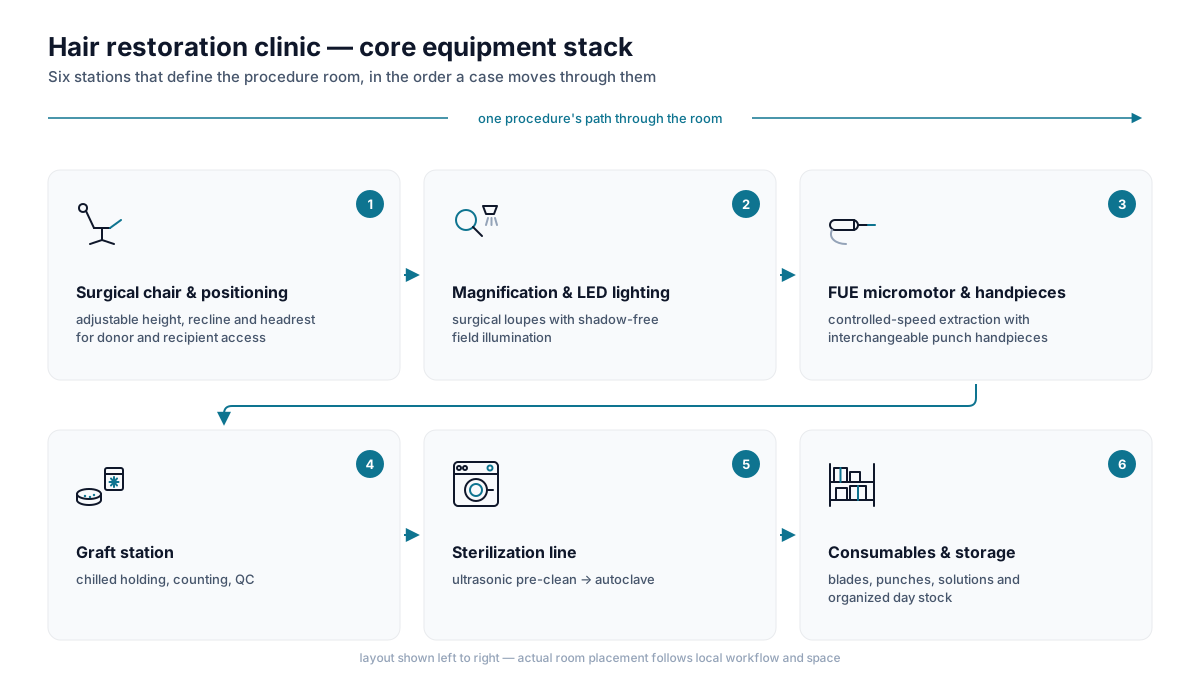
Shelf life is the period during which a sealed device is expected to remain fit for its intended use when kept under the storage conditions its maker specifies. It is communicated as an expiry or use-by date on the packaging, and for a sterile product it is bound to two things at once: the material staying stable, and the sterile barrier system staying intact. The date on the pouch is a promise about a sealed, correctly stored unit — not about one that has been opened, crushed or left in the wrong environment.
In a hair restoration clinic, shelf life is the axis that stock control turns on. Sterile disposables — syringes, a cannula, blades, implanter parts — each carry a date, and that date assumes the storage the label names: dry, off the floor, out of direct heat and sunlight. A product whose barrier is breached is expired in effect no matter what the printed date says, because its sterility is event-dependent as well as time-dependent. Reading shelf life as "date only" is the common trap; the honest reading is "date, provided the seal and the storage held."
Buyers make shelf life a receiving and rotation discipline. At goods receipt, check the remaining dating on every delivered lot and reject or query stock that arrives with too little life left for your turnover — a common contract term is a minimum share of shelf life remaining on arrival. Shelve on a first-expiry-first-out basis so the earliest date always sits at the front of the pick face, and trace each date to its lot number so a batch can be located and pulled if a supplier issues a notice. Count expiry as part of periodic stock takes, not just at the point of use.
Different sterilization routes and materials carry different dating, which is why shelf life is a per-item attribute rather than a blanket rule: an EO-sterilized polymer disposable and a foil-packed reagent can sit on the same shelf with very different windows. Order to consumption rather than to bulk-discount temptation, because deep stock of a short-dated item simply expires in the cupboard. For how expiry interacts with packaging integrity, storage and the wider consumables flow, see the instrument sterility and packaging guide.