
Autoclave Buying Guide for Hair Clinics: Classes, Sizing and Features
A buyer’s path through the autoclave decision: what B, S and N cycle classes actually mean for hollow and wrapped instrument loads, how to size the chamber to your session rhythm, and why drying time, water quality and the service network decide long-term satisfaction.
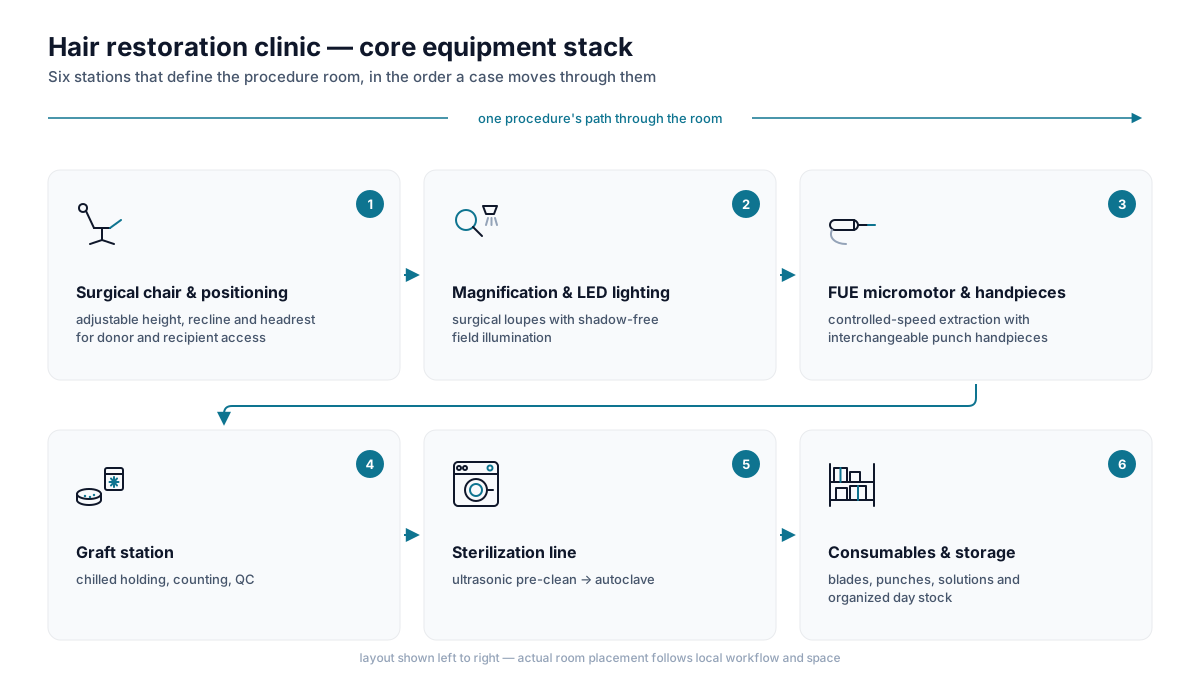
For a hair transplant clinic, the autoclave decision usually resolves to a Class B benchtop unit sized so that one day's instrument sets fit in two to three cycles — because the clinic's instrument mix is exactly what the B cycle exists for: narrow-lumen punches and implanter needles, hinged forceps, and wrapped sets that must come out dry and storable. Class N units sterilize only solid, unwrapped instruments for immediate use, and Class S covers whatever its manufacturer specifically validated it for, which makes it a fit only when your load list matches that validation line by line. After class, the deciding factors are chamber size against your session rhythm, full-cycle time including drying, water and maintenance demands, logging features, and — underrated at purchase, decisive in year three — the service network behind the brand.
Key takeaways
- Cycle class is about the load, not quality tiers: N handles solid unwrapped instruments for immediate use, B handles hollow, porous and wrapped loads, S handles exactly what its maker validated — check your instrument list against the class, not the brochure adjectives.
- Hair transplant instrument sets — lumened punches, hinged forceps, wrapped trays for storage — are a hollow-and-wrapped load profile, which is why Class B is the default answer.
- Size the chamber to sets per day and turnaround, not to the biggest tray you own: a day’s reprocessing should fit in two to three cycles with the room’s workflow keeping pace.
- Count the full cycle including drying — a wrapped load that comes out damp is not storable, so a fast sterilization phase with slow drying saves nothing.
- Buy the service network with the machine: response time, loaner availability and parts stock determine what a breakdown costs, and a clinic without a working sterilizer is a clinic without a schedule.
Cycle classes for buyers: B, S and N in plain terms
The class letters on benchtop autoclaves describe which load types a unit's cycles are built and tested to sterilize — they are not quality grades, and the right question is never "which class is best?" but "which loads do I run?"
Class N cycles handle solid, unwrapped instruments intended for immediate use. The N stands for naked: no pouches, no lumens, no porous materials. Air removal relies on gravity displacement, which cannot reliably evacuate the inside of a narrow tube or the layers of a wrapped pack — steam only sterilizes the surfaces it actually reaches, and trapped air is a barrier steam does not cross. An N unit is not a lesser B; it is a different tool, and one that cannot produce the sealed, storable pouches a session-based clinic runs on.
Class B cycles use fractionated vacuum: the chamber is evacuated and steam-pulsed several times before sterilization, which strips air out of narrow lumens, hinge crevices and pouch interiors, and a vacuum drying phase pulls moisture back out afterward. That makes B the class validated for the hard cases — hollow instruments, wrapped and double-wrapped loads, porous items — which is to say, for the contents of a hair clinic's instrument cycle.
Class S is the in-between category: everything beyond N that the specific manufacturer has validated for the specific model. Some S units handle certain hollow or single-wrapped loads well. The buyer's obligation is precise: obtain the validated load list in writing and check your actual instruments against it. If your reprocessing includes anything the S documentation does not name, the unit is the wrong purchase at any price.
Why this lands on B for hair restoration: an FUE punch is a narrow tube; implanter needles are narrower still; forceps and needle holders have box joints where air sits; and everything the clinic wants shelf-stable between sessions is pouched. That load profile is the textbook hollow-and-wrapped case. National regulations and standards define how sterilizer classes are specified and validated in each market; for the buyer, the operative habit is simply matching documented cycle capability to the real load list.
Sizing the chamber to your instrument volume
Chamber sizing starts from a count, not a catalog page: how many instrument sets, pouches and trays does one working day generate, and how quickly must they return to service? A clinic running one session per day with two or three full instrument sets in rotation lives comfortably with a mid-size benchtop chamber; a two-room clinic turning sets around same-day needs either a larger chamber or a second unit — and the second unit is worth pricing seriously, because it also removes the single point of failure from the whole reprocessing workflow.
Three sizing rules keep the decision honest. First, size to the day, not to the exception: the occasional oversized load can be split; a chamber too small for the daily standard load costs an extra cycle every single day. Second, respect loading geometry — capacity is what fits with pouches on edge or trays spaced so steam circulates, not what can be crammed in, and a chamber loaded past its rack positions produces wet, unevenly processed loads. Third, check the longest instrument against usable chamber depth with its pouch, not the bare instrument; pouched length is what has to fit.
Instrument inventory interacts with chamber size directly: more sets in rotation buys tolerance for a smaller, slower sterilizer, while a lean instrument inventory demands fast turnaround. That trade — more steel versus more chamber — is a real budgeting decision, and for single-use-heavy programs it shifts again, as the disposable versus reusable comparison shows for punches specifically.
Cycle time and drying: count the whole cycle
Brochures headline the sterilization phase; the clinic lives with the full cycle — heat-up, air removal, sterilization, and drying — plus loading and unloading. For wrapped loads the drying phase is not an appendix: a pouch that emerges damp wicks whatever it later touches and is not storable, so a damp load either goes back for another drying run or gets used immediately, defeating the point of packaging. When comparing units, compare complete-cycle times for a wrapped load and ask specifically how the vacuum drying performs with a full chamber, which is where weak drying shows first.
Cycle math also sets the reprocessing room's rhythm. If a full cycle takes north of an hour door to door and a day's instruments need three cycles, sterilization runs most of the afternoon — which is fine if the sterilization room's cleaning and packaging stations keep feeding it, and a bottleneck if one technician does everything serially. Faster cycles are worth paying for when they collapse a real queue, and not before.
Water, maintenance and daily reality
Benchtop autoclaves are particular about feed water, and ignoring this is the most common way a good machine becomes a problem machine. Mineral-laden water scales the steam generator and valves; the manual's conductivity limits are enforced by the machine's lifespan whether or not anyone reads them. Budget the water answer with the purchase: bottled demineralized water at low volume, a plumbed cartridge demineralizer or small RO unit as volume grows. Some units offer integrated water-quality sensors that lock out bad water — a feature worth having precisely because it removes a human judgment from the loop.
Routine maintenance is unglamorous and completely predictable: door seals wear, filters clog, safety valves want periodic checks, and the chamber wants cleaning on schedule. Two purchase-time questions expose the long-term picture: what does the annual maintenance kit cost and can trained clinic staff fit it, and what does the mandatory periodic service interval involve? A unit with cheap consumable parts and a sensible service scheme frequently beats a cheaper machine with proprietary everything.
Qualification, logging and the paper trail
A sterilizer produces two things: sterile loads and evidence. The evidence features matter more than they look on the spec sheet. Cycle logging — via printer, USB export or network connection — turns every run into a record that ties to load documentation; units without logging leave the clinic writing cycle parameters by hand or, realistically, not recording them. Program memory with named cycles reduces wrong-cycle errors. Support for routine test runs (vacuum and steam-penetration test cycles) belongs on the checklist, as does compatibility with the chemical indicators and pouch formats the clinic already uses — the packaging side of that pairing is covered in the sterility and packaging guide. Installation qualification and periodic revalidation requirements vary by market; what the buyer controls is choosing a unit whose documentation features make compliance clerical rather than archaeological.
Installation and total cost of ownership
Before the unit is chosen, its place in the sterilization room should already exist on the floor plan: bench depth and load rating for the machine's considerable weight, door-swing clearance, the ventilation gap the manual demands, a socket on an adequately rated circuit of its own, the feed-water point, and a drain or waste-water arrangement. Retrofitting any of these behind an installed autoclave is miserable work; planning them costs a pencil line.
The purchase price is then only the entry fee. The honest comparison between two candidate units is total cost over their service life: water supply and its running cost, annual maintenance kits, mandatory service visits, replacement seals and filters, the electricity of a vacuum unit run daily, and — hardest to see on a spreadsheet, easiest to feel in practice — downtime cost when service is slow. A unit a third cheaper at purchase that needs proprietary parts flown in loses that entire margin the first time the clinic reschedules a week of sessions. This is the equipment category where, across the whole clinic stack, buying on sticker price most reliably backfires; the sterilizer sits upstream of every session the clinic will ever run.
The service network is a specification
Every autoclave eventually stops mid-week with a full schedule booked. At that moment the purchase decision is retroactively re-graded on four questions: how fast does a technician arrive, is a loaner unit available, are parts stocked in-country, and does the distributor actually answer the phone? Ask all four before buying, and prefer verifiable answers — named service partners, stated response commitments, parts availability in writing — over reassurance. A modestly specified autoclave with a strong local service organization is operationally superior to a better machine serviced from another continent. For import buyers this belongs in supplier evaluation with the same weight as price and specification, alongside the checks in the manufacturer evaluation guide.
| Class | Loads it handles | Fit for a hair clinic |
|---|---|---|
| N (gravity displacement) | Solid, unwrapped instruments for immediate use only — no lumens, no pouches, no porous items | Not sufficient as the primary sterilizer: cannot produce storable pouched sets or reliably process lumened punches and needles |
| S (manufacturer-defined) | Exactly the load types the manufacturer validated for that model — may include specific hollow or single-wrapped items | Only if the written validated-load list covers every item you reprocess; any gap makes it the wrong unit |
| B (fractionated vacuum) | Hollow, porous, wrapped and double-wrapped loads, dried under vacuum to storable condition | The default fit: lumened punches and needles, hinged instruments and pouched sets are precisely the B-cycle load profile |
A short pre-purchase checklist
Before signing: your written load list against the unit's documented cycle capability; usable chamber dimensions against your longest pouched instrument and a full standard day in two to three cycles; complete wrapped-cycle time including drying, with a full chamber; the feed-water plan and its running cost; logging in a form your documentation actually uses; annual maintenance cost and who performs it; and the four service-network questions with verifiable answers. A unit that clears all of that will be boring for a decade — which is the highest compliment a sterilizer can earn.
Frequently asked questions
What is the difference between Class B, S and N autoclaves?
The class describes validated load types, not quality. N cycles handle solid, unwrapped instruments for immediate use. B cycles use fractionated vacuum to sterilize hollow, porous and wrapped loads and dry them for storage. S covers whatever the specific manufacturer validated for the specific model — nothing more, so the written load list is the deciding document.
Which autoclave class does a hair transplant clinic need?
Almost always Class B. FUE punches and implanter needles are narrow lumens, forceps have box joints that trap air, and sets are pouched for storage between sessions — a hollow-and-wrapped load profile that is exactly what the B cycle is built and tested for. An S unit qualifies only if its validated list covers every item you run.
What chamber size should a clinic choose?
Work from sets per day, not from the largest tray: a full working day’s instruments should fit in two to three cycles with correct loading geometry — pouches on edge, trays spaced for steam circulation. Check usable depth against your longest instrument in its pouch, and remember that more instrument sets in rotation buys tolerance for a smaller chamber.
Why does drying performance matter so much?
A wrapped load that comes out damp is not storable — moisture wicks contamination through the pouch — so it must be re-dried or used immediately, which defeats packaged sterilization. Compare complete wrapped-cycle times including vacuum drying with a full chamber, where weak drying shows first.
What water does an autoclave need?
Demineralized or reverse-osmosis water within the conductivity limits in the manual. Mineral-heavy tap water scales the steam generator and valves and shortens the machine’s life. Decide the water supply — bottled, cartridge demineralizer or RO unit — as part of the purchase, not after installation.
How should buyers evaluate the service side?
Ask four questions before buying: technician response time, loaner availability during repairs, in-country parts stock, and who exactly answers the phone. Prefer written, verifiable answers. A clinic without a working sterilizer has no schedule, so the service network is a specification, not an afterthought.
Related articles
Sterilization Room Setup: One-Way Flow, Equipment and Space Planning
The reprocessing room from the floor plan up: why one-way dirty-to-clean-to-sterile flow is the whole design, what equipment each zone needs and why, how to plan a small footprint honestly, and where water quality and documentation fit.
Instrument Reprocessing Workflow: Eight Steps from Used to Sterile
Reprocessing as a chain of eight steps — point-of-use pre-clean through sterile storage — with the purpose behind each step, the typical failure that occurs there, and why the chain is only as strong as its most rushed link.
Instrument Sterility and Packaging: A Buyer's Guide
What clinic buyers need to know about sterile and non-sterile supply formats, sterile barrier packaging, sterilisation methods, receipt inspection, shelf life and storage.
Hair Transplant Clinic Equipment: The Complete Stack
The full equipment stack of a hair transplant clinic, from operating table to autoclave — written for founders specifying their first operating room.