
Opening a Hair Transplant Clinic in the UAE: A Dubai-Focused Guide
In the UAE, healthcare licensing is organised by emirate, and in Dubai the DHA licenses both the facility and every clinician inside it. This guide walks through the Dubai route — approvals, fitout, credentialing, equipment — in the order the process actually runs.
The single most important thing to understand about opening a hair transplant clinic in the UAE is that healthcare licensing is organised by emirate, not federally — and in Dubai, where most founders in this specialty want to be, the Dubai Health Authority licenses twice. The DHA issues the health facility license for the clinic itself, and it separately licenses every doctor, nurse and allied professional who will work inside it. Neither approval substitutes for the other, and the clinic cannot see its first patient until both columns are complete. Plan the project around that dual structure from day one and the rest of the process, while paperwork-heavy, is unusually well signposted.
Key takeaways
- Dubai clinics are licensed by the DHA at two levels: a facility license for the premises and individual professional licenses for every clinician.
- Outside Dubai, MOHAP licenses private facilities in most other emirates, and the DHCC free zone runs its own licensing track within its district.
- Premises approval is a genuine design gate — the DHA reviews layouts before fitout, so engage a clinic-experienced designer before signing a lease.
- Physician credentialing (primary source verification, qualification review) is often the longest single workstream; start it before the walls go up.
- Instruments and devices are bought through UAE-registered suppliers, so build the equipment list and supplier shortlist early rather than at the end.
Who licenses what: DHA in Dubai, and the alternatives
In Dubai, the DHA is the licensing authority for private healthcare facilities and for healthcare professionals, and a hair transplant clinic falls squarely inside its remit as a licensed outpatient medical facility performing surgical procedures. The facility side covers the legal entity, the premises, the scope of services and the named medical director; the professional side covers each individual clinician, who must hold a DHA license in the correct title and specialty before treating patients. Elsewhere in the UAE, the federal Ministry of Health and Prevention (MOHAP) licenses private facilities in most other emirates, while Abu Dhabi runs its own department-level system — so a clinic in Sharjah or Ajman follows a MOHAP pathway rather than a DHA one. A third route exists inside Dubai itself: Dubai Healthcare City, a healthcare free zone with its own regulator and licensing track, which some founders choose for its clustering of specialist clinics and its free-zone company structures.
Two practical points follow from this map. First, decide the jurisdiction before anything else, because the choice between Dubai mainland, DHCC and another emirate determines the licensing pathway, the corporate setup and even which patients you can realistically attract. Second, do not assume experience transfers: a partner who opened a clinic under MOHAP will find the DHA process familiar in spirit but different in detail, and vice versa.
Professional licensing and credentialing: the long pole
For a surgical specialty like hair restoration, the professional licensing workstream deserves as much respect as the facility one. The DHA credentials each clinician through qualification review and primary source verification — meaning degrees, specialty training and experience certificates are checked with the issuing institutions abroad, a process whose duration depends heavily on how quickly those institutions respond. Surgeons trained in different countries arrive with different portfolios, and assembling a clean, verifiable file is the founder's job as much as the doctor's. The clinic also needs a licensed medical director, and the nursing and technician roster must be licensed in appropriate titles; the rules on what non-physician staff may do within a hair transplant procedure are part of the scope discussion with the regulator, not something to improvise after opening.
The sensible move is to start credentialing the core clinical team at the same time as the premises search. A finished, inspected facility that sits idle while a surgeon's verification file inches through a foreign university's registrar office is one of the most common — and most expensive — failure patterns in Gulf clinic projects.
Premises, fitout and sterilization expectations
The DHA treats premises as a design-stage question, not an inspection-stage one: facility layouts are reviewed against health facility guidelines before fitout, which is why experienced founders engage a clinic-fitout designer who has taken projects through DHA approval before they sign a lease. For a hair transplant clinic, expect scrutiny of the procedure room itself — sizing, finishes, lighting and ventilation appropriate to a room where minor surgery runs for hours — alongside consultation space, recovery provision and sanitary facilities. Dubai's competitive market adds a commercial layer on top: patients arriving from abroad have been marketed a premium experience, and the standard of fitout in established clinics is correspondingly high.
Sterilization capacity is the piece most often under-planned. A clinic reprocessing its own instruments needs a defined decontamination-to-sterile workflow with real separation between dirty and clean stages, an autoclave specified for the instrument load of daily cases, and documentation habits — cycle logs, indicator records — that stand up when an inspector asks. Our guide to sterilization room setup covers the workflow in depth, and it is far easier to get the plumbing and layout right during fitout than to retrofit a compliant reprocessing corner into a finished clinic.
Equipping the clinic
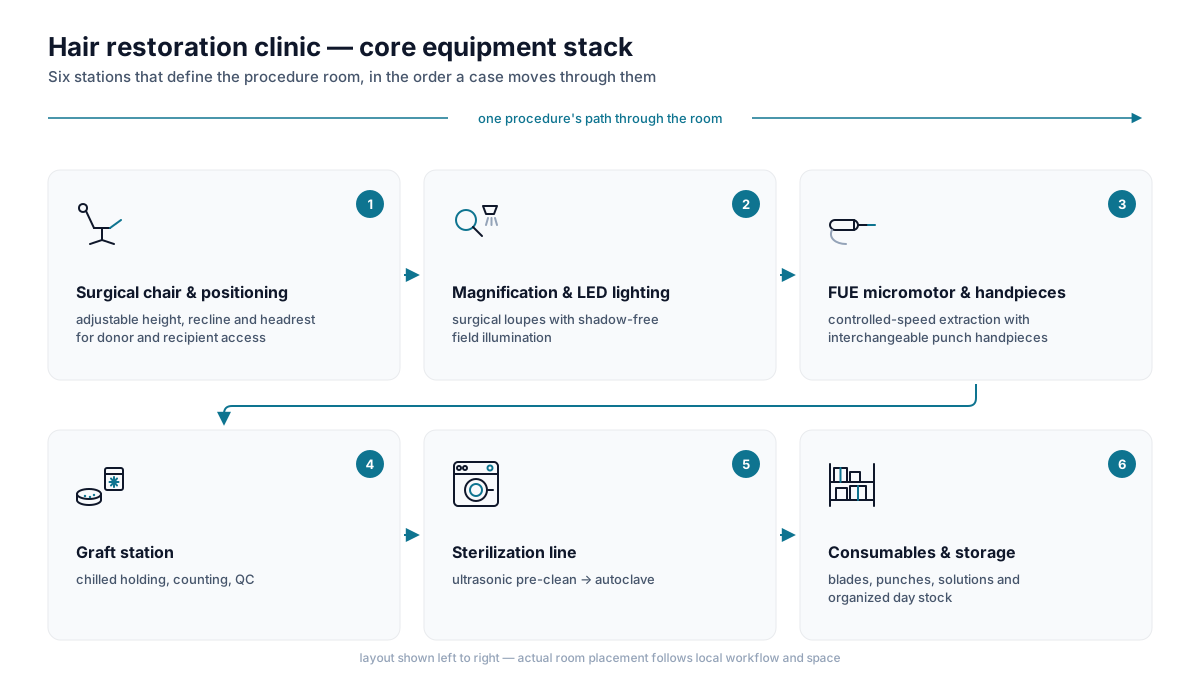
On the equipment side, the UAE's structural fact is that medical devices are registered with MOHAP at federal level and reach clinics through UAE-registered suppliers — in practice, a new clinic buys its punches, implanters, micromotors, autoclave and consumables from local distributors who hold the registrations and act as importer of record, rather than importing directly from manufacturers abroad. That makes supplier selection an early-stage task: quotations, delivery times and training support all flow from relationships that take a few weeks to establish. The clinic equipment hub maps the full instrument and equipment landscape for a hair restoration practice, and the clinic equipment budget guide breaks down where the money actually goes between the procedure room, sterilization and consumables.
The setup sequence, phase by phase
Every UAE project runs slightly differently, but the Dubai order of operations is remarkably consistent:
- Choose the jurisdiction. Dubai mainland under the DHA, DHCC under the free-zone regulator, or another emirate under MOHAP. This decision anchors everything downstream.
- Form the company and obtain initial approval. The commercial license and the regulator's initial approval for a healthcare activity typically run together; ownership structure and the named medical director enter the file here.
- Secure premises and pass design review. Lease with a fitout-approval condition where possible; submit layouts to the regulator before construction, then build to the approved drawings.
- Run professional licensing in parallel. Begin credentialing and primary source verification for the surgeon, medical director and nursing team as early as the process allows — this is the workstream most likely to set the opening date.
- Equip and commission. Order instruments, the autoclave and furniture through registered local suppliers against the approved room plan; commission the sterilizer and document it.
- Final inspection and facility license. The regulator inspects the finished, equipped clinic against the approved design and scope; the facility license issues after a successful visit.
- Open — with the paperwork habits you intend to keep. Registers, sterilization logs, consent documentation and clinical records are inspected realities in Dubai, not formalities.
Founders who have been through it consistently give the same two pieces of advice: run premises and people as parallel workstreams rather than sequential ones, and use a checklist discipline for the dozens of small approvals that orbit the main ones. Our printable clinic startup checklist exists for exactly that purpose.
Costs and commercial realism
Dubai is not a cheap place to open, and the costs that surprise founders are rarely the obvious ones. Rent in clinic-suitable buildings, fitout to DHA-approvable standard, and the months of salaries paid during credentialing typically outweigh the equipment budget itself. Two recurring obligations belong in the model from the start as well: medical malpractice insurance is a standing requirement for licensed practice in the UAE, priced per clinician and specialty, and both facility and professional licenses run on renewal cycles with continuing-education obligations attached — the compliance calendar is a permanent operating function, not a launch task.
Location within Dubai carries its own strategy. The established medical clusters — the healthcare free zone, the clinic-dense stretches of Jumeirah, the newer towers of Business Bay — each come with different rent profiles, patient expectations and neighbours, and hair restoration patients researching from abroad tend to read the address as part of the brand. A less obvious district can work commercially, but it shifts more of the trust-building burden onto marketing and reviews. Against that, the commercial upside is real: Dubai's medical-tourism machine delivers international patients at premium price points, the dirham's dollar peg keeps financial planning simple, and English-language operation is the norm. The clinics that struggle are usually those that budgeted for the license but not for the runway — the market rewards operators who arrive capitalised for a slow first two quarters while reputation and referral channels build.
Frequently asked questions
Who licenses a hair transplant clinic in Dubai?
The Dubai Health Authority (DHA), at two levels: a health facility license for the clinic and individual professional licenses for every doctor, nurse and allied health professional working in it. Both must be in place before the clinic treats patients.
What if I want to open outside Dubai?
Most other emirates license private facilities through the federal Ministry of Health and Prevention (MOHAP), and Abu Dhabi operates its own system. The structures are similar in spirit — facility approval plus professional licensing — but the pathways and details differ, so plan for the specific emirate.
What is Dubai Healthcare City and should I consider it?
DHCC is a healthcare free zone within Dubai with its own regulator and licensing track. It offers free-zone company structures and a dense cluster of specialist clinics; whether it suits a hair transplant practice depends on your ownership preferences, target patients and premises options.
How long does professional licensing take?
It depends largely on primary source verification — the checking of each clinician's qualifications with issuing institutions abroad — which can move quickly or slowly depending on those institutions. Treat credentialing as the schedule-critical workstream and start it before fitout begins.
Can the clinic import its own instruments?
In practice, no. Medical devices are registered federally with MOHAP and supplied through UAE-registered distributors who act as importer of record. New clinics buy from local suppliers, which is why building those relationships early matters.
Does the DHA really review the clinic layout before construction?
Yes — design review against facility guidelines happens before fitout, and building without approval risks expensive rework. Engage a designer with prior DHA-approved clinic projects and make the lease conditional on approval where you can.
Related articles
Hair Transplant Clinic Equipment: The Complete Stack
The full equipment stack of a hair transplant clinic, from operating table to autoclave — written for founders specifying their first operating room.
The Equipment Budget for a New Hair Transplant Clinic: Categories and Phasing
A budget structure for equipping a new hair transplant clinic: the three ledgers — capital, consumables, hidden costs — how to phase purchases so cash follows patients, where cheap equipment gets expensive, and an honest word on financing.
Hair Transplant Clinic Startup Checklist: Every Equipment Category, in Order
A category-by-category equipment walkthrough for opening a hair transplant clinic: what belongs in the OR, the sterilization line, instrument sets and consumables — and the order to buy it in.
Sterilization Room Setup: One-Way Flow, Equipment and Space Planning
The reprocessing room from the floor plan up: why one-way dirty-to-clean-to-sterile flow is the whole design, what equipment each zone needs and why, how to plan a small footprint honestly, and where water quality and documentation fit.