
Opening a Hair Transplant Clinic in Mexico
Mexico pairs a COFEPRIS-run establishment system — aviso or licencia sanitaria, plus a named responsable sanitario — with strict professional credential requirements, and offers something few markets can: border cities where US patients arrive by car.
Two facts define the Mexican opportunity for a hair transplant clinic founder. The first is regulatory: healthcare establishments answer to COFEPRIS, the federal health-risk authority, through a system built on establishment filings — an aviso de funcionamiento for lower-risk operations, a licencia sanitaria where the activity profile demands one — and on a named responsable sanitario who personally answers for the clinic's sanitary compliance. The second is geographic: no other country in this industry has border cities where patients from the world's largest procedure market arrive by car. A clinic in Tijuana is a domestic Mexican business serving San Diego walk-overs; that combination shapes everything from pricing to language to where you sign the lease.
Key takeaways
- COFEPRIS governs healthcare establishments through aviso de funcionamiento and licencia sanitaria filings — which applies depends on the clinic's activity profile.
- Every clinic names a responsable sanitario, a qualified professional personally responsible for sanitary compliance — a real role, not a formality.
- Physicians practice on the strength of the cédula profesional, with specialty credentials layered on top; patients and regulators both check.
- Border cities — Tijuana above all — offer direct access to US patients at Mexican cost structures, but the model demands US-grade service and follow-up systems.
- Instruments and devices need Mexican registro sanitario, so clinics buy through distributors holding the registrations rather than importing themselves.
COFEPRIS and the establishment paperwork
The starting point is COFEPRIS, which oversees healthcare establishments nationwide with state health authorities handling much of the front-line interaction. The system distinguishes between an aviso de funcionamiento — a notification that an establishment is operating, appropriate for lower-risk activity — and a licencia sanitaria, an authorization required where the establishment's activities carry a higher sanitary-risk profile. Where a hair transplant clinic lands depends on how its activities are characterized, including its anesthesia use and surgical profile, and getting that characterization right at the outset is precisely the kind of question a local regulatory advisor earns their fee on. Alongside the establishment filing sits the responsable sanitario: a named, qualified professional — for a medical clinic, a physician — who is personally responsible for the establishment's sanitary compliance. Choose this person as carefully as you choose the lead surgeon, because the role carries genuine accountability and the regulator treats it that way.
Mexican practice also leans on official technical standards for healthcare establishments and infection control — the NOM framework — which function as the reference point for how premises, records and hygiene processes are evaluated. You do not need to become a standards lawyer to open a clinic, but your architect, your responsable sanitario and your compliance advisor should all be working from them.
Who may practice: the cédula system
Professional practice in Mexico rests on the cédula profesional, the national professional license issued upon registration of a qualifying degree, with specialty-level credentials layered on top for specialist practice. For a hair transplant clinic this cuts in two directions. Defensively: every physician on the roster needs the right credentials in order, because both regulators and — increasingly — patients verify them, and credential scandals in the cosmetic sector have taught Mexican patients to check. Offensively: verified credentials are a marketing asset in a market where the informal end of cosmetic medicine has damaged trust, and the successful clinics display surgeon credentials, specialty affiliations and hospital relationships prominently. Foreign-trained surgeons can practice through recognition and registration pathways, but that is a project with real lead time, not an administrative afterthought.
Premises and sterilization expectations
Facility expectations for an outpatient surgical clinic follow the pattern the NOM framework establishes: premises appropriate to the declared services, a procedure room built for long local-anesthetic surgery, hygienic finishes, and — the point most often underestimated — a credible instrument-reprocessing operation. Inspectors and serious patients alike read the sterilization setup as a proxy for everything they cannot see, so a defined dirty-to-clean workflow, a properly maintained autoclave and disciplined cycle documentation belong in the buildout plan from the first sketch. Our sterilization room setup guide covers the workflow in detail, and it applies to a Tijuana clinic exactly as to one in Warsaw.
For border-market clinics there is an additional, commercial standard to meet: your patients are comparing the premises with US medical offices, not with the informal end of the local market. The winning formula among established border clinics is Mexican cost structure with US-legible presentation — bilingual signage and consent documents, online scheduling, and premises that photograph well.
Equipping the clinic
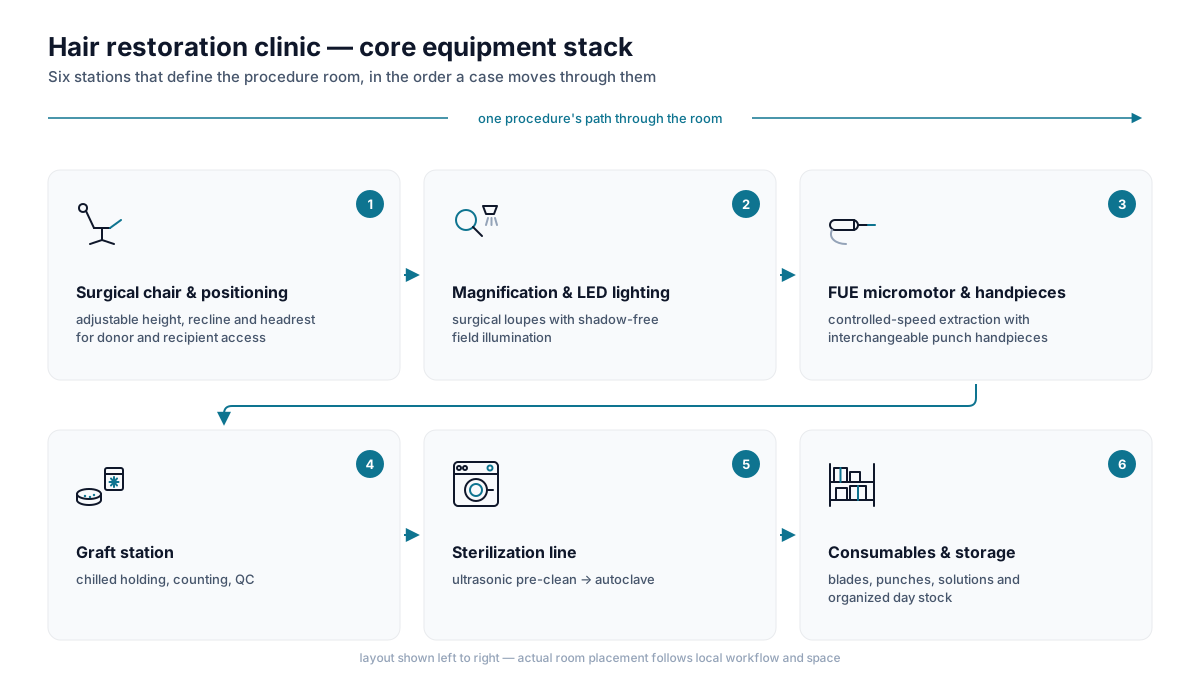
Device procurement in Mexico follows the registration logic common to regulated markets: instruments and equipment require Mexican registro sanitario, and the practical purchasing channel is the network of distributors who hold registrations for the brands they carry and act as importers of record. A new clinic therefore buys its punches, implanters, micromotors, autoclave and consumables domestically from those distributors, and supplier selection — pricing, stock reliability, service response — is an early workstream rather than a final errand. The clinic equipment hub maps the full equipment landscape for a hair restoration practice, and the clinic equipment budget guide breaks down how the investment typically distributes; both are worth reading before the first distributor meeting, because a specified list negotiates better than an open one. One genuine local advantage: Mexico's established hair restoration scene means experienced surgical technicians and assistants are a real labor pool in the major clinic cities, so a new operation can hire people who already know the instruments — shortening training time and informing which systems the clinic standardizes on.
The border-city strategy
Tijuana is the archetype and the busiest case: minutes from San Diego, with a mature medical-tourism infrastructure of border-crossing logistics, bilingual staff and US-facing marketing, it hosts clinics whose patient base is overwhelmingly American. Ciudad Juárez and Mexicali run smaller versions of the same play, while Cancún and Mexico City attract fly-in patients on a tourism-plus-procedure model closer to the Istanbul pattern. The border model's economics are compelling — US-adjacent pricing power on Mexican costs — but its operational demands are specific: patients decide online in English, expect US-style responsiveness, cross for a day or a weekend, and then need follow-up at a distance. That means investing early in bilingual coordination staff, remote consultation and aftercare workflows, and reputation management on the platforms US patients actually read. A border clinic that treats these as afterthoughts competes on price alone, which is the weakest position on the street.
Founders targeting purely domestic demand face a different map: Mexico City, Guadalajara and Monterrey carry the depth of the national market, competition is credential-led, and pricing is set by Mexican purchasing power rather than the dollar. Premises strategy differs accordingly — in the metropolitan markets, space in an established medical tower near a recognized hospital lends borrowed credibility and simplifies referrals, while border clinics more often occupy standalone, street-visible premises optimized for patients navigating an unfamiliar city on foot or by rideshare.
Payment mechanics deserve a line of their own. Border and tourism clinics routinely quote in US dollars, take card payments and deposits online before travel, and structure pricing as all-inclusive packages because cross-border patients compare offers that way; domestic-market clinics price in pesos, often against financing plans, and issue formal electronic invoices as a matter of course. Whichever model applies, decide it before the marketing launches — repricing a package market later is far harder than setting it correctly at the start.
A realistic sequence for Mexico
- Define the model first. Border-city US-facing, tourism fly-in, or domestic metropolitan — the choice drives location, language, pricing and even the anesthesia and service profile that shapes your COFEPRIS filing.
- Form the entity and engage local advisors. A Mexican corporate vehicle, a regulatory advisor who works with COFEPRIS filings, and an accountant for tax registration and invoicing.
- Secure and build out premises. Fit out against the NOM-based expectations for outpatient surgery, with the sterilization workflow designed in.
- Appoint the responsable sanitario and complete filings. Make the aviso or licencia filing that matches the clinic's activity profile, with the responsable named.
- Assemble the credentialed team. Cédulas and specialty credentials verified and displayed; foreign surgeons' recognition pathways resolved well in advance.
- Contract distributors and equip. Buy registered devices through Mexican distributors; commission the autoclave and start documentation habits immediately.
- Open with the service systems live. For border and tourism models especially, bilingual coordination and remote aftercare should work on day one, not month six.
Our printable clinic startup checklist tracks these dependencies through the buildout, and the long-form startup walkthrough explains what sits behind each line.
Frequently asked questions
Does a hair transplant clinic in Mexico need an aviso or a licencia sanitaria?
It depends on the clinic's activity profile — COFEPRIS distinguishes lower-risk establishments, which file an aviso de funcionamiento, from higher-risk profiles requiring a licencia sanitaria. How the clinic's surgical and anesthesia activities are characterized determines the answer, and local regulatory advice at the outset is the reliable way to get it right.
What is the responsable sanitario?
A named, qualified professional — for a medical clinic, a physician — who is personally responsible for the establishment's sanitary compliance. The role carries genuine accountability with COFEPRIS and should be assigned as deliberately as the lead surgeon role.
Can a foreign-trained surgeon practice in Mexico?
Yes, through degree recognition and registration pathways leading to the cédula profesional and applicable specialty credentials — but the process has real lead time and should be started long before the planned opening.
Why do so many clinics choose Tijuana?
Proximity: it sits minutes from San Diego with mature border-crossing logistics, so a clinic there serves US patients who arrive by car, at Mexican cost structures. The trade-off is that the model demands US-grade bilingual service, marketing and remote aftercare.
Can the clinic import instruments directly from abroad?
In practice no — devices require Mexican registro sanitario, and the registrations are held by distributors who import and sell domestically. New clinics buy from those distributors, which makes supplier selection an early task.
Do patients really check physician credentials?
Increasingly, yes. The cédula system is publicly verifiable, and after well-publicized problems at the informal end of cosmetic medicine, both Mexican and US patients have learned to check. Verified, displayed credentials are a trust asset, not bureaucracy.
Related articles
Hair Transplant Clinic Equipment: The Complete Stack
The full equipment stack of a hair transplant clinic, from operating table to autoclave — written for founders specifying their first operating room.
The Equipment Budget for a New Hair Transplant Clinic: Categories and Phasing
A budget structure for equipping a new hair transplant clinic: the three ledgers — capital, consumables, hidden costs — how to phase purchases so cash follows patients, where cheap equipment gets expensive, and an honest word on financing.
Hair Transplant Clinic Startup Checklist: Every Equipment Category, in Order
A category-by-category equipment walkthrough for opening a hair transplant clinic: what belongs in the OR, the sterilization line, instrument sets and consumables — and the order to buy it in.
Sterilization Room Setup: One-Way Flow, Equipment and Space Planning
The reprocessing room from the floor plan up: why one-way dirty-to-clean-to-sterile flow is the whole design, what equipment each zone needs and why, how to plan a small footprint honestly, and where water quality and documentation fit.