
Opening a Hair Transplant Clinic in Greece
Greek private-clinic licensing runs through the regions and the medical associations rather than one national counter — and the country's Mediterranean medical-tourism ambition gives a well-planned Athens or Thessaloniki clinic a story to build on.
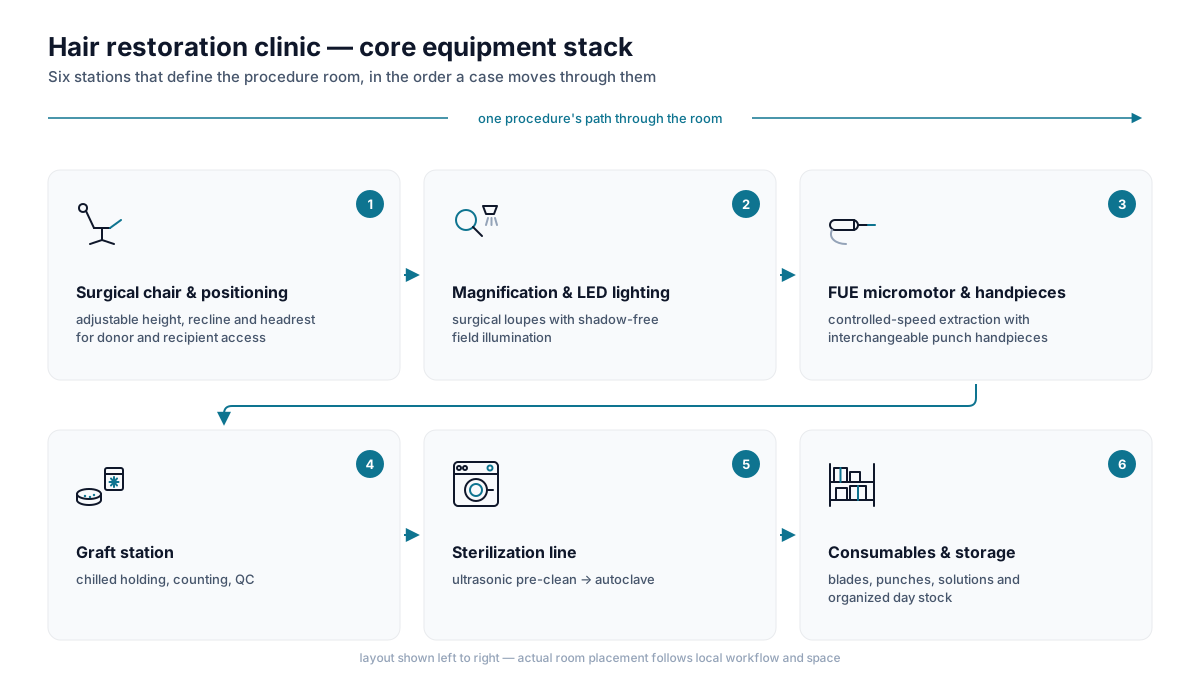
Two facts frame a clinic project in Greece better than any regulation summary. First, licensing of private health units is administered regionally — through the regional authorities and their public-health directorates, with the local medical association woven into the process — so the practical texture of an application in Attica differs from one in Central Macedonia, and early local contact is worth more than any national guide. Second, Greece wants your clinic to exist: the country has been deliberately building a health- and medical-tourism offer around its Mediterranean advantages, and hair restoration — elective, short-stay, recovery-friendly — fits that ambition as naturally as any specialty.
Key takeaways
- Private health units are licensed through the regional authorities, with requirements applied by regional public-health directorates and the local medical association involved in the process.
- Physicians must be registered with the local medical association (iatrikos syllogos) — membership is compulsory and tied to where they practice.
- Facility rules set technical specifications for private practices and units — premises, functional areas and equipment appropriate to the services declared.
- The setup order matters: engage the regional directorate and the medical association before signing a lease, because their reading of the rules shapes the premises you need.
- The medical-tourism angle is real but must be built: Greece competes on EU trust, climate and recovery experience, not on beating Turkish prices.
Licensing: regional process, association involvement
The national framework for private health services comes from the Ministry of Health, but the license that lets a private unit operate is handled at regional level, where public-health directorates receive the file, apply the technical specifications and inspect the premises. A hair transplant clinic is licensed for what it actually does: the classification of the unit — an enhanced private practice versus a day-clinic-type unit — depends on the procedures, anesthesia approach and patient-stay model declared, and that classification drives every premises requirement that follows. Getting a regional official and an experienced local engineer to confirm the classification before any lease is signed is the single highest-value move in a Greek clinic project.
What makes Greece distinctive is how deeply the medical associations sit in the machinery. Every practicing physician must be a member of the iatrikos syllogos — the medical association of the area where they practice — and the associations are not ceremonial: they participate in the licensing and oversight of private practice, opine on advertising propriety and enforce professional conduct. A foreign or returning Greek physician therefore has two registrations to think about — recognition of the qualification and enrollment with the local association — and the association's local standing means a cooperative relationship with it smooths a clinic's whole operating life, not just its opening file.
Staffing rules follow the general European pattern with Greek specifics: procedures are performed by or under the responsibility of licensed physicians, with nursing and technical staff operating within their own licensed scopes. Greece trains more physicians than its public system absorbs, and many Greek doctors have worked abroad — a genuine hiring advantage for a private clinic that offers modern equipment and serious case volume, and one reason well-capitalized aesthetic projects in Athens rarely struggle to recruit.
A word on process culture, because it shapes planning more than any single rule. Greek administration has digitized substantially in recent years and the licensing route is far smoother than its old reputation suggests — but it still rewards applicants who arrive with a complete, professionally prepared file and a local team that knows the regional office's habits. The engineer who drafts the plans, the accountant who runs the company's books and the lawyer who has filed health-unit applications in that specific region are not optional luxuries; they are how projects in Greece hold their schedule. Budget for them from the outset and treat the completeness of the file, not the speed of follow-up phone calls, as the variable you control.
Premises and hygiene expectations
Greek technical specifications for private health units define the functional areas a unit must have — examination and treatment spaces, sanitary provision, and for units performing invasive procedures, appropriately equipped intervention rooms — with the file typically supported by architectural plans prepared by an engineer. For a hair transplant clinic the practical checklist is familiar but must be evidenced on paper before it is inspected in person: an intervention room sized and finished for long surgical sessions, a defined route from used instruments to cleaning, packaging and steam sterilization, storage that keeps sterile stock unambiguous, and medical-waste arrangements under contract. Reprocessing is the area where ambition most often outruns planning — a clinic designed for daily sessions needs sterilization throughput engineered for that load, and our sterilization room setup guide sets out the workflow logic that the floor plan should encode.
Equipping the clinic
On the purchasing side Greece is a standard EU single-market jurisdiction: CE marking under the MDR is the conformity requirement for the devices a clinic buys, instruments move freely from European suppliers, and Greek dealers coexist with direct import from manufacturers — including the Turkish suppliers a short hop across the Aegean, a sourcing route many Greek clinics use without ceremony. Freight and lead times to Greece deserve slightly more planning margin than in northwestern Europe. What to buy, category by category, is mapped in our clinic equipment hub, and the argument for phasing purchases against booked demand rather than opening-day optimism is made in the equipment budget guide.
Sequencing a Greek clinic project
- Confirm the classification locally. Present the intended procedure and anesthesia model to the regional public-health directorate and an experienced local engineer; the answer defines the premises standard.
- Register the practitioners. Qualification recognition where needed, then enrollment with the local medical association — start early, since association matters run on local calendars.
- Form the operating company. An IKE is the common flexible vehicle; tax registration and books precede any license filing.
- Secure and design the premises. Choose property the technical specifications fit into, and have the engineer draft plans aligned to the declared classification.
- Fit out to the plans. Intervention room, reprocessing line, waste contracts — built as drawn, because the inspection compares reality against the file.
- File the license application and pass inspection. Submit through the regional directorate with plans, staff registrations and supporting documents; host the inspection; remedy findings.
- Equip and stock in phases. Sterilization and OR core first, instrument sets sized to the case mix, consumables deep enough to absorb supplier lead times — the printable clinic startup checklist gives the complete buying order.
- Open, then build the tourism channel deliberately. Multilingual patient service, packaged recovery logistics and honest outcome communication are what turn Greece's setting into bookings.
Sequence discipline matters more in Greece than in permit-lighter jurisdictions because the steps are genuinely dependent: the classification defines the plans, the plans define the fit-out, and the inspection compares the finished premises against the filed drawings. Founders who run premises work and paperwork in parallel without locking the classification first are the ones who end up rebuilding walls; those who let the file lead the construction typically find the Greek process slower to start but steady once moving.
The Mediterranean opportunity, honestly framed
Greece's medical-tourism ambition is government-backed and geographically credible: year-round flight connections, hotel infrastructure built for millions of visitors, and a recovery environment few competitors can match. The honest caveat is next door — Turkey dominates global hair-transplant tourism on price and volume, and a Greek clinic will not out-discount Istanbul. The workable position is different: EU-jurisdiction care with its consumer protections, surgeon-led treatment at boutique scale, and a recovery week on the Aegean as part of the offer — aimed at patients for whom trust and experience outweigh the lowest quote, including the diaspora and Balkan and Middle Eastern patients who already travel to Athens and Thessaloniki for private care. Domestic demand, concentrated in those two cities, gives a well-run clinic its base load; the tourism channel is the growth story built on top.
Seasonality deserves deliberate planning rather than discovery. Greece's visitor economy peaks in high summer, but elective surgery does not automatically follow it: post-procedure scalps and August sun mix poorly, many diaspora patients prefer to combine treatment with spring or autumn family visits, and Athens operates as a year-round city in a way the islands do not. The clinics that make the tourism channel work usually anchor themselves in Athens or Thessaloniki for twelve-month utilization and treat the Mediterranean setting as the recovery narrative, not the location strategy — the tempting island-clinic vision founders arrive with tends to dissolve on contact with staffing logistics and seasonal dead months. Domestic pricing sits meaningfully below Western European levels while the clinic's cost base does too, so the economics work at Greek price points; the inbound channel then improves margins rather than carrying the business.
Frequently asked questions
Who licenses a private hair transplant clinic in Greece?
Licensing of private health units runs through the regional authorities — their public-health directorates receive the application, apply the technical specifications and inspect the premises — within a national framework set by the Ministry of Health, and with the local medical association involved in the process.
How is the clinic classified?
By what it declares it will do: the procedure profile, anesthesia approach and patient-stay model determine whether the unit is treated as an enhanced private practice or a day-clinic-type unit, and that classification drives the premises requirements. Confirm it with the regional directorate before committing to property.
Do physicians have to join the local medical association?
Yes — membership of the iatrikos syllogos of the area of practice is compulsory, and the associations participate in licensing, advertising oversight and professional discipline. Foreign-trained physicians handle qualification recognition first, then enrollment.
Can a Greek clinic compete with Turkey for international patients?
Not on price, and it should not try. The credible Greek position is EU-jurisdiction care, surgeon-led boutique treatment and a genuinely attractive recovery setting — a trust-and-experience offer for patients who are not choosing on the lowest quote, alongside diaspora and regional patients already using Greek private care.
What are the premises requirements for hair transplantation?
Technical specifications define the functional areas the unit must have for its declared services: an appropriately equipped intervention room, reprocessing and sterile-storage arrangements, sanitary provision and contracted medical-waste handling, evidenced by engineer-prepared plans and verified at inspection.
Is equipment purchasing restricted in Greece?
No Greek-specific approval applies to buying: CE-marked devices under the EU MDR circulate freely, and clinics buy from Greek dealers, European suppliers or directly from manufacturers, including Turkish ones. Allow slightly more logistics margin than in northwestern Europe and phase purchases against real booking volume.
Related articles
Hair Transplant Clinic Equipment: The Complete Stack
The full equipment stack of a hair transplant clinic, from operating table to autoclave — written for founders specifying their first operating room.
The Equipment Budget for a New Hair Transplant Clinic: Categories and Phasing
A budget structure for equipping a new hair transplant clinic: the three ledgers — capital, consumables, hidden costs — how to phase purchases so cash follows patients, where cheap equipment gets expensive, and an honest word on financing.
Hair Transplant Clinic Startup Checklist: Every Equipment Category, in Order
A category-by-category equipment walkthrough for opening a hair transplant clinic: what belongs in the OR, the sterilization line, instrument sets and consumables — and the order to buy it in.
Sterilization Room Setup: One-Way Flow, Equipment and Space Planning
The reprocessing room from the floor plan up: why one-way dirty-to-clean-to-sterile flow is the whole design, what equipment each zone needs and why, how to plan a small footprint honestly, and where water quality and documentation fit.