
Tumescence
The infiltration of dilute fluid into the scalp to firm the tissue and disperse anesthetic before harvesting.
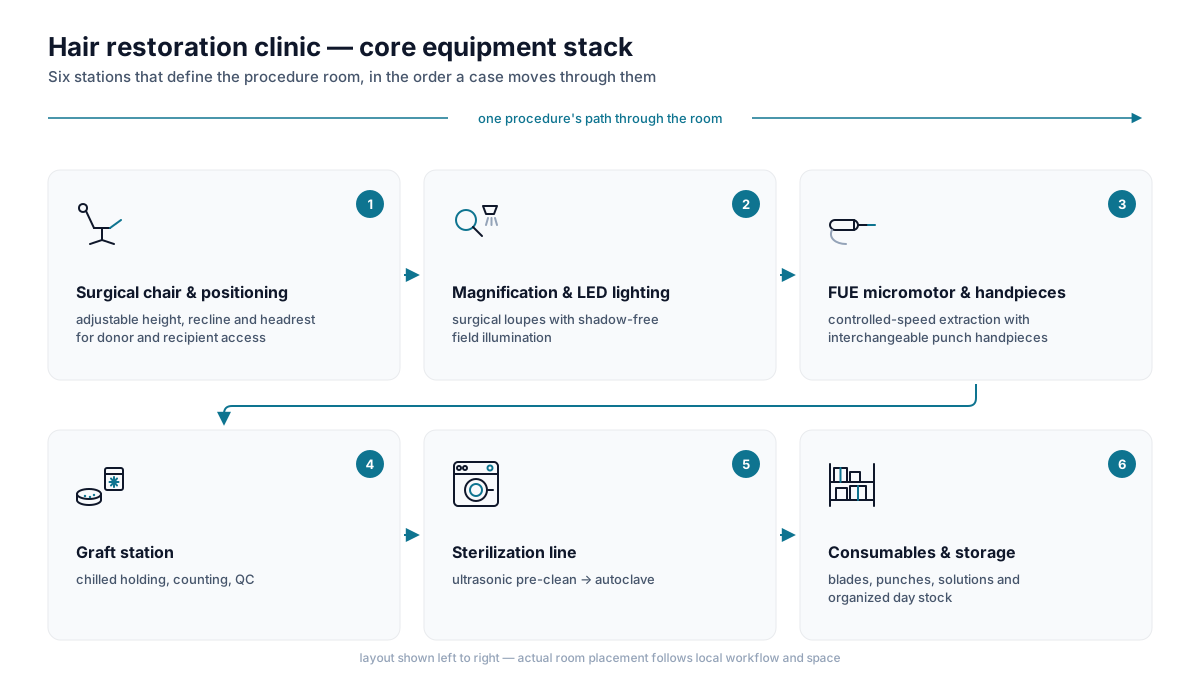
Tumescence is the infiltration of a dilute fluid solution into the layers of the scalp to swell and firm the tissue before or during a hair restoration procedure. The result is a taut, slightly raised working surface that supports the follicles, distributes local anesthetic, and can reduce bleeding in the treated area. It is a preparatory technique used across both FUE harvesting and recipient-site work.
In practice
The fluid — typically a saline base carrying dilute local anesthetic and, at the operator's discretion, other agents — is injected into the subcutaneous plane so the scalp becomes turgid to the touch. That firmness serves several practical purposes at once. It lifts and separates the tissue, which can make follicle orientation more predictable for the punch; it spreads anesthetic evenly so a broad field is comfortable without repeated injection; and by adding pressure and volume to the plane, it can limit oozing that would otherwise obscure the field. Because tumescence changes the tissue the punch enters, it interacts with instrument behavior and with how follicular units sit relative to the surface, which is one reason technique and equipment are discussed together.
What buyers and professionals should know
Tumescence is a clinical technique, and the composition, concentration, and volume of the solution are medical decisions made by the treating physician for each patient — not a product specification. From an equipment and sourcing standpoint, what falls into the buyer's remit is the supporting hardware: syringes, needles and cannulas, and infiltration or injection systems that deliver the fluid consistently, all part of the wider clinic equipment stack. Evaluate those on the usual grounds of build quality, sterility, and reliability rather than on any clinical claim. A pump or manifold that maintains steady pressure, needles and cannulas of appropriate gauge, and containers that keep the prepared solution sterile are the concrete, specifiable items; the clinical protocol that decides how they are used sits with the physician.
A note on vocabulary: tumescence describes the swollen tissue state, while "tumescent anesthesia" describes the specific use of that state to deliver dilute anesthetic over a wide field. The two are related but not identical, and precise use avoids confusion when reading protocols or product literature.