
Inner vs Outer Diameter
Inner vs outer diameter is the pair of measurements that defines a punch — the lumen the graft passes through versus the wound the donor heals, separated by the wall thickness.
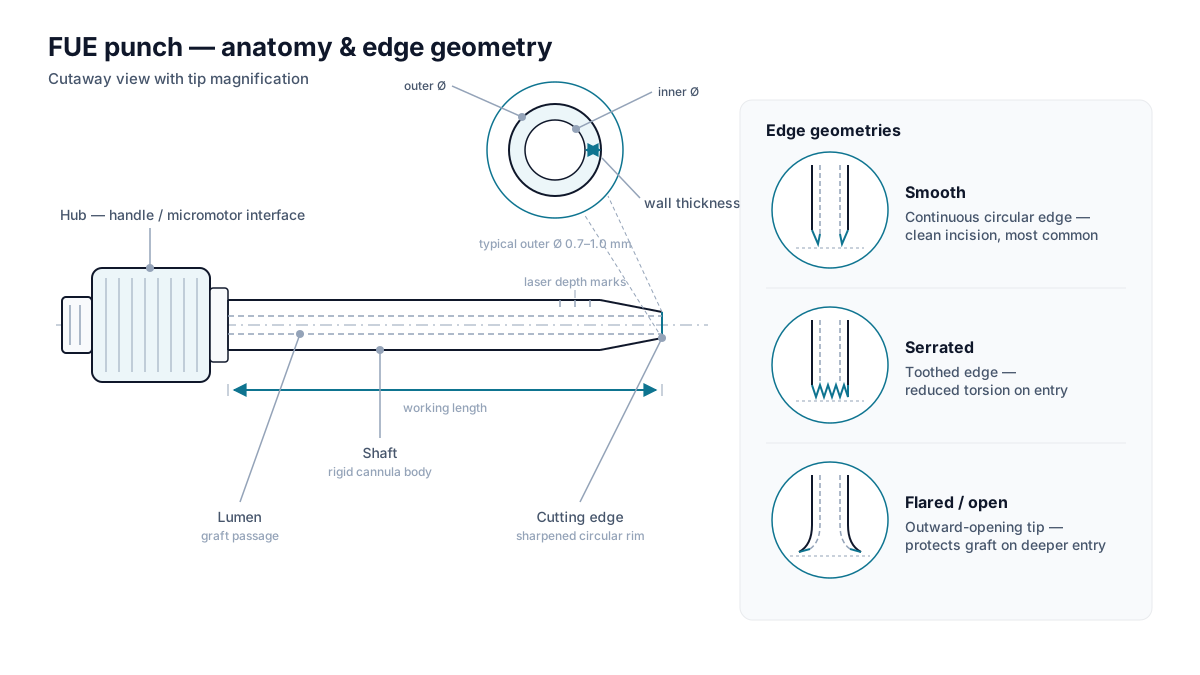
Inner versus outer diameter is the pair of measurements that fully defines an FUE punch: the inner diameter (ID, or lumen) is the internal space the follicular unit must pass through cleanly, and the outer diameter (OD) is the size of the circular wound the donor area heals. The gap between the two, measured on the radius, is the wall thickness. A single number can never describe a punch, because ID and OD describe physically different things and both change the outcome.
Inner vs outer diameter in practice
Wall thickness is where the two measurements stop being interchangeable. Take two punches both printed "0.90 mm." If one is 0.90 mm at the lumen and the other is 0.90 mm at the outer wall, they are not the same instrument: the first is larger overall, because its wall sits outside the 0.90 mm bore, so it removes more tissue and leaves a bigger mark. A thin-walled punch clears the same graft through a smaller wound; a thick-walled punch is more rigid and durable but wounds more for a given lumen. The ID/OD split is therefore also a wall-thickness decision, not a footnote to it.
The lumen governs graft safety — it must exceed the widest part of the follicular unit, including roots that splay below the surface — while the outer diameter governs donor cost. Because wound area scales with the square of the radius, a small OD difference hidden inside a shared nominal label produces a disproportionate difference in tissue removed.
What buyers and professionals should know
This is the single most common spec-sheet trap in punch procurement: manufacturers differ on which diameter their printed number refers to, and a catalogue that lists only one figure is telling you almost nothing. Two lines quoted at the "same" size can differ in real wound and real clearance simply because they measure from different surfaces. The punch diameter guide works through how each tenth of a millimetre changes wound area and graft fit.
Ask every supplier for three explicit numbers per SKU — outer diameter, inner diameter, and the grinding tolerance on each — and verify them against measured samples before committing volume. A supplier who states "0.90 mm OD, 0.80 mm ID, ±0.02 mm" is describing a controlled process; one who can only repeat the number on the box is not. The same discipline underlies the punch gauge question, and the full instrument context sits in the FUE punches hub.