
Hypothermic Graft Storage
Holding extracted follicular units in a chilled solution to slow their metabolism during the out-of-body interval.
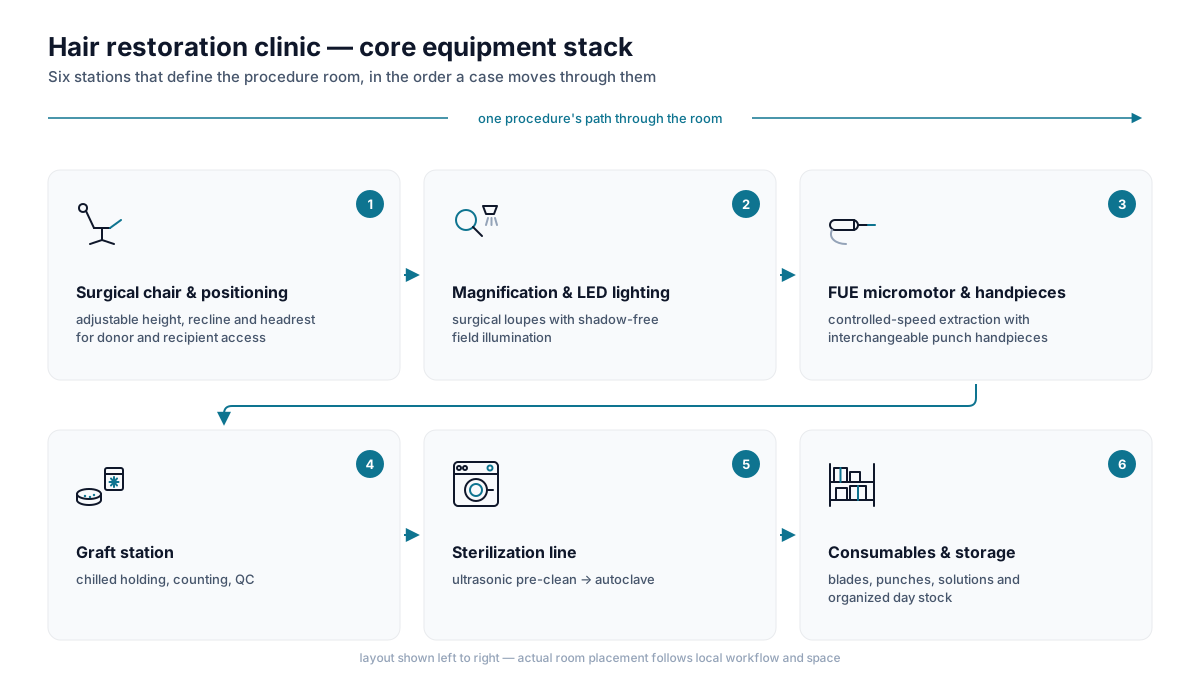
Hypothermic graft storage is the practice of keeping extracted follicular units in a chilled holding solution during the interval between harvesting and implantation. The principle is metabolic: lowering the temperature of the tissue slows the cellular processes that consume oxygen and energy, so grafts that are already cut off from a blood supply degrade more slowly while they wait outside the body.
In practice
Once a follicular unit is extracted it has no circulation, and the clock starts on how long it can sit before viability is threatened. Holding grafts cold is the standard way to buy time. In a working clinic this typically means grafts rest in a container of holding solution kept over ice or in a small chiller, with the temperature managed toward the cool range rather than allowed to drift to room temperature. The choice of fluid and the temperature are clinical decisions; the point of the technique is to keep the tissue in a low-metabolic, well-hydrated state until placement. The interplay between temperature, solution, and out-of-body time is part of what the graft storage solutions guide addresses.
What buyers and professionals should know
Hypothermic storage is one lever on graft survival, not a guarantee of it — and the honest framing is qualitative. Cold slows metabolism, and slower metabolism gives grafts a better chance across a longer out-of-body interval, but the specific benefit depends on temperature control, solution, handling, and how long grafts actually wait. Be cautious with product claims that attach survival figures to a cooler or a fluid; those are outcome claims about a whole workflow, rarely reported with the conditions that would make a number meaningful.
For equipment and procurement, the relevant items are concrete and specifiable: chilling units or insulated containers, thermometers to verify the holding temperature rather than assume it, and clean containers appropriate for tissue. These belong to the broader clinic equipment line and should be evaluated on temperature stability and reliability. The workflow discipline matters as much as the hardware — cold storage only helps if grafts actually reach it quickly and stay there, so the value is realised through process, not purchase alone.