
Opening a Hair Transplant Clinic in Germany
Germany builds the clinic around the doctor: Approbation and chamber membership come first, the hygiene plan and the health office define the premises, and the Praxis-versus-MVZ question decides the structure. A walkthrough of the real order of operations.
Germany starts from the practitioner, not the premises. Before any question of rooms, equipment or company structure, the founding doctor must hold the Approbation — the German licence to practise medicine — and belong to the medical chamber of the federal state where the clinic will operate; everything else in the setup hangs off that professional status. The second German particularity follows quickly: hygiene is not a soft expectation here but a documented system, and the local health office will judge your clinic by the hygiene plan and reprocessing arrangements you can show, room by room.
Key takeaways
- The founding doctor's Approbation and membership in the state medical chamber (Landesärztekammer) are the true first step — the clinic is built around licensed practitioners.
- Because hair restoration is private-pay medicine, no statutory-insurance admission is needed, which removes one of German healthcare's slowest hurdles.
- The local health office (Gesundheitsamt) is the day-to-day supervisory contact, and a written, RKI-guided hygiene plan is the document it expects to see lived.
- Structure choice — classic Praxis, group practice, or an MVZ-style corporate vehicle — shapes ownership, hiring and expansion, and deserves early legal advice.
- Sequence practitioner status, structure and premises before equipment: German fit-out standards determine what the sterilization line must look like.
Practitioner licensing: chamber, title, and what you may call yourself
Medical practice in Germany is licensed at state level through the Approbation, and every practising physician is a mandatory member of their Landesärztekammer — the state medical chamber that administers professional conduct, further training and title use. The Bundesärztekammer, the federal umbrella of these chambers, is a sensible first orientation point for a founder mapping which state chamber and which authorities apply. Hair transplantation is not a protected specialty of its own: doctors from various backgrounds perform it, but chamber professional codes govern what qualifications you advertise, and German patients and courts take title precision seriously. A founder who is not a physician cannot simply employ one and open a practice around them — German professional law restricts lay ownership of medical practices, which is exactly where the structural question below begins.
One genuine German advantage deserves emphasis: hair restoration is almost entirely private-pay (Selbstzahler) medicine. That means the slow, contested gatekeeping of statutory-insurance admission — the hurdle that dominates most German practice foundations — simply does not apply. You are opening a private practice, invoiced under the private fee schedule, and the timeline is correspondingly shorter than German medical folklore suggests.
Structure: Praxis, group practice, or corporate vehicle
The default German form is the physician-owned Praxis — lean, fast to establish, and fully controlled by the treating doctor. Partnerships between physicians (Berufsausübungsgemeinschaften) extend that model to several owners. Where founders want a corporate structure, employed physicians at scale, or outside capital, German law offers narrower channels — MVZ-style medical care centres and licensed private clinic structures, the latter involving a trade-law permission for operating a private hospital-type facility. Each carries different implications for who may own, who may hire, and how the clinic can expand to further sites. The honest guidance: this is the one setup decision where early specialist legal advice in Germany repays its cost many times over, because restructuring later is far more expensive than choosing correctly at the start.
Hygiene plans and the health office: premises done the German way
The Gesundheitsamt — the municipal or district public health office — is the authority a running German clinic actually deals with. Practices performing invasive procedures notify it and can expect inspections, and the central artefact of those inspections is the Hygieneplan: a written plan, guided by the recommendations of the Robert Koch Institute, covering surface disinfection, hand hygiene, personal protective equipment, and above all the reprocessing of medical devices. German expectations on reprocessing are among Europe's most exacting in practice: instruments are classified by risk, reprocessed through defined, documented steps, and sterilized in equipment whose cycles are validated and logged. Plan the physical dirty-to-clean workflow into the premises from the first sketch — our sterilization room setup guide shows the spatial logic, and the instrument reprocessing workflow maps the procedural side that your hygiene plan will need to reflect.
Beyond hygiene, premises expectations are shaped by state building law and professional standards rather than a single national clinic code: adequate separation of intervention rooms from circulation areas, appropriate surfaces and ventilation for the procedures performed, and documentation that the rooms match what you told the authorities. Sequence any fit-out only after the hygiene concept exists, because retrofitting a reprocessing line into finished rooms is the classic expensive German founding mistake.
Buying devices for a German clinic
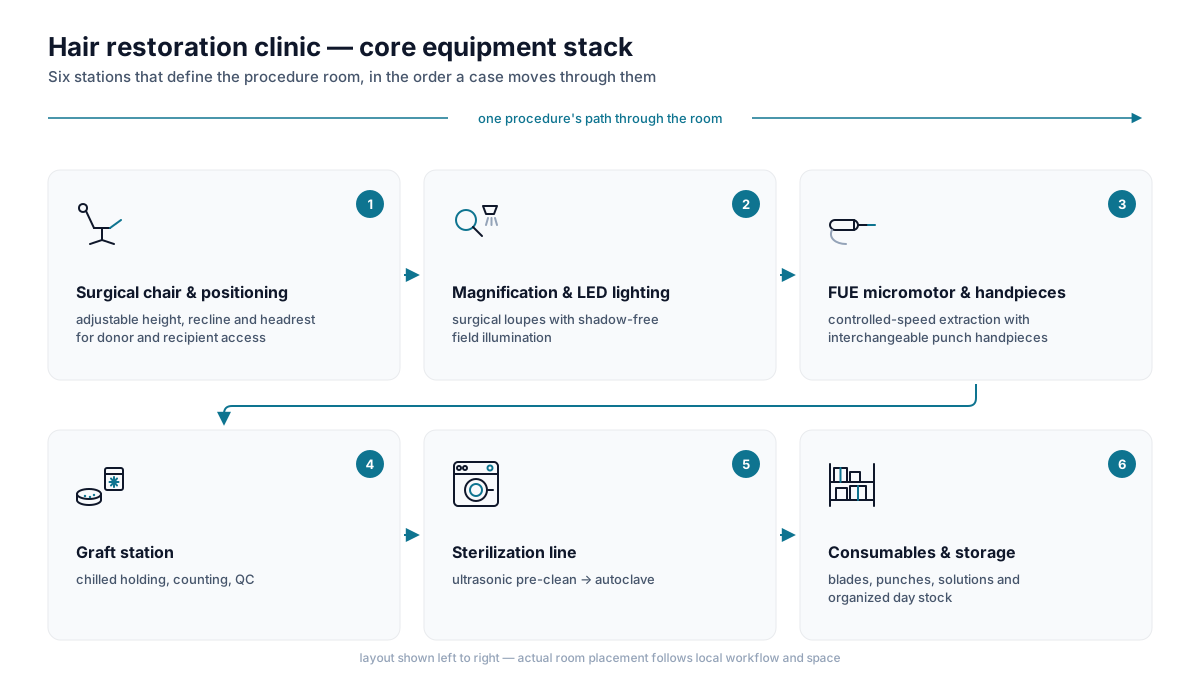
Equipment purchasing in Germany sits inside the EU framework: instruments and devices carry CE marking under the Medical Device Regulation, and German operators are additionally expected to keep orderly records of the devices they use — inventory, instructions for use, and maintenance in line with German operator obligations for medical devices. In buying terms this pushes German clinics toward suppliers who deliver complete documentation without being chased, since every folder you receive clean is a folder you need not reconstruct before an inspection. The clinic equipment hub organises the purchasing decisions by category, from punches and implanters through to sterilizers.
The realistic German sequence
- Secure practitioner status. Approbation recognised (a real project for foreign-trained doctors, handled by state authorities), chamber membership in the clinic's state, and clarity about which titles and qualifications will be advertised.
- Choose the structure with legal advice. Praxis, partnership or corporate vehicle — decided against ownership, hiring and expansion plans, not habit.
- Find premises and write the hygiene concept together. Let the hygiene plan and reprocessing workflow drive the floor plan; involve a hygiene consultant early if the team lacks that experience.
- Notify the authorities. Chamber notification of practice activity and contact with the Gesundheitsamt, plus the trade-law permission where a private-clinic structure requires one.
- Hire and train. German assistant staff (MFA) are accustomed to documented hygiene roles; assign the hygiene-responsibility and device-reprocessing roles by name in the plan.
- Equip against a phased budget and open. Buy the day-one clinical core to full standard and defer capacity purchases — the clinic equipment budget guide shows the phasing, and the clinic startup checklist keeps the licensing, premises and equipment threads aligned week by week.
Staffing the German way
German clinics benefit from a formalised assistant profession: the Medizinische Fachangestellte (MFA) is a trained, certificated role, and MFAs with surgical-assistance experience adapt well to graft preparation and OR support. What Germany lacks, like most of Europe, is a ready supply of hair-transplant-specific technicians, so realistic plans include a structured internal training phase with the surgeon carrying a deliberately restricted early caseload. Two staffing formalities are easy to miss: the hygiene plan should name responsible persons for device reprocessing — a role German inspectors expect to find assigned to someone with appropriate training — and employment in German practices sits inside a fairly protective labour-law framework, so hire at the pace the caseload genuinely supports rather than staffing for projections.
Advertising is the other area where German specificity bites. German health-advertising law constrains how invasive procedures may be promoted, and the promotion of surgical aesthetic interventions with before-and-after imagery in advertising is a well-known restricted zone; the medical chambers additionally police what their members may claim. The practical consequence is that German clinic marketing is built on substance — the surgeon's verifiable qualifications, patient education content, transparent consultation processes — rather than the promotional aesthetics common in less regulated markets. Founders arriving from abroad should have every campaign reviewed against German rules before it runs, not after a competitor complains, because competitor complaints are a genuine enforcement channel here.
What the German market rewards
German patients research thoroughly, expect written consent processes and transparent pricing, and respond to visible quality markers — a named, chamber-registered surgeon, documented hygiene, German-language aftercare. The competitive backdrop is distinctive: Germany is one of Europe's largest sources of outbound hair-transplant tourism, with large numbers of patients travelling to lower-cost destinations each year, so a domestic clinic's pitch is not price parity but everything the flight abroad cannot offer — accessible follow-up, German-language consent and aftercare, legal recourse under German law, and a physician who remains reachable at visit two, five and ten. City choice matters less than in centralised markets: Berlin, Munich, Hamburg, Düsseldorf and Frankfurt all sustain aesthetic-medicine ecosystems, and strong practices thrive in mid-sized cities where rents are lower and regional loyalty is high. Build the compliance backbone as marketing: in this market, they are the same asset.
Frequently asked questions
Can a non-doctor open a hair transplant clinic in Germany?
Not as a simple proprietor of a medical practice — German professional law ties practice ownership to licensed physicians, with corporate structures such as MVZ-style vehicles or licensed private clinics as the regulated exceptions. Non-physician founders need specialist legal structuring from the outset.
Do I need statutory health insurance (Kassen) admission?
No. Hair restoration is private-pay medicine, invoiced privately, so the statutory-insurance admission process that slows most German practice foundations does not apply. This shortens the realistic timeline considerably.
Who inspects a German hair clinic?
Day to day, the local Gesundheitsamt is the supervisory contact for hygiene and infection prevention, alongside the state medical chamber for professional conduct. Inspections centre on the written hygiene plan and whether reprocessing practice matches it.
What is expected for instrument sterilization in Germany?
A documented, RKI-guided system: risk classification of instruments, a defined dirty-to-clean reprocessing workflow, validated and logged sterilizer cycles, and named staff responsibility. Plan the physical reprocessing line into the premises before fit-out.
How long does it take to open a hair transplant clinic in Germany?
With Approbation already in hand, founders commonly need several months to a year across structure setup, premises, hygiene planning and notifications; recognition of a foreign medical qualification beforehand can add substantially. Sequencing hygiene planning before fit-out avoids the most common delays.
Related articles
Hair Transplant Clinic Equipment: The Complete Stack
The full equipment stack of a hair transplant clinic, from operating table to autoclave — written for founders specifying their first operating room.
The Equipment Budget for a New Hair Transplant Clinic: Categories and Phasing
A budget structure for equipping a new hair transplant clinic: the three ledgers — capital, consumables, hidden costs — how to phase purchases so cash follows patients, where cheap equipment gets expensive, and an honest word on financing.
Sterilization Room Setup: One-Way Flow, Equipment and Space Planning
The reprocessing room from the floor plan up: why one-way dirty-to-clean-to-sterile flow is the whole design, what equipment each zone needs and why, how to plan a small footprint honestly, and where water quality and documentation fit.
Instrument Reprocessing Workflow: Eight Steps from Used to Sterile
Reprocessing as a chain of eight steps — point-of-use pre-clean through sterile storage — with the purpose behind each step, the typical failure that occurs there, and why the chain is only as strong as its most rushed link.